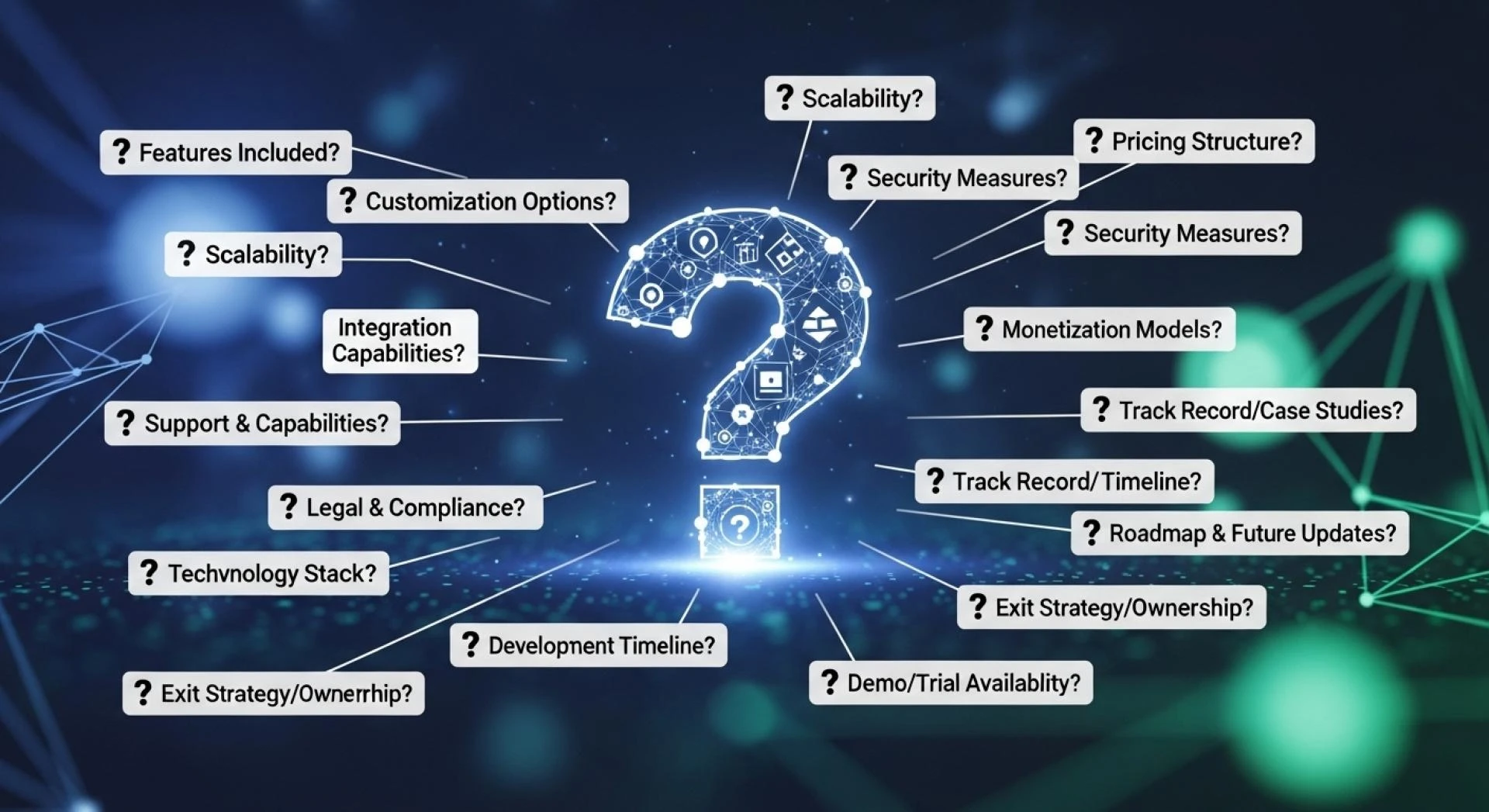

Launching a white label NFT marketplace is an exciting opportunity for creators, entrepreneurs, and businesses looking to tap into the digital collectibles ecosystem. However, the success of your marketplace depends heavily on the provider you choose. Not all white label NFT marketplace solutions are created equal. Some offer robust features, scalability, and security, while others may fall short in areas critical for long-term growth.
To make an informed decision, it’s essential to ask the right questions before partnering with a provider. This guide outlines 15 crucial questions that help buyers evaluate providers, uncover potential limitations, and select a solution that aligns with their strategic goals.
1. What Blockchain Networks Are Supported?
Understanding which blockchains the provider supports is vital:
- Can the marketplace operate on multiple chains?
- Are energy-efficient or low-fee blockchains supported for scalability and user adoption?
- Does the provider offer options for future integrations with emerging chains?
Multi-chain support ensures flexibility, reduces transaction costs, and attracts a broader audience.
2. How Customizable Is the Platform?
A white label solution should allow you to create a marketplace that reflects your brand and vision:
- Can you fully customize UI/UX elements, themes, and branding?
- Are smart contracts adjustable to match your business logic?
- Can you modify transaction workflows, payment options, or listing structures?
High customization ensures your marketplace stands out rather than appearing as a generic template.
3. What Features Are Included Out-of-the-Box?
Evaluate the provider’s default feature set:
- Listing types (fixed price, auctions, timed sales)
- Wallet integrations (custodial and non-custodial)
- Multi-currency payment options
- Analytics dashboards for user and transaction tracking
Knowing what’s included helps determine whether additional development will be required.
4. How Secure Is the Platform?
Security is critical when financial transactions and digital ownership are involved:
- Are smart contracts audited by independent experts?
- What measures are in place to prevent hacking or fraud?
- How is sensitive user data protected?
A secure platform protects your users and maintains trust in your marketplace.
5. What Compliance and Regulatory Support Is Provided?
NFT marketplaces increasingly need to comply with financial and legal regulations:
- Does the provider support KYC (Know Your Customer) and AML (Anti-Money Laundering) processes?
- Are tools included for reporting and regulatory compliance?
- Can the platform adapt to jurisdiction-specific requirements?
Compliance readiness reduces legal risk and facilitates fiat-to-NFT transactions.
6. How Scalable Is the Platform?
Growth can be unpredictable, so scalability is essential:
- Can the marketplace handle increasing users, transactions, and content without performance issues?
- Are there limits to concurrent listings or traffic?
- Does the provider support horizontal or vertical scaling options?
Scalable platforms ensure smooth growth without costly migrations later.
7. What Onboarding Support Is Available?
Ease of use is key for attracting first-time NFT buyers:
- Does the platform support simplified wallet creation?
- Are tutorials, guides, or walkthroughs integrated for beginners?
- Can onboarding processes be customized to your target audience?
Good onboarding drives adoption and reduces user drop-off.
8. Are Analytics and Reporting Features Included?
Data is crucial for strategic decision-making:
- Can you track user behavior, transaction trends, and popular collections?
- Are dashboards customizable for your reporting needs?
- Is historical data easily accessible for analysis?
Analytics capabilities help optimize marketing, user retention, and revenue strategies.
9. How Is Customer Support Structured?
Even the best platforms may face technical challenges:
- Does the provider offer 24/7 support?
- Are there dedicated account managers or technical teams?
- How are bug fixes, updates, and maintenance handled?
Reliable support minimizes downtime and ensures a smooth user experience.
10. What Payment Options Are Available?
Payment flexibility impacts user adoption and revenue:
- Are crypto payments supported across multiple networks?
- Are fiat gateways integrated for users unfamiliar with cryptocurrency?
- Can you add or remove payment options based on audience needs?
Flexible payment options make your marketplace accessible to a broader demographic.
11. Can the Platform Handle Community Features?
Community engagement drives marketplace growth:
- Are features like forums, chat, or live event integrations available?
- Can creators and collectors interact directly through the platform?
- Are gamification tools, badges, or leaderboards supported?
Community-friendly features enhance loyalty and repeat transactions.
12. What Is the Deployment Timeline?
Time-to-market can influence your competitive advantage:
- How long does it take to deploy a fully branded marketplace?
- Are there staged rollouts or beta testing options?
- What is the expected timeline for feature integration and updates?
Clear timelines help manage expectations and plan marketing campaigns effectively.
13. What Are the Maintenance and Update Policies?
Long-term sustainability requires ongoing support:
- How frequently are software updates and security patches released?
- Are new features automatically available to your marketplace?
- Does the provider offer long-term technical assistance and upgrades?
A reliable update policy ensures your marketplace remains secure, modern, and competitive.
14. Are There Built-In Marketing and Growth Tools?
Driving traffic is as important as technology:
- Are referral programs, NFT promotions, or social sharing features included?
- Can you schedule drops, featured collections, or email campaigns from the platform?
- Does the provider offer tools for SEO optimization or analytics integration?
Marketing-ready features help attract and retain users without extensive external tools.
15. What Are the Costs and Licensing Terms?
Understanding the financial model upfront is essential:
- Are there licensing fees, subscription models, or revenue-sharing arrangements?
- Are there extra charges for scaling, additional features, or multi-chain integration?
- Are payment terms flexible and transparent?
Clear cost structures prevent unexpected financial burdens and ensure long-term feasibility.
Conclusion
Selecting the right white label NFT marketplace provider requires careful evaluation. By asking these 15 questions, you can gain a clear understanding of technical capabilities, scalability, security, compliance, user experience, and long-term support.
A thorough vetting process ensures that your marketplace is not only functional but also secure, user-friendly, and capable of growing alongside your community. Making informed decisions at the outset sets the stage for a successful, sustainable, and engaging NFT marketplace.











Sign in to leave a comment.