
Russian science fiction cinema occupies a unique place in world film history. From philosophical journeys through space to apocalyptic visions of the future, Russian directors have used the movie genre of science fiction to question human nature, technology, and the meaning of existence. Unlike Hollywood’s often spectacle-driven approach, Russian sci-fi tends to focus on the metaphysical. It asks not only where humanity is going, but why it is going there. These films combine literature, science, and art to create a cinematic language both poetic and profound.
Many of these films were born in the Soviet Union, where censorship and ideology shaped every artistic expression. Yet within these limits, filmmakers found ways to express deep philosophical insights. The 42 films listed here span from the 1920s to today, reflecting the evolution of Russian thought and aesthetics. They include experimental works, dystopian parables, and cosmic odysseys—each one offering a distinct vision of the future. Through this collection, we explore how Russian sci-fi has contributed to the global film industry and influenced directors worldwide.
1. Solaris (1972)
Directed by Andrei Tarkovsky, Solaris remains one of the most significant achievements in science fiction cinema. Based on the novel by Stanisław Lem, the film explores the psychological impact of space travel rather than the technology itself. It tells the story of a scientist sent to a space station orbiting a mysterious planet that manifests human memories into reality. Through haunting imagery and slow pacing, Tarkovsky examines guilt, love, and the boundaries of human consciousness.
Unlike typical space adventure films, Solaris emphasizes introspection. The planet Solaris serves as a mirror of the human soul, forcing the characters to confront their inner ghosts. This masterpiece challenges the audience to question what reality truly means. It’s less about outer space and more about inner space—making it one of the most philosophically complex works in Russian cinema history.
2. Stalker (1979)
Another Tarkovsky classic, Stalker adapts Arkady and Boris Strugatsky’s novel “Roadside Picnic.” The film follows three men who venture into “The Zone,” a forbidden area where normal laws of physics do not apply. Within the Zone lies a mysterious room that grants one’s deepest desires. However, reaching it requires both spiritual and physical endurance. The journey becomes a meditation on faith, desire, and the moral cost of dreams.
Stalker is visually stunning and symbolically dense. Its slow, deliberate pace draws the viewer into an otherworldly experience. Rather than focusing on special effects, Tarkovsky uses desolate landscapes and decaying architecture to evoke both decay and transcendence. The Zone becomes a metaphor for life itself—beautiful, terrifying, and unknowable. Many critics consider it one of the greatest achievements of both science fiction and world cinema.
3. Aelita: Queen of Mars (1924)
One of the earliest examples of Russian science fiction, Aelita directed by Yakov Protazanov, tells the story of a Soviet engineer who dreams of traveling to Mars. There, he meets Aelita, the Martian queen, and leads a workers’ revolution. Combining futuristic costumes and avant-garde set design, the film captures the revolutionary optimism of the 1920s. It’s both a love story and a political allegory about class struggle and human aspiration.
The film’s visual style, inspired by constructivist art, influenced generations of filmmakers. Although the plot may feel dated today, Aelita remains a cornerstone of early sci-fi cinema. It reflects the Soviet fascination with space exploration long before it became a reality. The film’s dreamlike portrayal of Mars continues to inspire discussions about imagination and ideology in science fiction storytelling.
4. Planet of Storms (1962)
Directed by Pavel Klushantsev, Planet of Storms is a visually inventive tale about Soviet cosmonauts landing on Venus. Combining practical effects and philosophical undertones, it presents a vision of interplanetary exploration that predates many Western depictions. The film’s remarkable use of miniatures and cinematography makes it a milestone in special effects within Soviet cinema.
Beyond its visual appeal, the movie reflects the optimism of the space race era. It portrays human curiosity as a noble force pushing against the boundaries of the unknown. Its themes of unity and scientific progress mirror the Soviet idealism of the time, while still addressing deeper existential questions about humanity’s place in the universe.
5. Kin-dza-dza! (1986)
Kin-dza-dza! by Georgiy Daneliya stands as one of the most original Russian sci-fi comedies ever made. The story follows two men accidentally transported to the desert planet Pluk, where society is absurdly hierarchical and communication is reduced to nonsense words. Using humor and satire, Daneliya constructs a dystopian reflection on human greed, social inequality, and the loss of empathy.
The film’s minimalistic setting and absurd logic serve as a metaphor for Soviet society in decline. Its dark humor masks a deep sense of melancholy about civilization’s fragility. Over the years, Kin-dza-dza! has gained cult status for its originality, turning its bizarre world into a cultural symbol of absurdist science fiction.
6. Hard to Be a God (2013)
Directed by Aleksei German, Hard to Be a God adapts the Strugatsky brothers’ novel about scientists observing a planet stuck in a perpetual Middle Ages. The film’s bleak visual style and chaotic narrative depict the collapse of reason and morality in a barbaric society. It took German more than a decade to complete, and the result is both visually stunning and emotionally overwhelming.
The film challenges the viewer’s perception of civilization. By immersing us in filth and cruelty, it asks whether enlightenment can exist in a world that rejects knowledge. Though difficult to watch, Hard to Be a God stands as one of the most ambitious works in Russian cinema—an epic meditation on humanity’s failure to evolve.
7. The Inhabited Island (2008)
Fedor Bondarchuk’s The Inhabited Island brings a modern touch to Soviet sci-fi. Based on the Strugatsky brothers’ novel, it tells the story of a space traveler who crashes on a distant planet ruled by totalitarian forces. Combining action sequences with political commentary, the film portrays the tension between freedom and control, a recurring theme in Russian science fiction.
Visually dynamic and thematically bold, the movie bridges classic Soviet motifs with modern filmmaking techniques. Its dystopian world and oppressive government mirror concerns about propaganda and mass manipulation. In that sense, The Inhabited Island continues the Russian tradition of using sci-fi as a mirror of society’s moral and political struggles.
8. The Andromeda Nebula (1967)
Based on Ivan Yefremov’s novel, The Andromeda Nebula envisions a utopian communist future. The film celebrates humanity’s scientific achievements and collective spirit. Unlike dystopian works, it portrays a society where knowledge and cooperation guide progress. Its aesthetic reflects both optimism and discipline typical of Soviet ideology.
Though its pace is deliberate, the film’s idealism remains inspiring. It demonstrates how Soviet filmmakers used science fiction not merely for entertainment, but as a philosophical and moral guide for humanity’s future. Its influence extended to later generations who reimagined utopia through a more critical lens.
9. The Ugly Swans (2006)
Konstantin Lopushansky’s The Ugly Swans adapts another Strugatsky story, focusing on gifted children and their conflict with adults who fear them. The narrative blends apocalyptic imagery with philosophical reflection on evolution and the human mind. It’s haunting, visually poetic, and intellectually rich.
The film raises profound questions about progress and fear of change. It suggests that the next step in human evolution may not be technological but moral. With its somber tone and stunning cinematography, The Ugly Swans stands as a modern heir to the great philosophical tradition of Russian sci-fi cinema.
10. Letters from a Dead Man (1986)
Letters from a Dead Man by Konstantin Lopushansky offers a grim vision of a post-nuclear apocalypse. It tells the story of a scientist writing letters to his son as civilization collapses. The film’s stark visuals and meditative pace convey both despair and hope. It explores humanity’s resilience amid destruction.
The movie stands out for its haunting atmosphere and philosophical tone. It portrays the human spirit as fragile yet enduring, even in the face of extinction. The moral gravity of its themes makes it one of the most unforgettable Russian post-apocalyptic films ever made.
11. To the Stars by Hard Ways (1980)
Richard Viktorov’s To the Stars by Hard Ways tells the story of a female alien who joins humans to save her dying planet. It mixes adventure and moral reflection, showing how empathy and cooperation transcend species and ideology. The film’s visual design and emotional depth captivated Soviet audiences.
Its central message—that compassion is the ultimate intelligence—makes it timeless. The film uses science fiction to illustrate universal values, reminding viewers that the search for meaning goes beyond the limits of technology.
12. Dead Mountaineer’s Hotel (1979)
Grigori Kromanov’s Dead Mountaineer’s Hotel blends sci-fi with mystery. Based on the Strugatsky brothers’ novel, it follows a detective investigating strange events in a mountain hotel where nothing is as it seems. The atmosphere is surreal and philosophical, touching upon identity and perception.
The film’s mood and ambiguity make it a cult favorite. Its themes of alienation and moral complexity reflect the existential core of Russian sci-fi, proving that the genre can be both cerebral and emotionally engaging.
13. The Mystery of the Third Planet (1981)
This animated classic by Roman Kachanov is beloved across generations. The Mystery of the Third Planet follows a young girl and her companions traveling through space in search of rare animals. Behind its childlike wonder lies a sophisticated commentary on curiosity, adventure, and discovery.
The film’s unique animation style and vibrant imagination make it stand out. It inspired a generation of Soviet children to dream of space exploration, capturing both the optimism and creativity that defined the era’s sci-fi art.
14. The Zero City (1988)
The Zero City by Karen Shakhnazarov is a surreal satire about a man trapped in a bizarre town governed by absurd rules. Though not overtly science fiction, its dreamlike logic and social commentary place it firmly within the genre’s speculative tradition.
The film critiques bureaucratic absurdity and the dehumanizing effects of ideology. Its dark humor and eerie tone make it both disturbing and thought-provoking—a perfect example of Russian speculative storytelling.
15. The Spacewalker (2017)
Dmitriy Kiselev’s The Spacewalker dramatizes the true story of Soviet cosmonauts during the first spacewalk. Though rooted in historical fact, the film’s execution feels like science fiction in its depiction of human courage and isolation beyond Earth.
Its stunning visuals and authentic emotion capture the beauty and terror of space exploration. It also reflects Russia’s ongoing fascination with space as a metaphor for human transcendence and vulnerability.
16. Orion’s Loop (1980)
In Orion’s Loop, a mysterious cosmic threat forces humanity to reconsider its place in the universe. The film blends Cold War tension with metaphysical inquiry. It imagines a cosmic intelligence testing human morality and collective will.
Though less known internationally, it remains a prime example of Soviet cosmic cinema, emphasizing intellect and ethical responsibility over spectacle.
17. Amphibian Man (1962)
Amphibian Man directed by Vladimir Chebotaryov is a romantic sci-fi tale about a man adapted to live underwater. Combining adventure and moral allegory, it explores freedom, love, and the conflict between science and society.
The film’s poetic tone and stunning underwater cinematography make it unforgettable. It also captures the tension between innovation and tradition—a hallmark of Russian storytelling.
18. The Target (2011)
The Target by Alexander Zeldovich envisions a near-future Russia where the elite pursue immortality. A group of wealthy individuals travel to a remote region to find a cosmic source that halts aging, but the quest corrupts them. It’s a critique of vanity, greed, and the illusion of perfection.
The film blends futuristic design with psychological depth. It’s both social satire and existential reflection, proving that modern Russian sci-fi can merge spectacle with substance.
19. Night Watch (2004)
Timur Bekmambetov’s Night Watch mixes urban fantasy with science fiction. It depicts a hidden war between supernatural beings living among humans. The film’s visual flair and fast-paced editing brought Russian genre cinema to global attention.
While rooted in fantasy, its themes of duality, destiny, and power align with Russian sci-fi’s moral and philosophical tone. It opened the door for a new wave of visually dynamic Russian genre films.
20. Day Watch (2006)
A sequel to Night Watch, this film expands its universe with bolder visuals and higher stakes. The struggle between light and darkness becomes an allegory for free will and moral complexity. Bekmambetov pushes the limits of visual storytelling.
It demonstrates how Russian cinema adapted global trends while retaining its cultural identity, fusing high-concept fantasy with ethical reflection—a hallmark of Russian speculative art.
21. The Time of the First (2017)
The Time of the First tells the story of Alexei Leonov, the first man to perform a spacewalk. Though based on real events, its dramatic tension and isolation in space elevate it to cinematic poetry. The film explores courage and human fragility in the face of cosmic infinity.
Its attention to detail and emotional authenticity make it a visual triumph. More than just a historical account, it celebrates the existential beauty of exploration and the indomitable human will.
22. Coma (2020)
Directed by Nikita Argunov, Coma merges sci-fi with surrealism. After an accident, an architect awakens in a distorted world shaped by human memories. The film’s striking visuals depict fragmented cities floating in space, symbolizing the instability of consciousness.
The narrative combines action and metaphysics, exploring how reality and imagination intertwine. Coma exemplifies modern Russian sci-fi’s ability to fuse technology and philosophy into visually stunning storytelling.
23. The Cold Summer of 1953 (1987)
Though grounded in realism, The Cold Summer of 1953 incorporates speculative undertones about fate and freedom. It portrays men released from prison during Stalin’s death, facing a collapsing world order. Its moral ambiguity resonates with sci-fi’s existential themes.
The film reflects how Russian cinema often blends history and speculation to examine the human condition, proving that science fiction’s philosophical reach extends beyond futuristic settings.
24. Visitor from the Future (1984)
This family-friendly Soviet sci-fi adventure, Visitor from the Future, follows a time traveler trying to prevent a disaster. The story balances humor, optimism, and subtle commentary on responsibility and progress. It became a beloved cultural memory in Russia.
Its imaginative portrayal of time travel inspired young audiences and showed that Russian sci-fi could entertain while encouraging moral reflection on technology and destiny.
25. Solaris (TV Miniseries, 1968)
The early television adaptation of Lem’s novel predated Tarkovsky’s film. This version of Solaris focuses more on psychological realism and minimalist sets. Despite limited technology, it conveys emotional tension with profound simplicity.
Its existence underscores how deeply Solaris influenced Russian culture. Each adaptation reflects a different aspect of human introspection through science fiction’s lens.
26. Battle for Sevastopol (2015)
While primarily a war drama, Battle for Sevastopol includes science-fictionalized imagery of human endurance and technological might. It showcases Russia’s cinematic transition into modern hybrid genres that mix realism and futurism.
The film’s emotional resonance and technical precision highlight how science fiction motifs—heroism, destiny, innovation—can appear even in historical narratives.
27. Sputnik (2020)
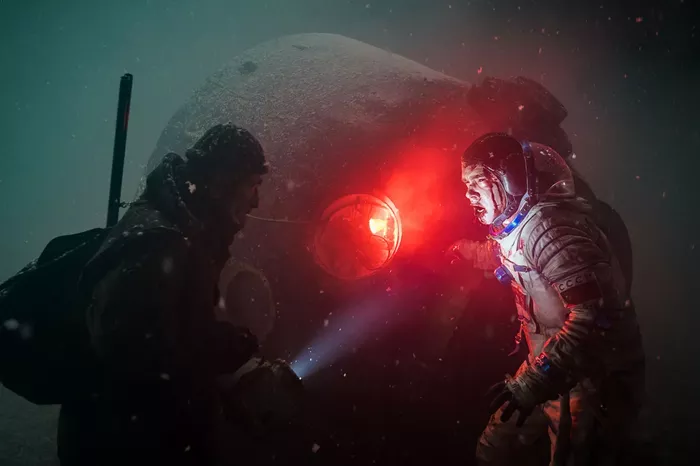
Egor Abramenko’s Sputnik is a tense sci-fi horror film about a cosmonaut who returns from space carrying an alien organism inside him. The film merges Cold War paranoia with emotional depth, creating a gripping psychological thriller.
Its detailed production design and strong performances elevate it beyond genre clichés. Sputnik reaffirms Russia’s ability to reinvent classic sci-fi horror through its own cultural and philosophical lens.
28. Attraction (2017)
Fedor Bondarchuk’s Attraction begins with an alien spacecraft crashing into Moscow. What follows is both an action spectacle and a reflection on humanity’s fear of the unknown. The film’s themes of empathy, xenophobia, and coexistence feel profoundly timely.
By combining modern effects with moral inquiry, Attraction continues the Russian sci-fi tradition of merging visual grandeur with ethical reflection.
29. Invasion (2020)
A sequel to Attraction, Invasion deepens its themes of identity and coexistence between species. It explores how understanding the other requires overcoming prejudice and fear. The narrative’s emotional focus distinguishes it from Western alien-invasion tropes.
Its humanistic tone and philosophical undertones make it more than a spectacle—it’s a parable of trust, love, and shared survival in an uncertain world.
30. The Space Between Us (2022)
The Space Between Us explores the psychological toll of long-distance space missions. Set in a near-future Russia, it examines isolation and memory as astronauts lose touch with Earth. The film emphasizes emotional realism over technical spectacle.
Through minimalism and silence, it conveys loneliness and existential wonder—continuing Russia’s meditative approach to cosmic storytelling.
31. Roadside Picnic (1972, Unfilmed Adaptation)
Although never fully realized on screen until Stalker, the early attempts to adapt the Strugatsky novel influenced Russian cinematic language. The concept of The Zone and moral ambiguity became cornerstones of later films.
Even as an unrealized project, it shaped the philosophical foundation of Russian science fiction, blending spiritual allegory with social critique.
32. The Hyperboloid of Engineer Garin (1965)
Based on Alexei Tolstoy’s novel, The Hyperboloid of Engineer Garin tells of a scientist who invents a deadly weapon. The story examines ambition, ethics, and power, predicting modern debates about technological responsibility.
Its noir-like atmosphere and sharp political undertones make it one of the most distinctive Soviet sci-fi thrillers of its time.
33. Moscow-Cassiopeia (1974)
This cheerful adventure follows Soviet teenagers selected to travel to a distant star system. Moscow-Cassiopeia captures the optimism of youthful exploration and collective effort. Its humor and sincerity give it lasting charm.
The film celebrates curiosity and teamwork, showing science fiction as a source of hope rather than fear. It remains a nostalgic favorite for Russian audiences.
34. Teens in the Universe (1975)
A sequel to Moscow-Cassiopeia, this film expands on the crew’s adventures. They encounter robots and philosophical dilemmas about individuality and freedom. Despite its light tone, it offers surprisingly deep reflections on human nature.
Its balance of optimism and moral inquiry makes it a valuable part of the Soviet sci-fi legacy—one that inspires both children and adults.
35. The Dawns Here Are Quiet (1972)
Though not strictly science fiction, The Dawns Here Are Quiet carries speculative symbolism about sacrifice and renewal. Its poetic imagery influenced how later Russian films treated heroism and memory in speculative contexts.
It reminds audiences that the core of all great stories—sci-fi or not—is the human heart’s endurance in adversity.
36. The Fourth Planet (1992)
This lesser-known film envisions the colonization of another world, blending existentialism and political allegory. The Fourth Planet explores the conflict between progress and preservation as humans encounter alien life.
Its minimalist design and bleak tone mark it as one of post-Soviet cinema’s hidden gems, examining how exploration can lead to both enlightenment and moral crisis.
37. The Living (2012)
Though primarily drama, The Living uses speculative elements to explore life after trauma. The narrative blurs the line between life and afterlife, science and faith, making it deeply philosophical.
It reflects the shift in modern Russian sci-fi toward intimate, psychological storytelling rather than grand cosmic spectacle.
38. The Ninth (2019)
Set in 19th-century St. Petersburg, The Ninth blends detective fiction and supernatural sci-fi. The film’s dark visual aesthetic creates a mood of mystery and metaphysical dread. It’s both historical and futuristic in spirit.
Through its alchemical imagery and tension, it revisits the eternal conflict between reason and belief—a central theme of Russian speculative art.
39. Mirror for a Hero (1987)
Konstantin Lopushansky’s Mirror for a Hero merges time travel and moral introspection. Two men relive the same day in the past, forced to confront guilt and responsibility. The film uses temporal loops as metaphors for self-discovery.
Its quiet, reflective tone connects it to the broader philosophical current of Russian sci-fi, where technology serves the purpose of human understanding.
40. The Black Lightning (2009)
Produced by Timur Bekmambetov, The Black Lightning is Russia’s answer to superhero sci-fi. A student discovers a flying car built in the Soviet era. Balancing humor and heroism, the film combines spectacle with emotional sincerity.
It bridges Western superhero tropes with Russian values of humility and moral strength, showing the genre’s universal appeal.
41. Cosmoball (2020)
Cosmoball is a futuristic sports adventure set on an intergalactic arena. It blends anime-inspired visuals with moral lessons about unity and perseverance. Its energetic pacing and vibrant world make it appealing to younger audiences.
Despite its fantasy elements, the film continues Russia’s cinematic tradition of combining entertainment with reflection on ethics and destiny.
42. The Blackout (2019)
In Egor Baranov’s The Blackout, mysterious events plunge the world into darkness. Only a small area of Eastern Europe survives. Combining action, horror, and speculative science, it depicts the struggle of survival against cosmic unknowns.
The film’s intense atmosphere and existential tone make it a fitting conclusion to this list. It encapsulates modern Russian sci-fi’s balance between spectacle and soul—a tradition stretching back a century.
Conclusion
The evolution of Russian science fiction cinema mirrors the country’s historical, philosophical, and artistic transformations. From the silent imagination of Aelita to the digital frontiers of Cosmoball, these films reflect humanity’s eternal desire to understand the universe and itself. Through visionary storytelling, Russian filmmakers turned the sci-fi movie plots into reflections of human existence—proving that the greatest journeys are always inward.
Sign in to leave a comment.