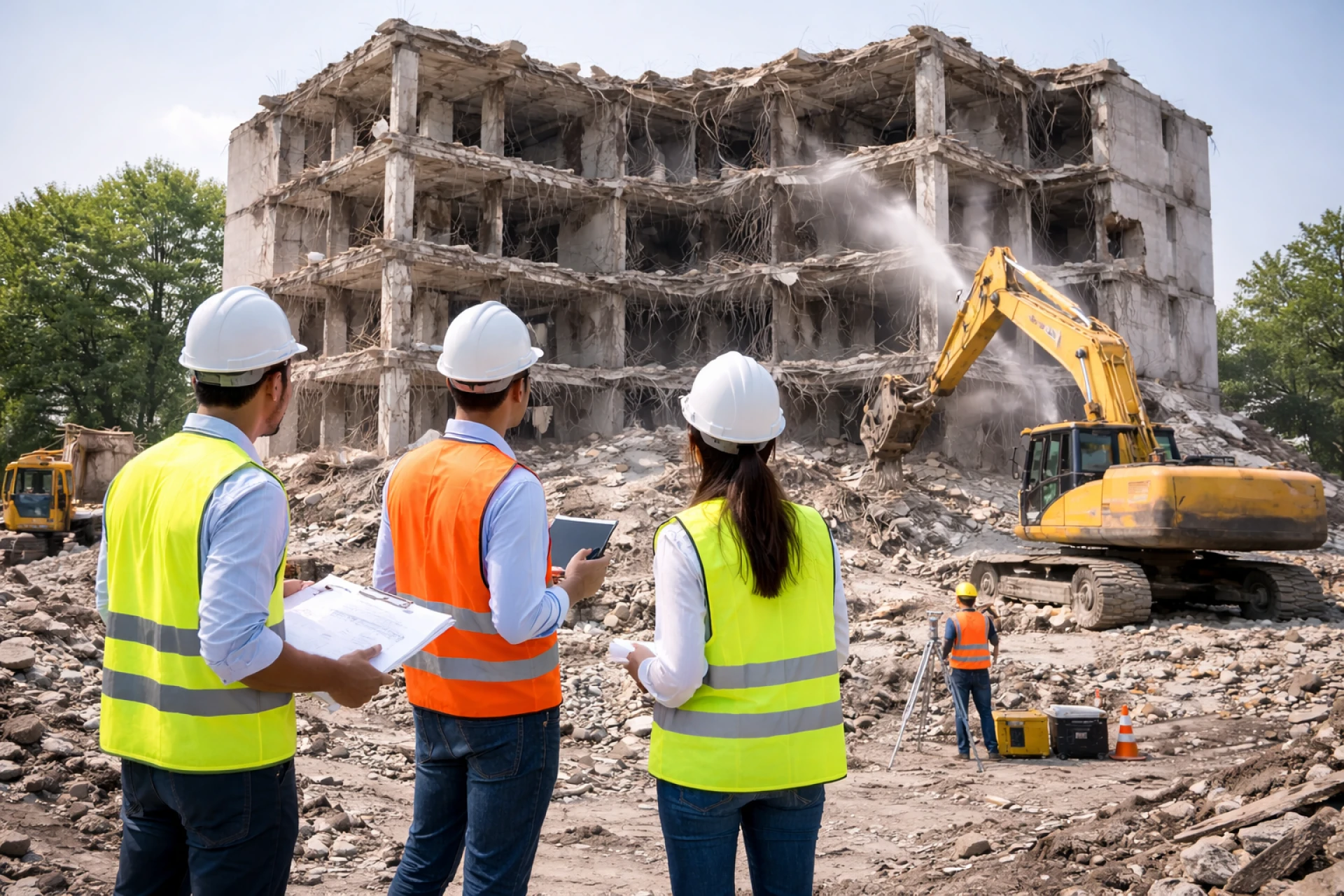

Controlled building removal is a highly technical process that demands precise engineering evaluation long before any machinery arrives on site. Proper pre-removal checks ensure structural safety, environmental compliance, and operational efficiency. Without these assessments, projects risk delays, hazards, and regulatory violations. Below are seven critical engineering checks required before any controlled structure dismantling begins.
1. Structural Integrity Assessment
Engineers first evaluate the building’s structural system — including load-bearing walls, columns, beams, and slabs. Understanding how weight is distributed helps determine the safest dismantling sequence. This assessment prevents sudden collapses and ensures each phase of removal remains controlled and predictable.
2. Material Composition Analysis
Identifying construction materials is essential. Concrete grade, steel reinforcement density, masonry type, and composite materials influence the dismantling technique. Hazardous materials such as asbestos or lead must also be detected early to plan safe handling and disposal procedures.
3. Site Surrounding Survey
Nearby structures, roads, utilities, and public zones are examined carefully. Engineers measure vibration tolerance levels and safe clearance distances. In dense urban zones, this survey becomes critical to avoid collateral structural damage and ensure public safety throughout the operation.
4. Utility Disconnection Verification
Before removal begins, all electrical, gas, water, sewage, and telecom connections must be safely disconnected. Engineering teams verify isolation certificates to eliminate risks such as fire outbreaks, flooding, or electrocution during dismantling activities.
5. Equipment Load & Access Planning
Heavy machinery requires stable ground access and operational space. Engineers calculate soil bearing capacity, entry routes, crane radius clearance, and equipment load distribution. Proper planning ensures machines operate safely without causing ground failure or access obstructions.
6. Environmental & Dust Control Planning
Controlled removal must comply with environmental regulations. Engineers design dust suppression systems, debris containment plans, and noise reduction measures. This step is especially important in populated or commercial districts where air and sound pollution must remain within permissible limits.
7. Risk Methodology & Sequence Design
Finally, engineers develop a step-by-step dismantling methodology. This includes collapse direction planning, phased removal sequencing, emergency response protocols, and worker safety systems. Professional expertise — such as that provided by a demolition company saudi arabia — ensures these engineered plans align with regional regulations and international safety standards.
Conclusion
Engineering checks form the backbone of every successful controlled building removal project. From structural analysis to environmental safeguards, each step minimizes risk while maximizing efficiency. Careful planning not only protects workers and surrounding assets but also ensures the site is cleared responsibly and ready for future development.










Sign in to leave a comment.