
Do you want to become a UI/UX Designer? You've come to the right place.
People want to become UI and UX Designers for a variety of reasons. Many people are drawn to the creative aspects of the job, as it allows them to use their imagination and creativity to design user interfaces and user experiences that are visually appealing and functional. Others are attracted to the challenge of creating user-friendly and effective designs, as this can be a complex and rewarding process.
Additionally, many UI and UX Designers enjoy the opportunity to work with cutting-edge technologies and stay up-to-date with the latest trends in the design industry.
This article will show you 7 simple steps to help unlock UX design's secrets. We will also provide you with valuable resources that will give you the skills you need to become a successful and professional UX and UI Designer.
So, what are you waiting for? Let's get started!
Before that, let’s understand the exact meaning of UI and UX, respectively.
UI and UX Design-Difference
There needs to be more clarity around the differences between UI and UX design. UI design stands for user interface design and refers to the look and feel of the interface. This includes the layout, colors, text, and overall visual appearance.
On the other hand, UX design- for user experience design- refers to the overall experience of using the interface. This includes how easy it is to use, how intuitive, and how satisfying the experience is.
In short, UI design is about how the interface looks, while UX design is about how it works. UI design can be thought of as the surface of the interface, while UX design is concerned with more profound levels of functionality and usability.
According to Forester research, a more robust UX design may increase a website's conversion rate by up to 400%, while good UI can improve it by up to 200%. If a website has an excellent mobile UX design, about 74% of visitors will come back.
UX and UI Designer- What Do They Do?
A UI/UX Designer is responsible for creating interfaces and user experiences that are both adequate and appealing to users. They work closely with developers and other stakeholders to provide that the final product meets the users' needs. UX and UI Designers use various tools (Sketch, Adobe XD, Figma, UXPin, MockFlow, Justinmind), including wireframing and prototyping, to create high-quality designs.
Is it tricky to become UI/UX Designer?
It's typical to be trying to figure out where to start while learning UX design. Finding your first job in UX design might be challenging due to the potent demand in the industry, particularly if you're new to the field.
The good news is that earning money in UI/UX design does not necessitate a drawn-out and challenging degree program. Many people who lack college degrees sometimes enroll in boot camps and get certificates from UI/UX organizations as a substitute. You'll learn all you need to know in months to become a UX designer.
Making a plan is essential to pursuing a career in UX design. If you put in more effort, network strategically, and carefully review your portfolio, landing your first UX job will be accessible.
Important:- Are you wondering for UX and UI Design Company to make an appealing design of your idea? Here at Quokka Labs, we combine our years of expertise and dedicated team of UI/UX to create an attractive and easy navigation design. So, what to wait for? Hire UI/UX Designers and transform your idea into reality!
Guide- 7 Standard Steps to Become UX and UI Designer?
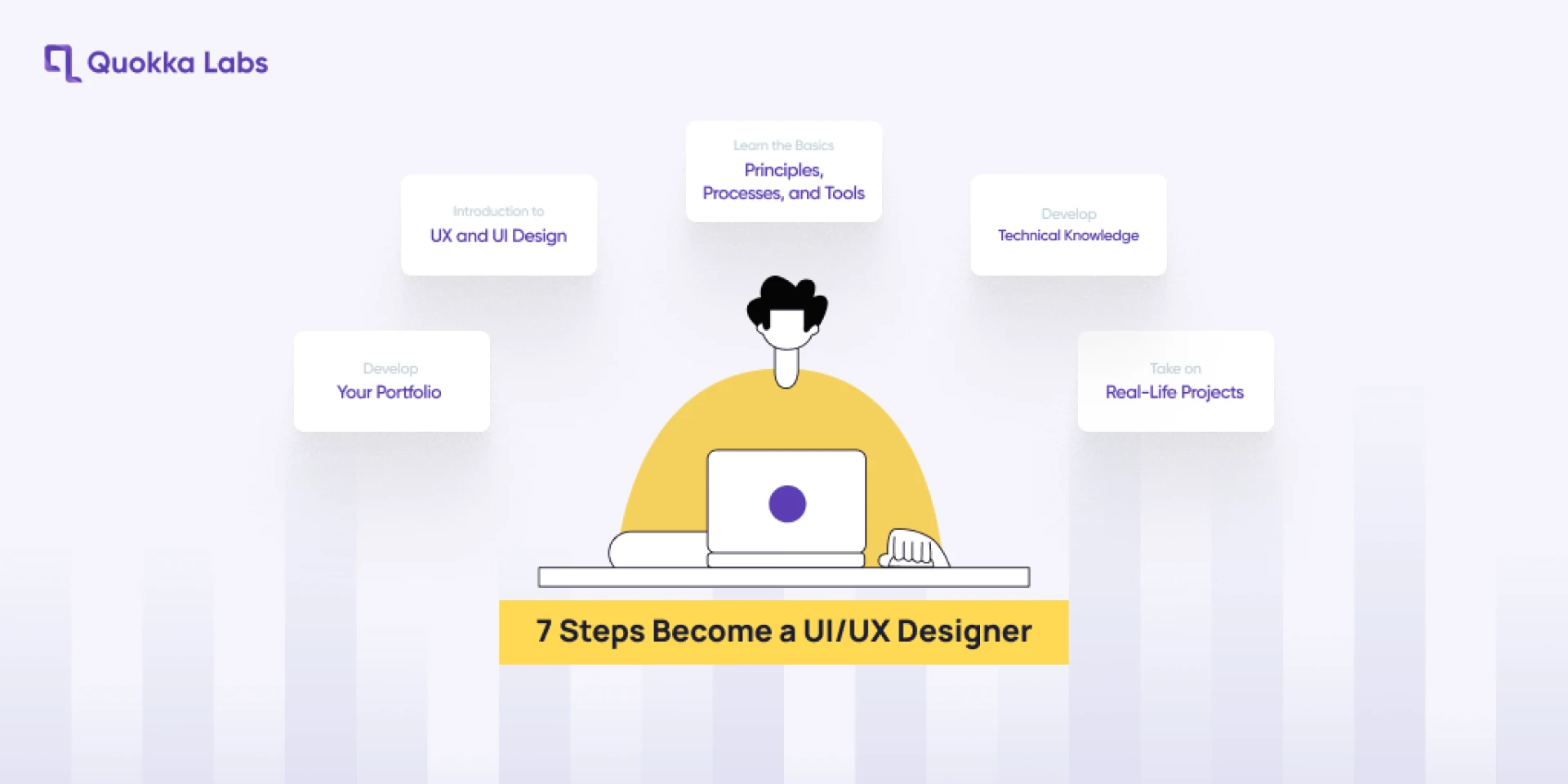
If you're interested in becoming a UX designer, here are seven steps to help unlock UI/UX design's secrets.
Introduction to UX and UI Design
If you're interested in design and want to create websites, mobile app designs, and user interfaces that are appealing and effective, consider becoming a UX/UI designer. UX design is a specialized field that focuses on the user experience of a website or application. At the same time, UI design focuses on the look and feel of the interface.
UX and UI Designers work with teams of developers, project managers, and business analysts to build designs that are not just visually appealing but also easy to use. They must consider the user's needs and preferences, as well as the constraints of the project.
Learn the Basics: Principles, Processes, and Tools
If you want to become a UX and UI Designer, you need to learn the basics: principles, processes, and tools.
UX design is all about solving problems. You must understand human-centered design principles to develop solutions that meet users' needs.
You also need to be familiar with the design process, which includes research, ideation, prototyping, and testing. And finally, you need to know how to use the right tools for the job, such as Sketch, Adobe XD, Figma, etc.
Develop Your Portfolio
A portfolio is essential when seeking a UX design job. It is your chance to show off your skills and creativity and also a way to introduce yourself to potential employers.
When putting together your portfolio, include samples of your best work. (sample of best work includes the entire explanation of your worked projects) Make sure to highlight any projects in which you took a lead role, as this will show that you can take control and drive the design process.
In addition, be sure to write a brief explanation of each project that you include. This will give the viewer a better understanding of your work and how it fits into the overall design process.
Develop Technical Knowledge
As a UI/UX Designer, you must understand Javascript, HTML, and CSS. While you don't necessarily need to be able to code from scratch, it's essential that you know the basics of these languages and can read others' code. It would be best if you also understood various web technologies and frameworks to create a compelling user experience for the audience. For example, learning about libraries like Bootstrap or React can be essential for making the best user experience possible.
Take on Real-Life Projects
Now that you’ve learned the basics of UI/UX design, it’s time to get out there and put your skills to work. Find projects you can work on for real clients. This will allow you to get some hard-earned experience and put your skills to the test. You may have to do some volunteer work or even offer discounted rates while you build your portfolio, but it’ll be worth it in the end. You can leverage your experience when applying for jobs or pitching new clients in the future.
Networking: Making Connections in the UX Community
Networking is important in becoming a UI/UX Designer. It is essential for any job, and for UX design, it can make all the difference. Connecting with experienced professionals in the industry will help you develop your skills and find job opportunities.
You can attend events, engage with industry professionals on social media, or join a web design forum to get started. Connecting with designers already working in the field will allow you to learn from their experience and pick up valuable advice on succeeding.
Find Junior or Entry-Level Roles and Apply to Them!
To become UX and UI Designer, you must build your portfolio. The best way to do that is by starting small and working your way up. To get your foot in the door, apply for junior-level roles at companies you admire and want to work for, like Quokka Labs. These can be found on job portals like LinkedIn, Naukari.com, Cut short, Indeed, Instahyre, Monster, Apna, Monster, or directly with companies via their website's careers page.
However, be prepared for rejection—even if you’re qualified for the role, it doesn't mean they’ll hire you immediately.
Final Thought!
In conclusion, becoming a UX and UI Designer is a challenging task. You need to have a background in design and technology and the determination to learn everything about these fields. However, if you follow these steps and stick with them long enough, you will have no trouble getting your dream job!











Sign in to leave a comment.