

Adi Kailash Yatra is indeed one of the most emotional and spiritual pilgrimages of Lord Shiva believers. Located in the very picturesque Himalayas of Uttarakhand, Adi Kailash, or Chhota Kailash, is unparalleled for its religious significance to Hinduism. It is said to be the sacred home of Lord Shiva with Goddess Parvati and her two sons, Lord Ganesha and Lord Kartikeya. It is not a terrestrial path but of emotions and spirituality,but one which ends with meeting God.
The Holy Significance of Adi Kailash
Adi Kailash is one of the Panch Kailash, or the five Kailash peaks. It is the second Dham of all, as per myth, and represents Lord Shiva's everywhere presence. The hill is a replica of the real Mount Kailash in Tibet and also known as its echo on the Indian side of the Himalayas. The location is very peaceful and features a vibrational energy, which makes it a spiritual center for self-realization and meditation.
Hindu lore speaks of Ravana, a favorite disciple of Lord Shiva, who traveled all the way from the south to pray here at Adi Kailash. Enchanted by his devotion, Lord Shiva blessed him with ten heads and twenty hands. The Pandavas, according to tradition, when they were in exile, spent their days here in the presence of sage Vyasa and meditated in an attempt to gain spiritual wisdom. All such historical connections confer Adi Kailash a position that is where divinity and mythological extensions so euphorically met.
The Divine Duo—Adi Kailash and Om Parvat
Pilgrims on the Adi Kailash Yatra are also fortunate enough to visit the sacred Om Parvat. While Adi Kailash and Om Parvat share the same Pithoragarh district, they are two separate divine locations. Here at Om Parvat, snow itself constitutes the holy symbol "ॐ" (Om) of its very own self—a little bit of heavenly magic that has attracted human beings as pilgrims and even travelers to there. Out of eight such "Om" symbols of the world, this one is just one that has been found till now.
On Adi Kailash Yatra, devotees also have darshan of the other three sacred peaks—Brahma Parvat, Annapurna Parvat, and Naag-Naagin Parvat. These are sacred peaks contributing religiosity to pilgrimage.
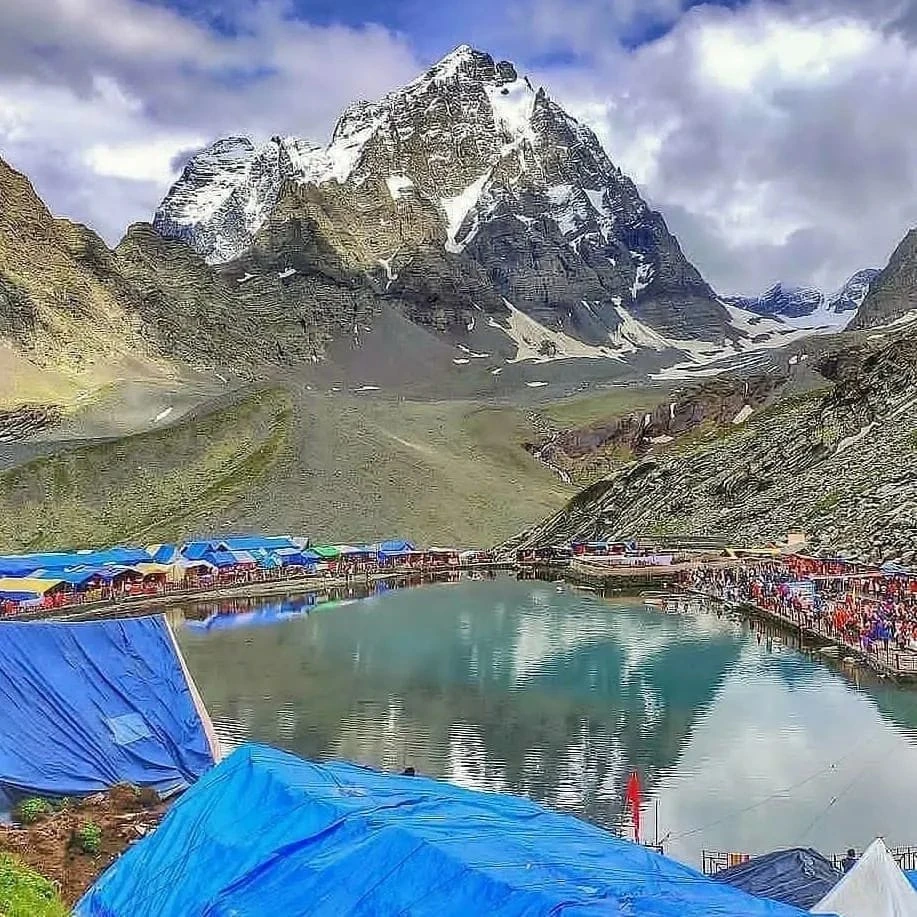
Parvati Sarovar, or Gauri Kund, is where the devout bathe in the holy waters at the foot of Adi Kailash to cleanse the soul of sin. One is able to correct one's karma and mend the heart and mind due to the sacred energy that pervades here.
A Replica of Mount Kailash
Scripturally also known as the twin brother of Mount Kailash, Adi Kailash stands at an altitude of 5,945 meters (19,505 ft) above sea level. To catch sight of the white spire cloud-shrouded and the peaceful Parvati Sarovar at its foot is in itself a miracle. The majority of pilgrims feel that the walk to Adi Kailash is as holy as Mount Kailash Yatra in Tibet, especially for those who are unable to go on the trek to the Tibetan plateau.
Om Parvat, however, is 5,590 meters (18,340 ft) tall and is seen on the same yatra. Viewing the natural "Om" symbol reversed on the mountain is akin to a message of the gods hand-painted upon nature's canvas.
Best Time to Visit Adi Kailash
One can undertake the Adi Kailash Yatra in May and June or September and October when the weather is fine and roads are open. The weather in these months is not too cold or too hot, and driving and trekking are comfortable. It should be avoided in July and August when it rains incessantly and landslips occur every day.
How to Reach Adi Kailash
By Air: The closest airport is Pantnagar Airport in Uttarakhand. Since it is less busy for airlines, flyers do not prefer to go from here and want to get a flight from Indira Gandhi International Airport, New Delhi, which is conveniently connected.
By Rail: The closest railway stations are Kathgodam and Haldwani. Both the stations are well connected with Delhi and other North Indian cities.
By Road: Feasible via overnight road bus from Delhi to Kathgodam or Haldwani. The road journey goes on till Dharchula, the last town on the bank of the Kali River marking Nepal's border.
Tour operators offer full Adi Kailash Yatra packages with transport, stay, meals, and essential permits. Pilgrims are normally picked up early in the morning at Haldwani or Kathgodam for driving till Dharchula.
Trekking and Route Information
Until 2019, Adi Kailash Yatra would involve rigorous 200 km trekking through hill ranges. But as the new road is made now, now one can drive right up to Jolingkong and Nabidhang, and thus pilgrimage is getting easy for the devotees.
A 4 km easy walk from Jolingkong takes one to sacred Parvati Sarovar and Chhota Kailash Temple, where prayers are chanted and blessings are achieved. A walking option of 2 km to Gauri Kund, one of the yatra's holy spots, is also available.
The Adi Kailash trek takes one through serene valleys, green forests, and Indo-Nepal border hamlets, with a glimpse of Himalayan village life.
Age Limit and Physical Health
The age group of 5 to 80 years is the age group of Adi Kailash Yatra. The yatri must be hale and hearty and should not have any serious disease because weather at high altitude is exhausting. There are Medicare facilities available in Yatra, but good physical condition and health are prerequisites beforehand.
Conclusion
Adi Kailash Yatra is a real pilgrimage of rebirth, spirituality, and belief. It forces you to leave all your materialistic problems behind and immerse yourself in the divine energies of Lord Shiva. A spiritual pilgrim, a tourist, or a Mahadev bhakt, Adi Kailash provides you with an experience that cannot be spoken.
Standing before the sacred mountain and shining crystal lake, you breathe in the eternal grace of Lord Shiva—grace that floods your heart with peace, vitality, and divine benediction.










Sign in to leave a comment.