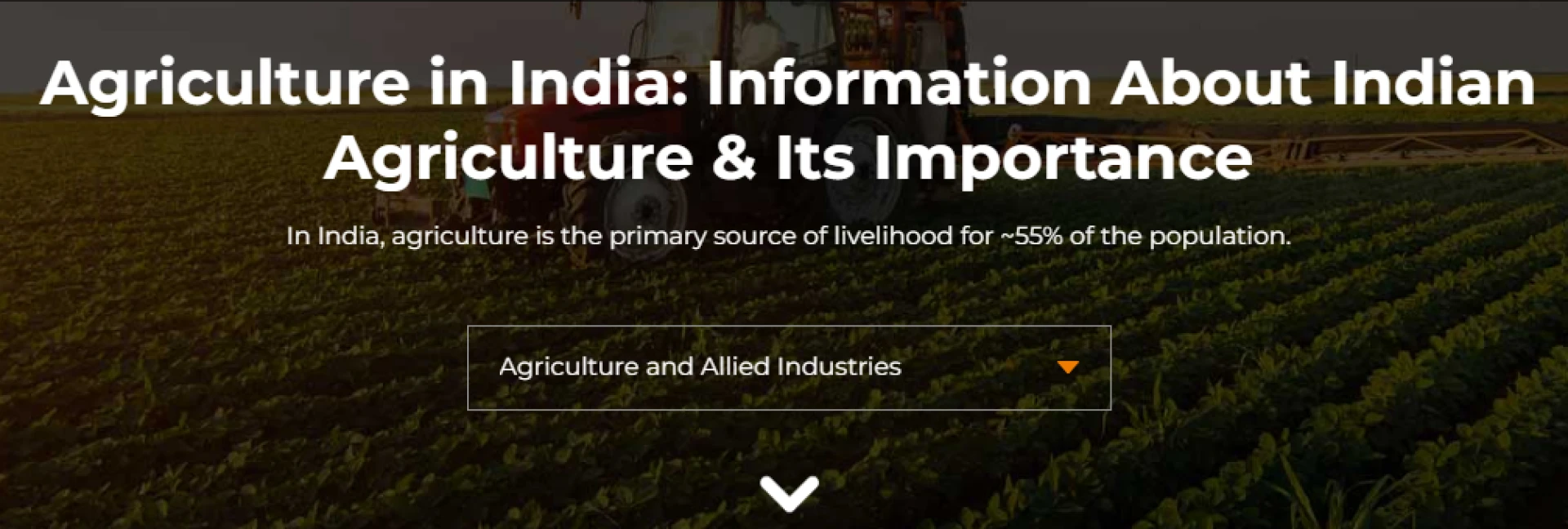

Agriculture remains the backbone of the Indian economy, playing a vital role in employment, food security, and overall economic development. With a rich diversity of crops, favorable climatic conditions, and continuous policy support, India has emerged as one of the world’s leading agricultural producers.
Importance of Agriculture in India
Agriculture is a primary source of livelihood for nearly 55% of India’s population, making it one of the largest employment-generating sectors in the country. Beyond employment, the sector contributes significantly to the nation’s economic stability and rural development.
India holds a strong global position in agriculture. It is the largest producer of milk, pulses, and spices, and ranks among the top producers of rice, wheat, fruits, vegetables, and cotton. This dominance highlights the country’s critical role in ensuring global food supply and agricultural trade.
Contribution to the Economy
Agriculture and allied sectors contribute around 17.8% to India’s GDP, underlining their importance in the national economy. The sector has shown consistent growth, supported by rising production levels and increasing exports.
India’s agricultural exports have reached record levels, crossing Rs. 4.4 lakh crore (US$ 51+ billion) in FY25. This growth is driven by high demand for Indian products such as rice, spices, marine products, and processed foods across global markets.
Rising Production and Market Growth
Agricultural production in India has witnessed remarkable growth over the years. Foodgrain production is projected to reach a record 3,539.59 lakh metric tonnes in 2024-25, reflecting improved productivity and better farming practices.
Horticulture is another rapidly expanding segment, with output increasing significantly over the past decade. Additionally, sectors such as fisheries and dairy continue to strengthen India’s agricultural base and export potential.
The food processing industry, which accounts for about 32% of the total food market, is also expanding rapidly. It plays a key role in value addition, reducing wastage, and generating employment across the supply chain.
Government Initiatives and Investments
The Indian government has introduced several initiatives to boost agricultural productivity and farmer income. Programs focused on irrigation, crop insurance, digital agriculture, and infrastructure development are helping modernize the sector.
Investments through Foreign Direct Investment (FDI) have also supported growth. The agriculture services and food processing sectors have attracted significant inflows, encouraging innovation and private participation.
Schemes promoting farmer-producer organizations, agricultural infrastructure, and supply chain development are improving market access and efficiency.
Technology Transforming Agriculture
Technology is reshaping Indian agriculture. Tools such as artificial intelligence (AI), drones, blockchain, and geographic information systems (GIS) are being used to enhance productivity and transparency.
The rise of agritech startups and digital platforms is enabling farmers to access real-time data, better pricing, and improved farming techniques. The smart agriculture market in India is expected to grow rapidly, driven by increasing adoption of precision farming technologies.
Opportunities in the Agriculture Sector
India’s agriculture sector offers vast opportunities for growth and investment:
- Expansion of food processing and value-added products
- Growth in organic and sustainable farming
- Increasing export demand for agricultural commodities
- Development of cold storage and logistics infrastructure
- Emerging sectors like seaweed farming and agri-tech innovation
These opportunities are expected to drive long-term growth and create new income sources for farmers.
Challenges in Indian Agriculture
Despite its strengths, the sector faces several challenges:
- Dependence on monsoon and climate variability
- Fragmented land holdings
- Limited access to modern technology in rural areas
- Supply chain inefficiencies and post-harvest losses
Addressing these issues is crucial for ensuring sustainable and inclusive growth in agriculture.
Future Outlook
The future of agriculture in India looks promising, with the sector expected to grow steadily over the next decade. Increasing demand for food, supportive government policies, and technological advancements will continue to drive growth.
With a strong focus on sustainability, innovation, and infrastructure development, India is well-positioned to become a global leader in agriculture and food production.













Sign in to leave a comment.