

The next decade of software development isn’t only about better code. It’ll be defined by who controls the systems that write, test, ship, and maintain that code.
Businesses worldwide are already feeling it. Budgets are tightening. Delivery cycles are shrinking. Talent expectations are shifting. And boards are asking the same question:
“What does AI in software engineering US really mean for our roadmap, hiring plan, and margins?”
This isn’t about hype. It’s about operating models. Below, we’ll break down what the next ten years are likely to look like, from automation and skills to cost structures and competitive positioning.
What’s the role of AI in custom software development?
The promise of AI in software development is simple: writing code faster. But for a custom software development project, speed is a “double-edged sword.”
A 2025 study from METR highlights a critical productivity paradox. While it shows developers feel 20% more productive using AI tools, the cycle is actually 19% slower, especially for complex architectures. This gap between perception and reality happens due to “babysitting” the AI tools to refine their “almost correct outputs.”
The risk: hidden cost of cheap code
AI can surely increase productivity, but it also poses significant risks.
Using LLM (large language model) tools can help you generate an API endpoint or React component. It might optimize for syntactic correctness, but not architectural integrity.
If you find teams spending 40% of their time fixing AI-generated technical debt, there’s no “efficiency gain” from your end.
Will AI replace software engineers in the US?
Short answer? NO.
Long answer? It’ll replace certain types of development work.
The AI vs. Human debate is no longer the main factor. The real story is the “polarization of the US tech job market.”
What’s disappearing is the middle ground: the demand for “code executors.” However, the demand for “technical strategist” remains high.
| Task Category | Automation Level | Strategic Value |
| Unit Testing & Scaffolding | 90% (Automated) | Low |
| Legacy Refactoring | 70% (Assisted) | Medium |
| Security Modeling | 20% (Assisted) | Very High |
| System Architecture | 10% (Human-Led) | Critical |
Most automation trends in web dev focus on unit test scaffolding, refactoring repetitive legacy code, integrating APIs, and code generation. However, human expertise is still vital for trade-off analysis, security modeling, system architecture negotiation, and regulatory interpretation.
How will AI change the future of development?
The fundamental shift is that AI has moved from a "helpful assistant" to a "core collaborator" in the development lifecycle.
According to an independent study, AI-assisted coding in the US surged from 5% in 2022 to 29% of all new code functions, fundamentally altering how engineers spend their time.
The rise of agentic workflows
AI agents are moving beyond simple code completion to managing multi-step implementation tasks. Instead of writing single functions, developers now coordinate "agentic" systems that can independently handle debugging, documentation, and testing over several days.
What’s changing?
- Agents now perform autonomous "self-healing" by detecting production errors and proposing hotfixes before humans intervene.
- Developers are shifting into "Orchestrator" roles, managing specialized agents for architecture, security, and QA.
What CTOs should focus on?
Invest in agent orchestration frameworks and standardize "prompt governance" to ensure that autonomous agents follow internal compliance and security protocols without constant manual hand-holding.
Shift from syntax to systems architecture
As AI automates routine coding, the bottleneck of software engineering is moving from "writing lines" to "validating logic." The next decade will reward engineers who can design complex, modular systems that AI can then fill in with high-fidelity code.
What’s changing?
- Manual boilerplate generation is becoming obsolete, replaced by instant, AI-driven scaffolding based on high-level system prompts.
- The primary value of an engineer is now their ability to challenge and verify AI output rather than generating it from scratch.
What CTOs should focus on?
Prioritize seniority and architectural literacy in your team. If your engineers can’t reason about failure modes or data flow, AI-generated speed will only accelerate the accumulation of hidden technical debt.
Preemptive security and automated compliance
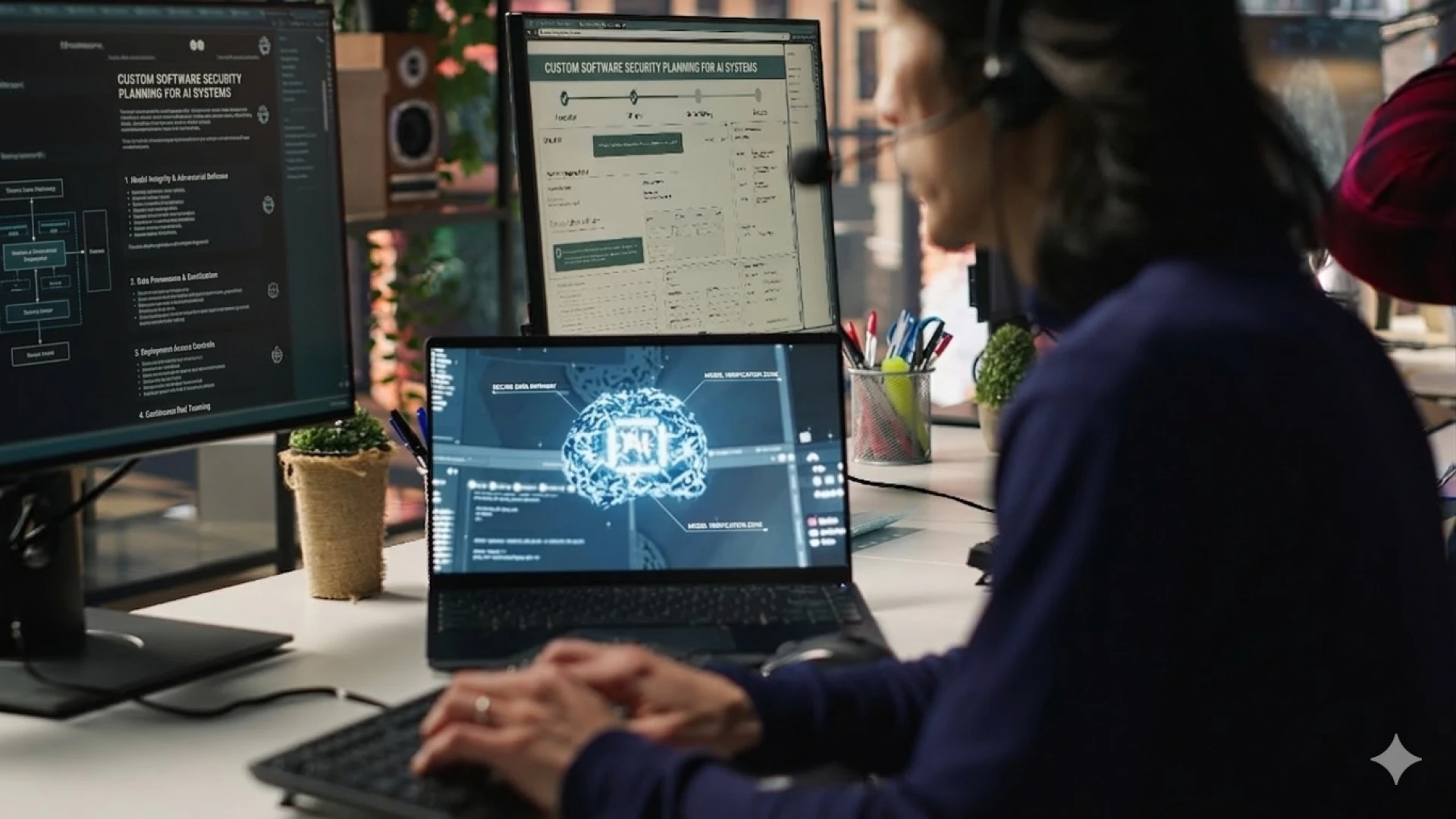
Security is no longer a post-development check but a real-time, AI-driven filter. LLM tools can now scan for vulnerabilities and dependency risks during code generation, effectively "moving security left" to the start of the cycle.
What’s changing?
- AI-native security platforms now identify and block insecure patterns in real-time as developers write or prompt code.
- Automated compliance bots verify that every new feature complies with regulatory standards such as GDPR and HIPAA throughout the CI/CD pipeline.
What CTOs should focus on?
Embed AI security gates directly into your developer environment. Relying on traditional manual security audits in an AI-accelerated world will create a dangerous backlog that stalls your release cycles.
How should software development companies adapt to these changes?
The next decade for custom software development is moving from a "factory" model to a "strategic advisor" model. As the cost of raw code trends toward zero, the value of custom software lies in its ability to navigate complex business logic and mitigate the risks of AI-generated output.
Companies that continue to sell "man-hours" will struggle as clients demand the efficiency gains that AI now makes possible.
Challenge 1: Managing AI-driven technical debt
AI tools prioritize functional output over long-term maintainability, which can lead to fragmented codebases.
Solutions:
- Implement mandatory AI-output audit checklists to verify code quality.
- Track the Refactor-to-Feature ratio as a primary KPI for engineering teams.
Challenge 2: The "Junior Mentorship Gap"
As AI automates entry-level tasks that juniors traditionally used to learn, the pipeline for future senior talent is breaking down.
Solutions:
- Redesign junior roles to focus on AI-assisted debugging and verification rather than raw creation.
- Pair juniors with senior architects specifically to review and "critique" AI-generated system designs.
Challenge 3: Transitioning to outcome-based pricing
Traditional hourly billing becomes a "race to the bottom" when AI makes tasks 50% faster.
Solutions:
- Shift client contracts toward fixed-price milestones based on business value.
- Market your services as "System Reliability and Governance" rather than just software delivery.
For CTOs looking to navigate this transition without sacrificing quality, partnering with a forward-thinking custom software development company, like Unified Infotech, can be a strategic move. They’re known for their years of expertise in blending AI-driven speed with the rigorous architectural oversight required for high-stakes custom software projects.
What will be the reality of US tech job markets in 2030
The 2030 job market will prioritize judgment over syntax, as workers are expected to see nearly two-fifths of their existing skill sets become outdated.
| Software Engineer Skill Trends | 2026 Importance | 2030 Importance |
| Syntax & Language Mastery | High | Low |
| Prompt Engineering & Orchestration | Medium | High |
| Systems Architecture & Design | High | Very High |
| AI Output Verification | Medium | Critical |
| Cybersecurity Literacy | High | Critical |
| Cloud Cost & Token Economics | Low | Medium |
Given this scenario, CTOs should look beyond the capabilities of their future developers and instead focus on the following to future-proof their pipeline:
- Can the candidate explain the "why" behind an AI-generated solution?
- How do they handle "Almost-Right" code?
- Do they have "Systems Thinking" intuition?
The ending note
The conversation about AI in software engineering US has long been dominated by fear and hype. But the reality is starting an era of unparalleled leverage.
The future of software development in the USA belongs to the "Architecture-First" process. It belongs to businesses that treat AI as a high-powered engine that requires a world-class braking system (Governance) and a master navigator (Senior Talent).
The winners of 2030 won't be the ones who wrote the most code, but the ones who built the most trustworthy systems.













Sign in to leave a comment.