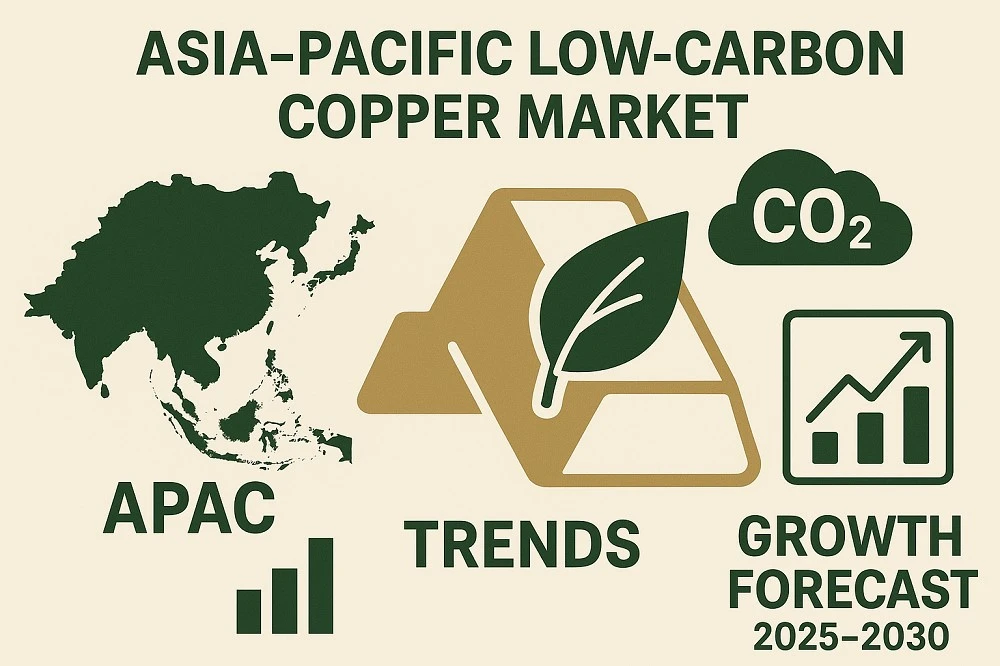
The Asia-Pacific Low-Carbon Copper Market is experiencing robust growth, driven by increasing environmental regulations, the global push for decarbonization, and the rising demand for sustainable raw materials across industries. As nations strive to meet net-zero emissions goals, low-carbon copper has emerged as a critical material for the clean energy transition and green infrastructure development.
According to BISResearch, the Asia-Pacific low-carbon copper market is projected to reach $101.49 billion by 2033 from $46.35 billion in 2023, growing at a CAGR of 8.15% during the forecast period 2023-2033.
What are the key drivers of the low-carbon copper market in Asia-Pacific?
- Decarbonization and Net-Zero Goals: Countries across Asia-Pacific are implementing strict carbon reduction policies. Copper’s crucial role in electric vehicles (EVs), wind turbines, and solar panels makes it indispensable in low-carbon initiatives.
- Growing EV Market: With China leading the global EV revolution and India rapidly expanding its electric mobility infrastructure, demand for low-carbon copper in battery and motor applications is surging.
- Sustainable Construction: Green building initiatives and eco-conscious real estate development are pushing the use of environmentally friendly construction materials, including low-carbon copper in wiring and plumbing systems.
- Technological Advancements: Innovations in copper recycling and green smelting technologies are improving production efficiency and reducing environmental impact, making low-carbon copper more accessible and cost-effective.
Regulatory Push and Technological Innovation Fueling Demand for Low-Carbon Copper
In response to tightening environmental regulations, industries are ramping up investments in low-carbon copper to meet compliance standards and achieve corporate sustainability goals. Advances in copper production technology—particularly those that enhance efficiency and reduce emissions—are playing a key role in driving market growth. Additionally, government incentives aimed at promoting green practices and innovative solutions are further accelerating the adoption of low-carbon copper across sectors
Request A Free Sample on the APAC Low-Carbon Copper Market!
What challenges does the Asia-Pacific region face in low-carbon copper adoption?
- High Production Costs: Manufacturing low-carbon copper involves advanced technologies and renewable energy inputs, which can raise production costs.
- Limited Awareness: In developing markets, there is a lack of awareness and understanding of the long-term benefits of low-carbon materials.
Sustainable Growth Ahead: Low-Carbon Copper Key to APAC’s Green Future
As the Asia-Pacific region continues to prioritize environmental responsibility and sustainability, the low-carbon copper market is poised for significant growth. This shift is vital for advancing sustainable development goals, enhancing supply chain resilience, and meeting the increasing demand for eco-friendly materials across key sectors such as renewable energy, electronics, and construction.
Who are the major players in the Asia-Pacific low-carbon copper market?
- LS MnM Inc.
- JX Metals Corporation
- Zijin Mining Group Co., Ltd.
- BHP
Future Outlook
From 2023 to 2033, the Asia-Pacific Low-Carbon Copper Market is projected to grow at a CAGR exceeding 8.15%, driven by ongoing policy support, private sector investments, and technological innovation. Companies focusing on transparency in carbon accounting, circular economy practices, and collaboration with regional governments are likely to gain a competitive edge.
Conclusion
The Asia-Pacific Low-Carbon Copper Market is on a transformative path, aligning economic development with environmental sustainability. As the region continues to lead in the adoption of green technologies, the demand for low-carbon copper is set to rise, offering immense opportunities for manufacturers, investors, and policymakers dedicated to building a greener future.











Sign in to leave a comment.