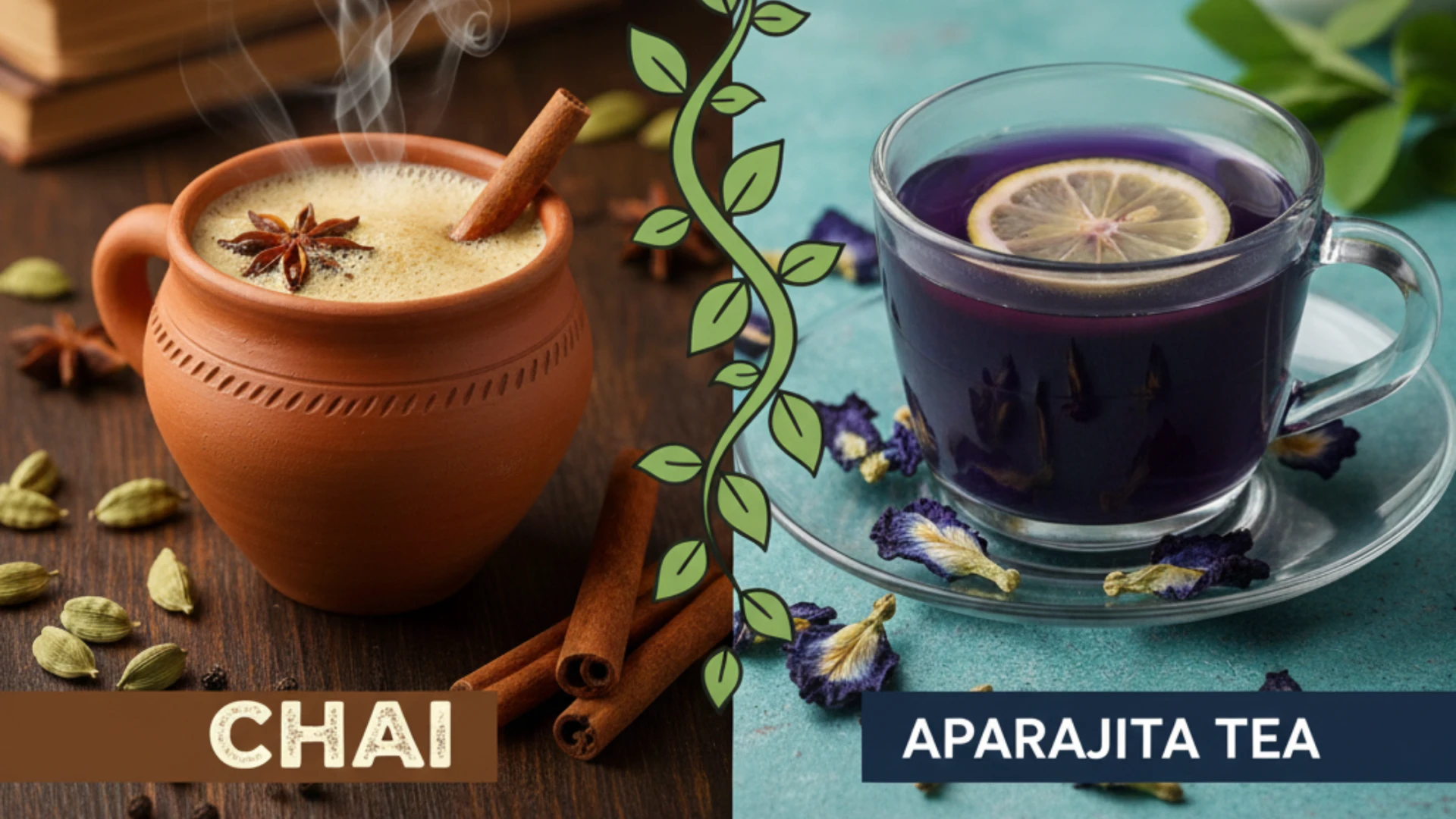

Chai is rich, sweet and energising, while aparajita tea is light, colourful and calming. Understanding these differences helps you decide which drink fits better into your daily routine.
What is Traditional Chai?
Traditional chai is usually made with black tea leaves boiled in water and milk along with spices such as ginger, cardamom, cloves and cinnamon. Sugar or jaggery is often added, giving chai its familiar sweet, creamy taste. This combination makes chai feel satisfying and comforting, especially in the morning or on cool days.
Because chai is based on black tea, it naturally contains caffeine. This can help with alertness and focus but may also lead to restlessness or sleep issues in some people, especially if taken late in the day. The milk and sugar also mean each cup carries a noticeable amount of calories.
What is Aparajita Tea?
Aparajita tea is made by steeping the dried blue petals of the aparajita plant in hot water. These petals, known as aparajita flower, colour the drink a deep blue and give it a mild, earthy flavour. The tea is usually taken plain or with simple additions like lemon or a little honey.
The same blossom is widely known as butterfly pea flower in English recipes and wellness products. Because the drink uses only water and petals, aparajita tea is naturally free from caffeine and very low in calories when taken without sugar. This gives it a lighter, gentler profile than traditional chai.
Taste and Drinking Experience
Chai offers a strong, spiced flavour with a creamy mouthfeel from milk. It often feels like a small snack because of its richness and sweetness. The warm spices also bring a sense of comfort and nostalgia, which is why many people link chai with family time and relaxed conversations.
Aparajita tea, in contrast, has a softer, cleaner taste. It does not coat the tongue or feel heavy afterward. The bright blue colour from butterfly pea flower makes it visually striking, and adding lemon to turn it purple adds a bit of fun. This makes aparajita tea feel special even though the ingredients are simple.
Health and Lifestyle Angle
From a health point of view, chai can still be part of a balanced lifestyle when enjoyed in moderation with less sugar and milk. However, frequent large cups can add up in terms of calories and caffeine. For people watching their weight or dealing with sleep issues, this can become a concern.
Aparajita tea suits those who want a lighter option. A plain cup contributes almost no calories, making it an easy swap for sugary drinks. Its caffeine‑free nature means it can be taken in the afternoon or evening without disrupting sleep. The warm liquid also supports hydration, which is important for energy and skin health.
When to Choose Which Drink
Morning is often chai time, especially if you enjoy the energy boost and the emotional comfort it provides. Keeping the serving modest and not overly sweet helps it fit better into a health‑conscious routine.
Later in the day, aparajita tea usually becomes the better choice. A cup during work breaks or after dinner offers warmth and calm without overstimulating the body. The gentle taste and striking colour from aparajita flower make it satisfying even without milk or heavy sweeteners.
Finding a Balance
You do not have to choose one drink forever. A practical approach is to enjoy traditional chai when you want a rich, energising cup and use aparajita tea when you need something light, soothing and colourfully refreshing. In this way, aparajita tea complements chai rather than competing with it, giving you flexible options that match both tradition and modern wellness needs.











Sign in to leave a comment.