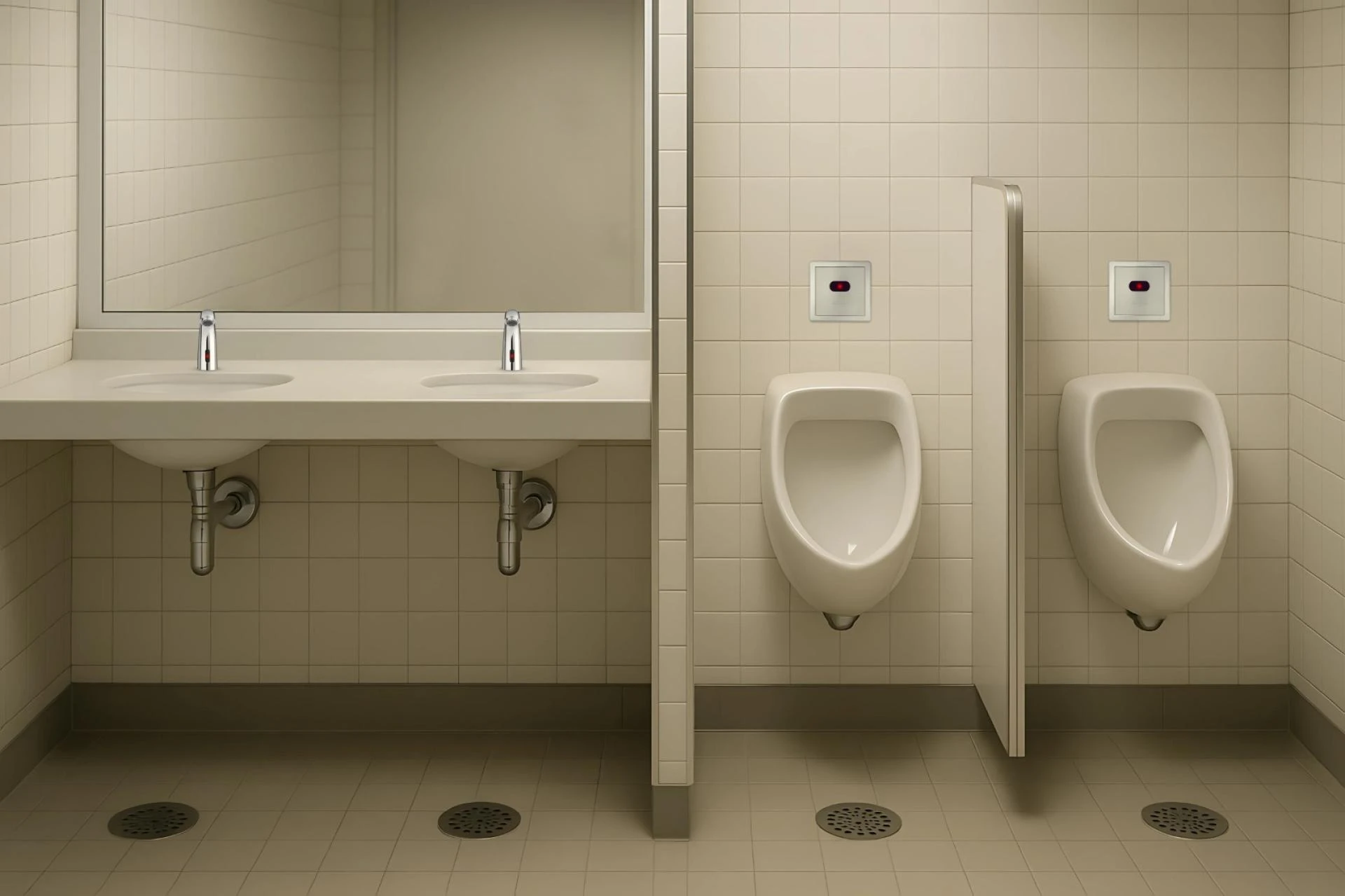

In today’s world, hygiene and water conservation are no longer “optional upgrades” — they’re necessities. If you’ve ever visited a modern mall, airport, hospital, or corporate office, you’ve probably noticed sensor-based taps and urinal systems replacing traditional manual ones. So, what’s really the difference between Automatic tap vs Manual Taps & Urinal Systems? And more importantly, which one should you choose?
Let’s break it down in a simple, practical, and honest way.
What Are Manual Taps & Urinal Systems?
Manual systems are the traditional fixtures most of us grew up using. You have to turn a knob, twist a handle, or push a lever to start and stop water or flushing.
Common features:
- Simple mechanical design
- Low initial cost
- No electricity or batteries required
- High dependency on user behavior
These systems work fine in homes, but in public or commercial washrooms, they tend to waste a lot of water and create hygiene issues.
What Are Automatic (Sensor-Based) Taps & Urinal Systems?
Automatic systems use infrared (IR) sensors to detect hand or body movement and control water flow or flushing automatically.
Key features:
- Touchless operation
- Water stops automatically
- Battery or electric powered
- Modern and hygienic
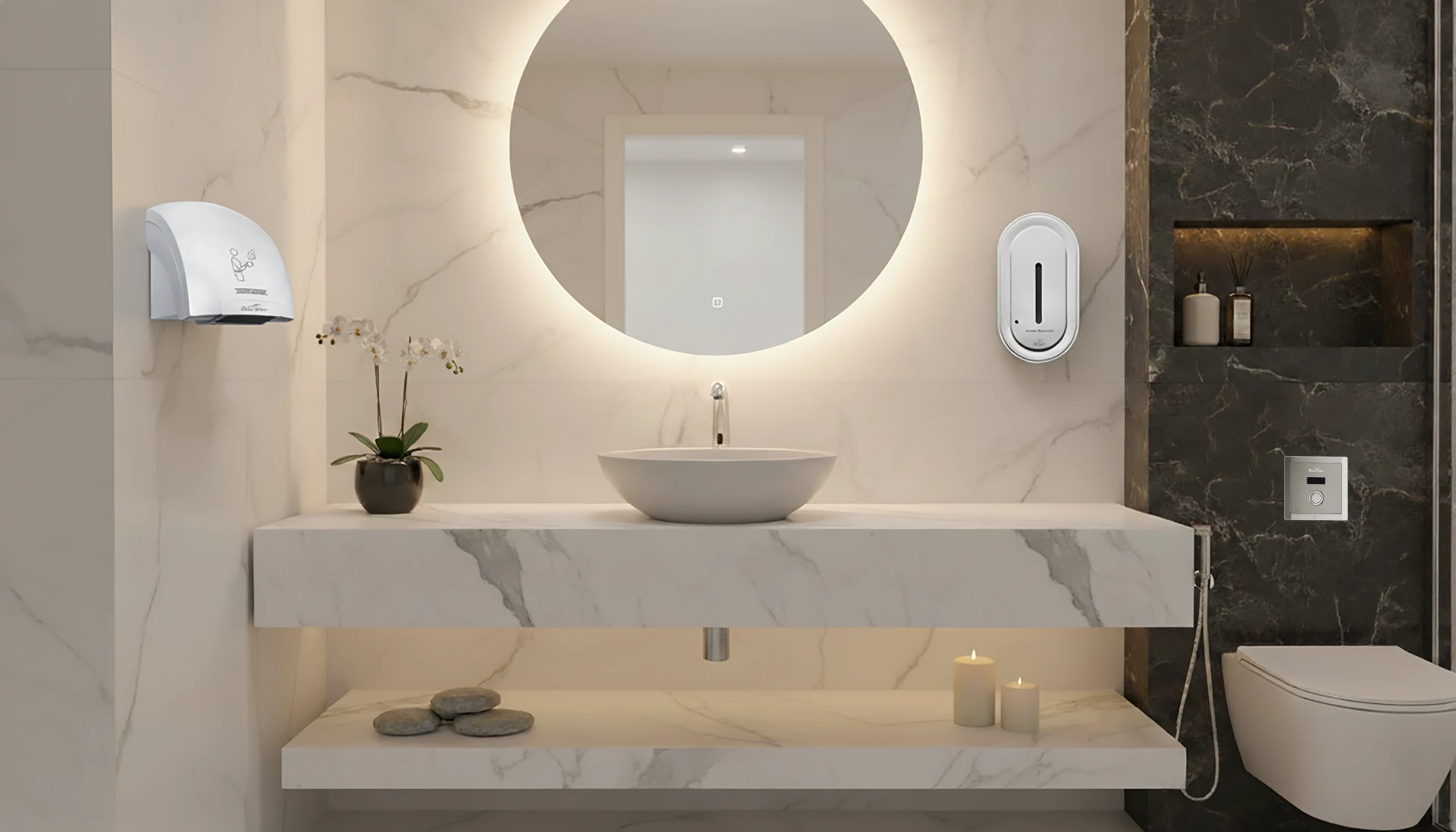
These are extremely popular in smart buildings, airports, malls, hospitals, hotels, and offices.
Automatic vs Manual Taps – Direct Comparison
1. Hygiene Level
Manual Taps:
Every user touches the same handle, which becomes a hotspot for germs and bacteria. In high-traffic locations, this is a serious health risk.
Automatic Taps:
Completely touch-free. You don’t need to touch anything, which makes these far more hygienic.
✅ Winner: Automatic Taps
2. Water Saving
Manual Systems:
Many people forget to close the tap properly, or they leave it running longer than needed.
Automatic Systems:
Water flows only when needed and stops instantly when hands move away, saving up to 60–70% water.
✅ Winner: Automatic Systems
3. Ease of Use
Manual:
Simple but not always convenient — especially for kids, elderly, or differently-abled users.
Automatic:
Just place your hands under the sensor. No twisting, no effort.
✅ Winner: Automatic Systems
4. Maintenance & Durability
Manual Systems:
Mechanical parts wear out with time due to constant physical force.
Automatic Systems:
Fewer moving parts and well-sealed components mean longer life when installed properly.
✅ Winner: Automatic Systems
5. Initial Cost
Manual:
Very affordable and widely available.
Automatic:
Higher initial investment due to sensors and electronics.
✅ Winner: Manual Systems (for initial cost only)
Automatic vs Manual Urinal Systems – Key Differences
1. Flushing Mechanism
Manual Urinals:
Operate using a push valve which users often forget to press, or press too long.
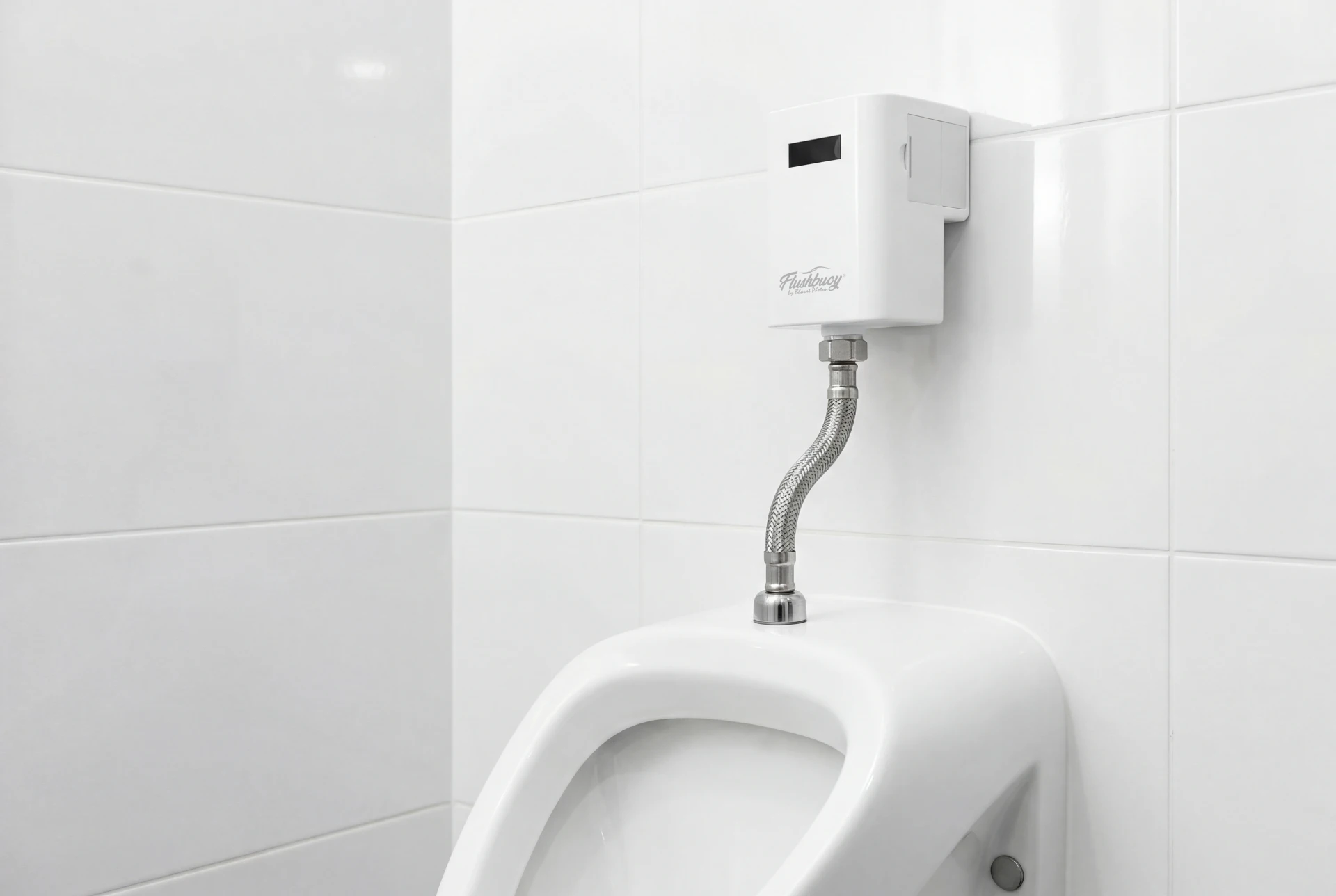
Automatic Urinals:
Flush automatically after use, ensuring consistent cleanliness.
✅ Winner: Automatic Urinals
2. Odor & Cleanliness
Manual:
Delayed or skipped flushing can cause bad odor and stains.
Automatic:
Timely flush after every use keeps the area fresh and clean.
✅ Winner: Automatic Systems
3. Water Management
Manual:
High risk of water misuse.
Automatic:
Smart control of water volume based on real use.
✅ Winner: Automatic Systems
My Personal Experience
I still remember visiting a busy railway station washroom with manual taps and urinals. The taps were either broken or constantly leaking, and most of them were left running. It felt unhygienic and wasteful.
Later, I experienced sensor-based washrooms in a modern corporate office. No touching, no struggling with handles, no bad smell — just smooth, clean, and smart usage. That moment completely changed my perspective. From both hygiene and sustainability viewpoints, automatic systems felt like the future.
Now, whenever I see a building using sensor taps and automatic urinals, I instantly feel more confident about the cleanliness of the place.
Which One Should You Choose?
Here’s the practical truth:
- For low-traffic homes, manual systems may still be okay.
- For offices, malls, hospitals, schools, airports, restaurants, and public washrooms, automatic systems are clearly the better choice.
They save water, improve hygiene, and enhance user experience.
SEO-Friendly Keywords Used
- Automatic taps vs manual taps
- Automatic urinal systems
- Sensor-based washroom systems
- Touchless taps for public washrooms
- Smart washroom solutions
- Water-saving bathroom technology
Frequently Asked Questions (FAQs)
Q1: Are automatic taps really better than manual ones?
Yes, they provide better hygiene, save water, and reduce maintenance issues, especially in commercial spaces.
Q2: Do automatic taps work during power failure?
Most automatic systems run on long-lasting batteries or have backup power, so they still function.
Q3: Are sensor-based urinals difficult to maintain?
Not at all. With proper installation and basic maintenance, they work smoothly for years.
Q4: Do automatic systems waste electricity?
No. Sensors consume very minimal power and are highly energy-efficient.
Q5: Are automatic systems suitable for homes?
Yes, especially for modern smart homes and families focused on hygiene and sustainability.
Final Thoughts
When we compare Automatic vs Manual Taps & Urinal Sensor the winner is clear. Automatic systems are smarter, more hygienic, and water-efficient. Yes, they cost more initially, but the long-term savings and hygiene benefits make them worth every penny.
Call to Action (CTA)
Ready to upgrade your washroom to a smarter and more hygienic version?
✅ Switch to automatic sensor taps and urinal systems today
✅ Save water. Improve hygiene. Future-proof your washroom.
📞 For expert guidance & installation support, call: 18001216254
Upgrade your washroom. Upgrade your hygiene. 🚿✨










Sign in to leave a comment.