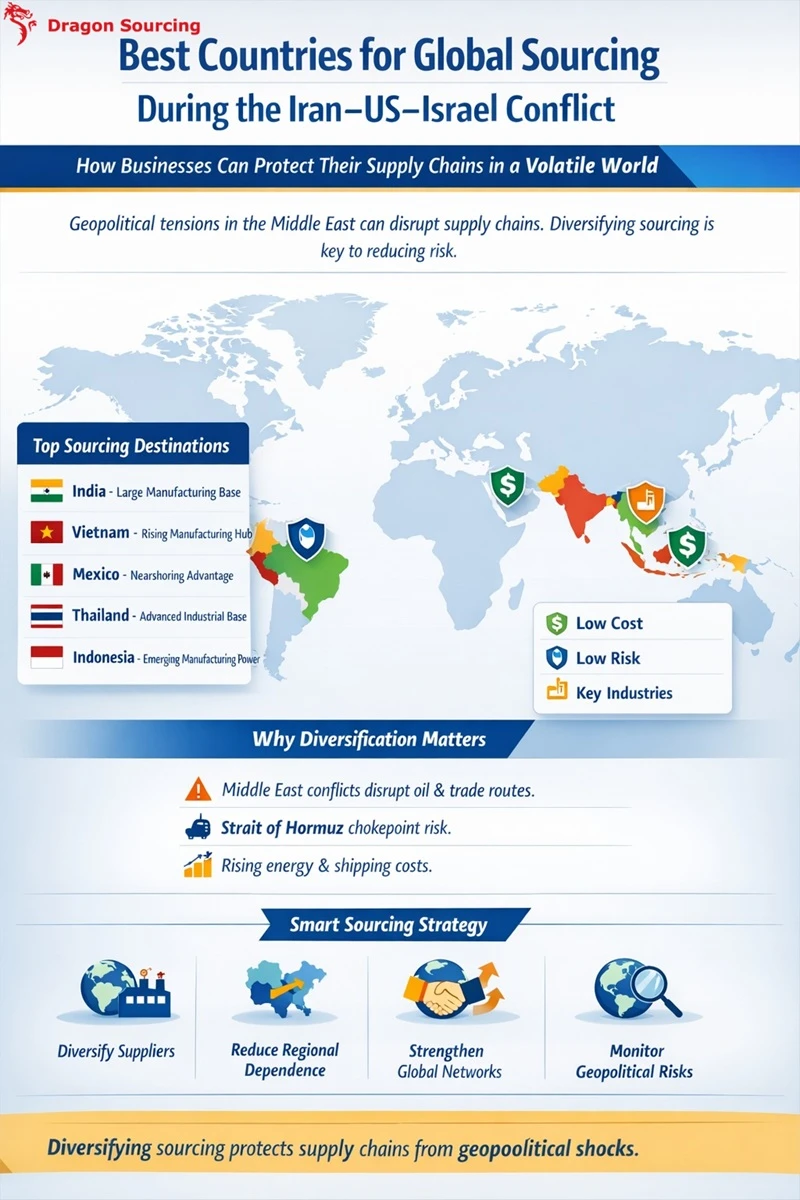

For the Middle East's recent crisis, 20% of global oil, and major air cargo routes, the blog argues that procurement teams must move from "Just-in-Time" to "Just-in-Case" models, prioritizing countries that offer safety and long-term reliability.
Top Alternative Sourcing Destinations
- Southeast Asia (The "China Plus One" Hub)
- Countries: Vietnam, Thailand, Malaysia, and Indonesia.
- Why: These nations have become the primary beneficiaries of the "China Plus One" strategy. They offer cost-efficient labor, rapidly developing infrastructure, and favorable foreign investment policies. They are seen as the most stable alternatives for electronics and textile manufacturing.
- Latin America (The Nearshoring Leader)
- Countries: Mexico, Brazil, and Colombia.
- Why: For North American companies, these countries offer reduced logistics costs and shorter lead times. Mexico, in particular, benefits from trade deals like the USMCA, making it a "safe haven" for automotive and industrial sourcing.
- Eastern Europe (High-Skilled Proximity)
- Countries: Poland, Romania, and Hungary.
- Why: Ideal for Western European firms, this region provides a highly skilled workforce at a lower cost than the West. Their proximity to EU markets minimizes the shipping risks associated with Middle Eastern transit routes.
- India (The Scale Player)
- Why: Despite being affected by regional energy shocks, India's massive domestic market and government incentives (like the PLI scheme) make it a formidable alternative for pharmaceuticals, chemicals, and IT services.
Key Takeaways for Procurement Teams
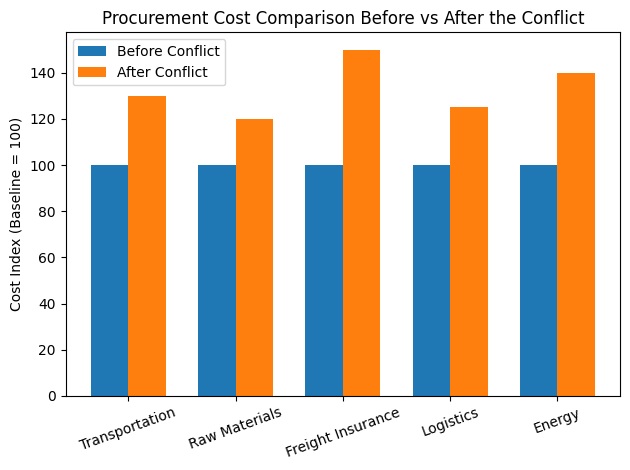
- Risk Mitigation: Do not depend on a single supplier or region. The conflict has proven that even "indirect" exposure can spike costs.
- Logistics Agility: Develop alternative shipping routes that bypass the Strait of Hormuz.
- Inventory Buffers: Build "strategic inventory buffers" for critical materials like petrochemicals and fertilizers, which are most vulnerable to Middle Eastern disruptions.
Visit our blog for more details: https://www.dragonsourcing.com/best-countries-for-global-sourcing-during-the-iran-us-israel-conflict/










Sign in to leave a comment.