
When a prospect walks into your sales gallery, you have one opportunity to shift them from curious to convinced. Static renderings and printed brochures won't get you there. What does is a moment where a buyer stands before a massive LED screen, sees their future home in photorealistic detail, and suddenly understands not just what they're buying—but why it matters.
That's the shift happening in premium real estate right now. And Nahar Realty's Chandivali Valley project in Mumbai proves it works.
The Limitation of Traditional Sales Tools
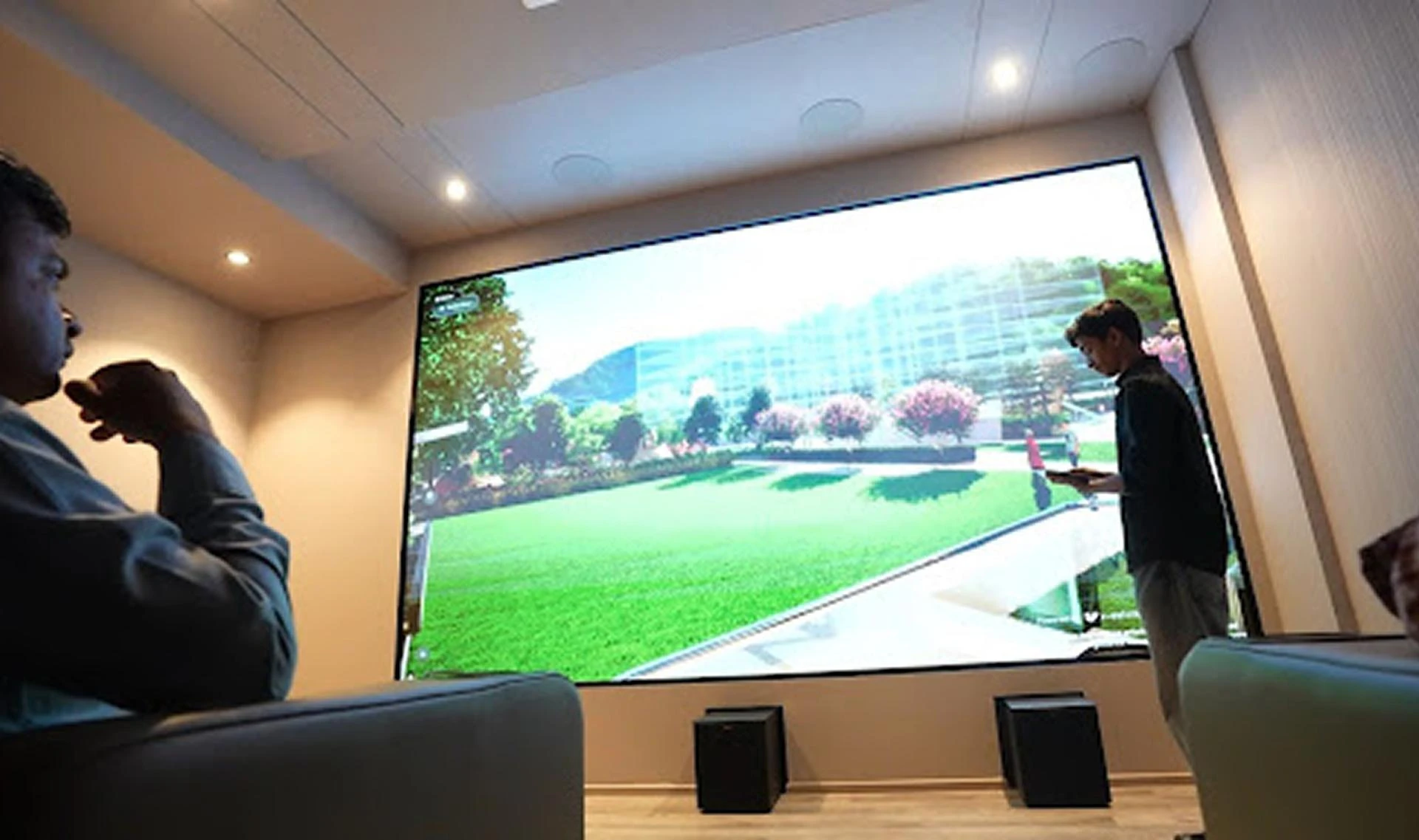
For decades, developers have relied on the same playbook: glossy renderings, scale models, and verbal storytelling. These tools work, but they come with a hard ceiling. A 2D rendering can't convey the grandeur of a landscape. A scale model can't show sightlines across an elevated terrain. Most critically, they can't guarantee every prospect receives the same narrative—leaving consistency and confidence on the table.
When a project sits on complex topography and stakes its lifestyle promise on something intangible like a Miyawaki forest, traditional tools falter. How do you show a buyer they're minutes away from urban forests, not just a park? How do you convey the magnitude of a community plaza anchored by a heritage banyan tree?
This is where 3d property walkthrough technology changes the game.
Chandivali Valley: Translating Complexity Into Conviction
Nahar Realty built Chandivali Valley within the larger Amrit Shakti township, on elevated terrain in a micro-market hungry for differentiation. The developer's 35-year legacy gave them one clear mandate: make every touchpoint count.
The project's defining asset wasn't another tower—it was lifestyle. A developer-grown Miyawaki forest. Heritage trees. Thoughtfully designed amenities. But these assets existed on terrain that made visualization difficult. How would a buyer understand the relationship between their unit, the forest trails, the plaza below, and the neighbourhood connectivity?
Enter the immersive AV experience.
The 13.5 ft × 8.3 ft LED Moment
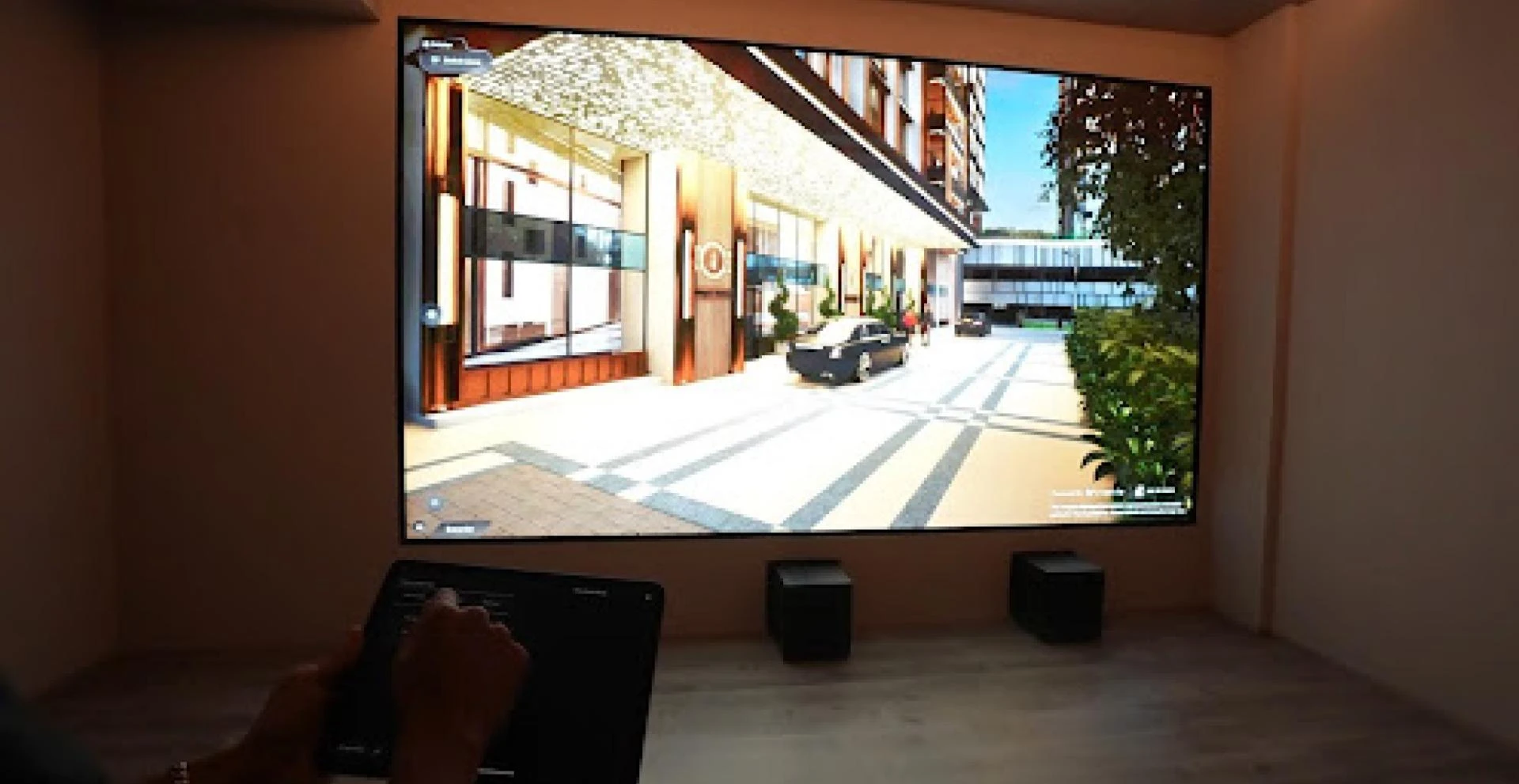
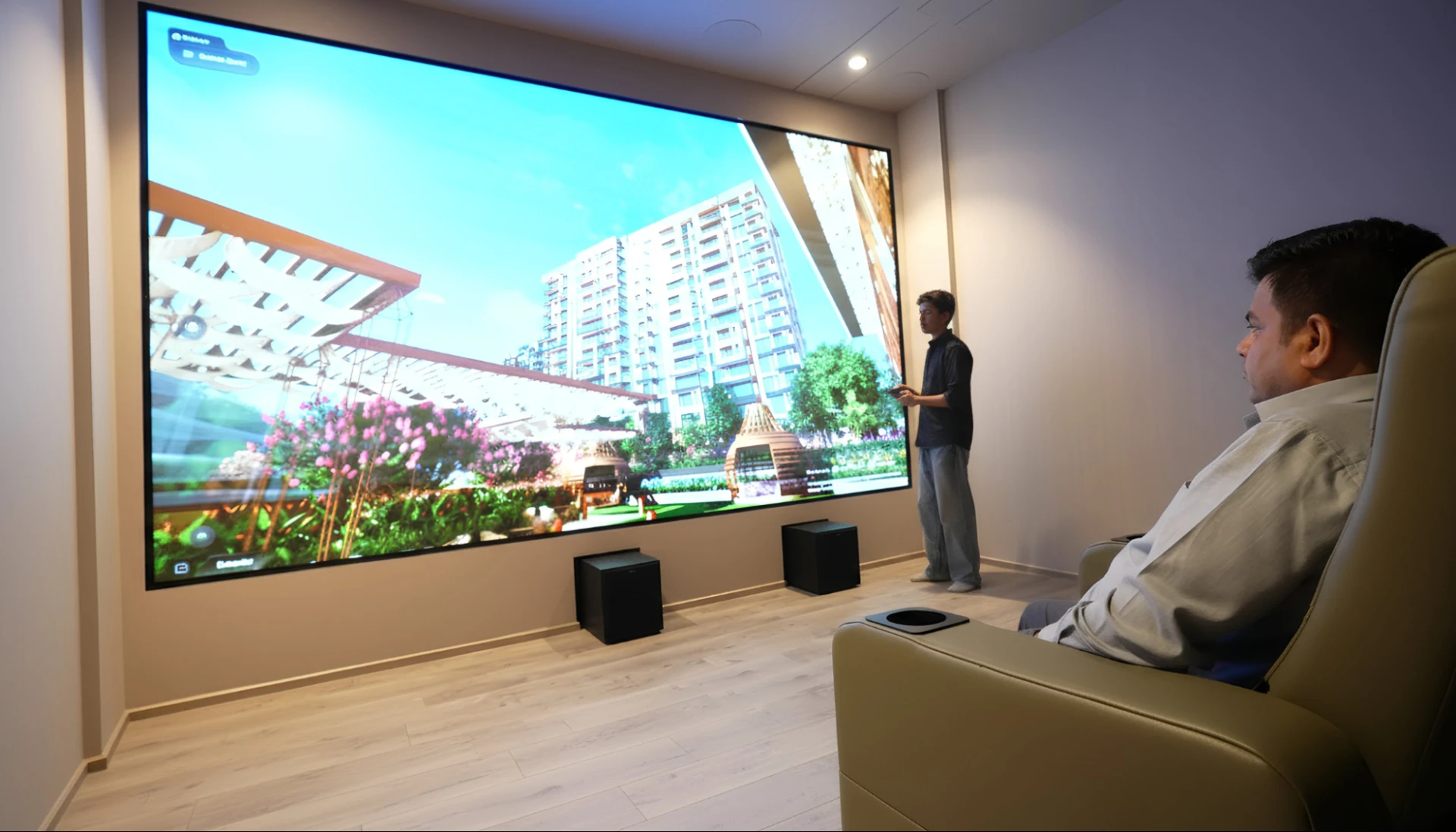
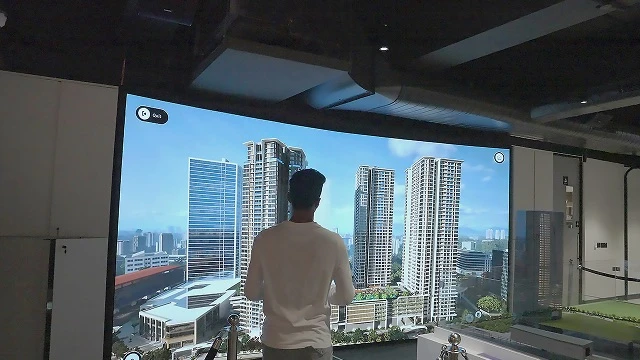
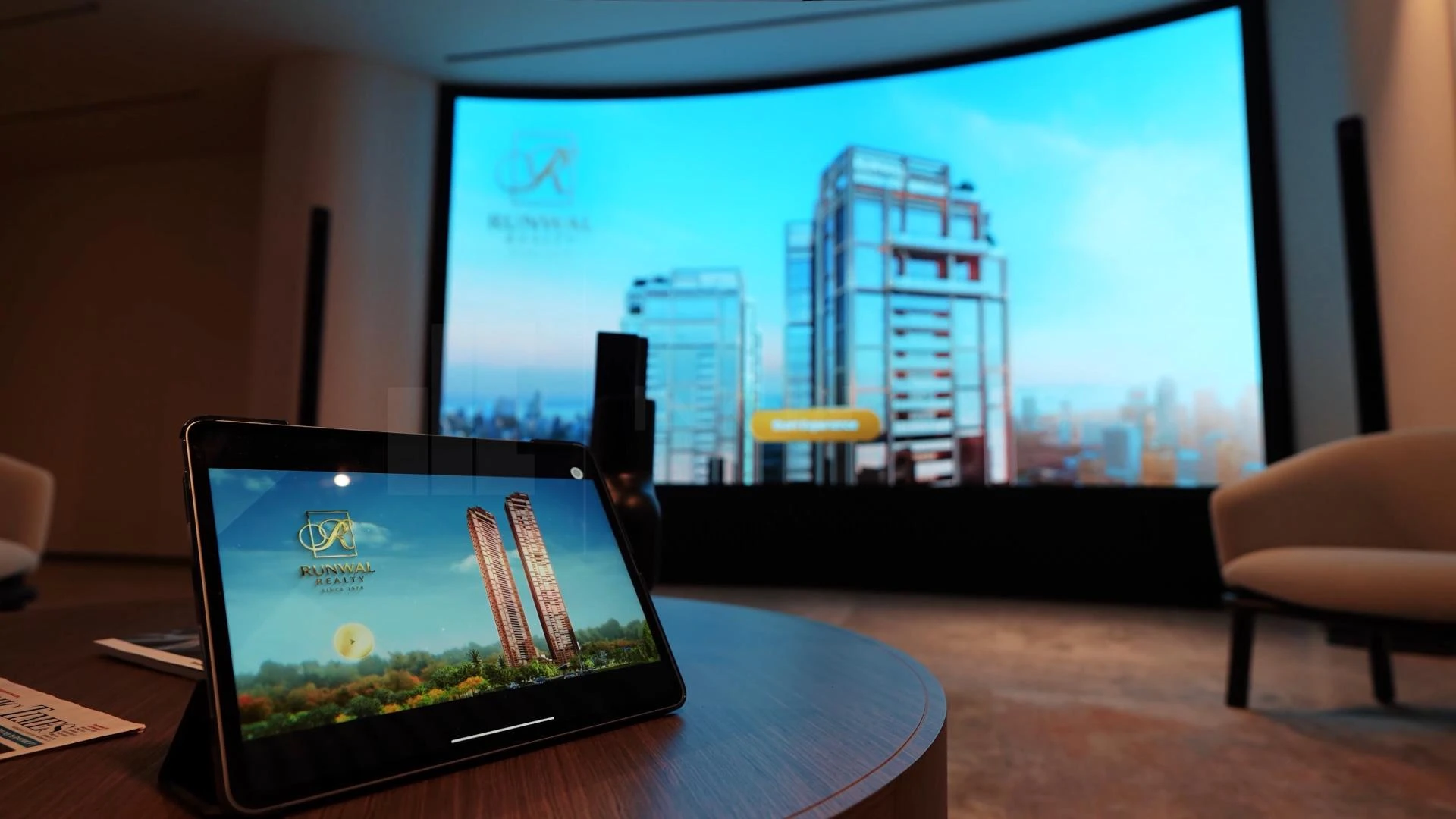
Before a prospect enters the physical sales gallery, they step into a controlled environment: a 13.5 ft × 8.3 ft LED wall, 1.8 mm pixel pitch, controlled entirely via iPad. The moment they see it, the experience is standardized. No variation. No mixed narratives. Every one of the team's 25+ sales executives, closers, and channel partners walks prospects through an identical journey.
The technical architecture powering this came from Unreal Engine 5.4, leveraging Lumen for photorealistic global illumination and Nanite technology for high-fidelity façades and complex geometry. A custom PCG (Procedural Content Generation) system managed forest density and level-of-detail rendering, ensuring the Miyawaki landscape felt alive without overwhelming the GPU. The heritage banyan tree asset was optimized to its own spec—a landmark within the visualization that grounded emotion.
The camera pipeline was meticulously storyboarded to match the sales script, movement by movement. Lighting was tuned to match the actual site conditions during optimal viewing hours. This wasn't a pretty walkthrough; it was a precision instrument.
The Four-Step Gallery Journey
From there, the prospect's journey through the physical gallery reinforced what they'd just experienced:
- Immersive AV experience – The 3D visualization sets expectation and context.
- Physical scale model – They touch something real. They see their unit's position.
- 3BHK sample flat – Materials, finishes, square footage come into focus.
- Discussion room – Sales and financing conversations happen with clarity already established.
The design—architecture by Hafeez Contractor, landscape by Green Space Alliance—was built with tower orientation in mind. Views were curated. Privacy was engineered. When a prospect saw this in the 3D visualization, then walked through the sample flat, cognitive dissonance vanished. What they saw matched what they'd been shown.
Why This Approach Moves Prospects Faster
The reasoning is straightforward but powerful:
- Clear sightlines in 3D eliminate imagination gaps. A prospect doesn't wonder if the forest is close; they see it.
- Standardized first touchpoint builds team alignment. Every salesperson tells the same story the first time. Confidence multiplies.
- Amenity scale becomes tangible. A clubhouse rendered in 3D space reads differently than a floor plan. Buyers feel the space.
- Lifestyle positioning crystalizes. A Miyawaki forest isn't just a marketing phrase; it's a walkable reality that buyers have already explored mentally.
- Decision velocity increases. When prospect conviction rises, time to close compresses. Follow-ups become confirmations, not re-pitches.
The Results: From Launch to Market Leadership
Since the gallery's launch, Nahar Realty captured first-mover advantage in the Chandivali micro-market. Prospects who engaged with the 3d real estate software setup returned more frequently and brought family members specifically to experience it again. Conversion rates from gallery visitor to serious inquiry rose measurably. More importantly, buyers arrived at the sample flat already sold on the project vision—they were verifying details, not being convinced.
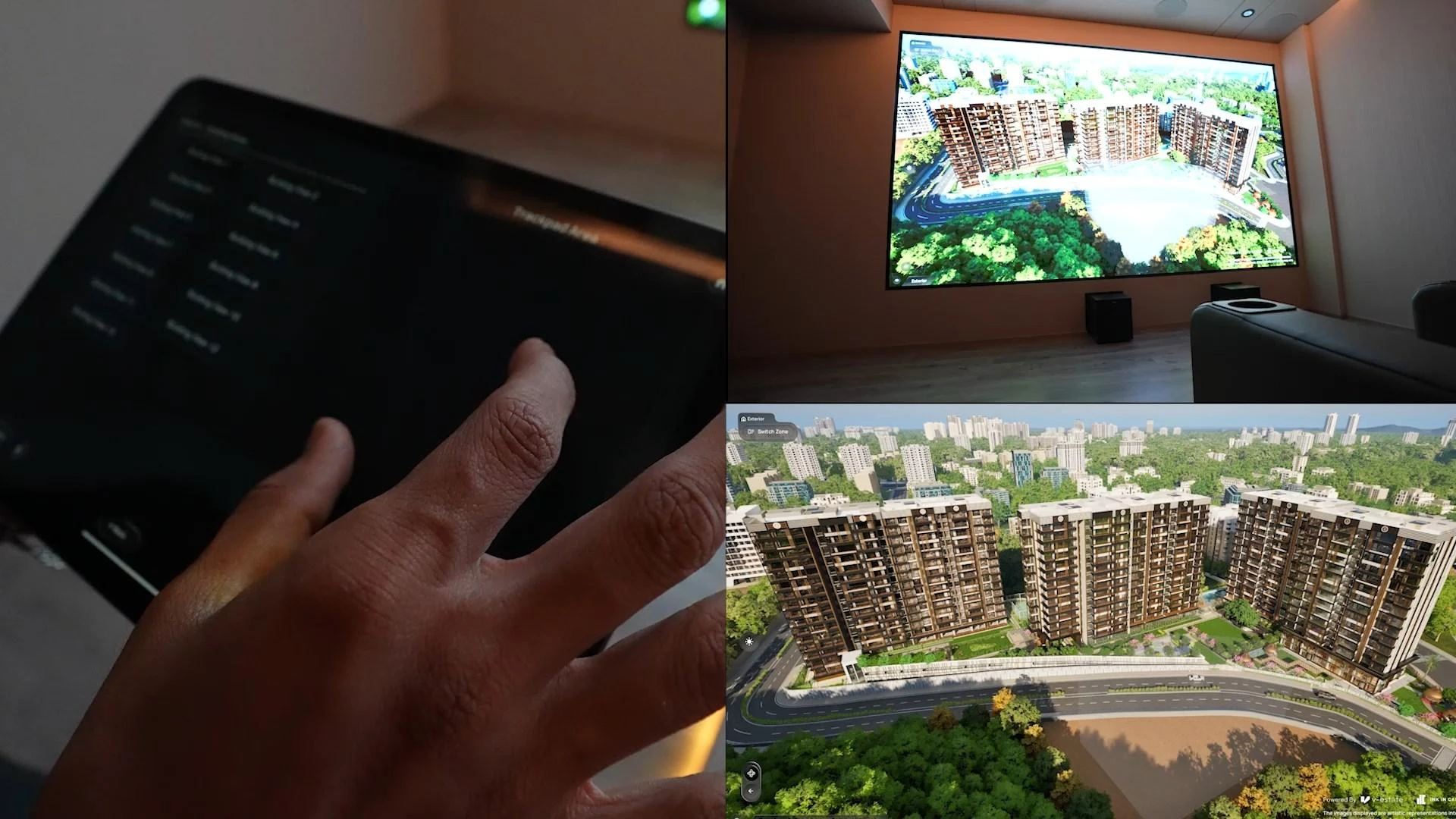
The operational backbone proved equally important. The two-stage LED installation process was timed to sync with interior completion, minimizing disruption. A high-spec workstation (RTX 4090-class GPU, 64 GB+ RAM, i9-class CPU) ran the visualization without lag. An on-site engineer and annual maintenance contract (AMC) ensured 100% uptime since day one. Not a single prospect experience was degraded by technical failure.
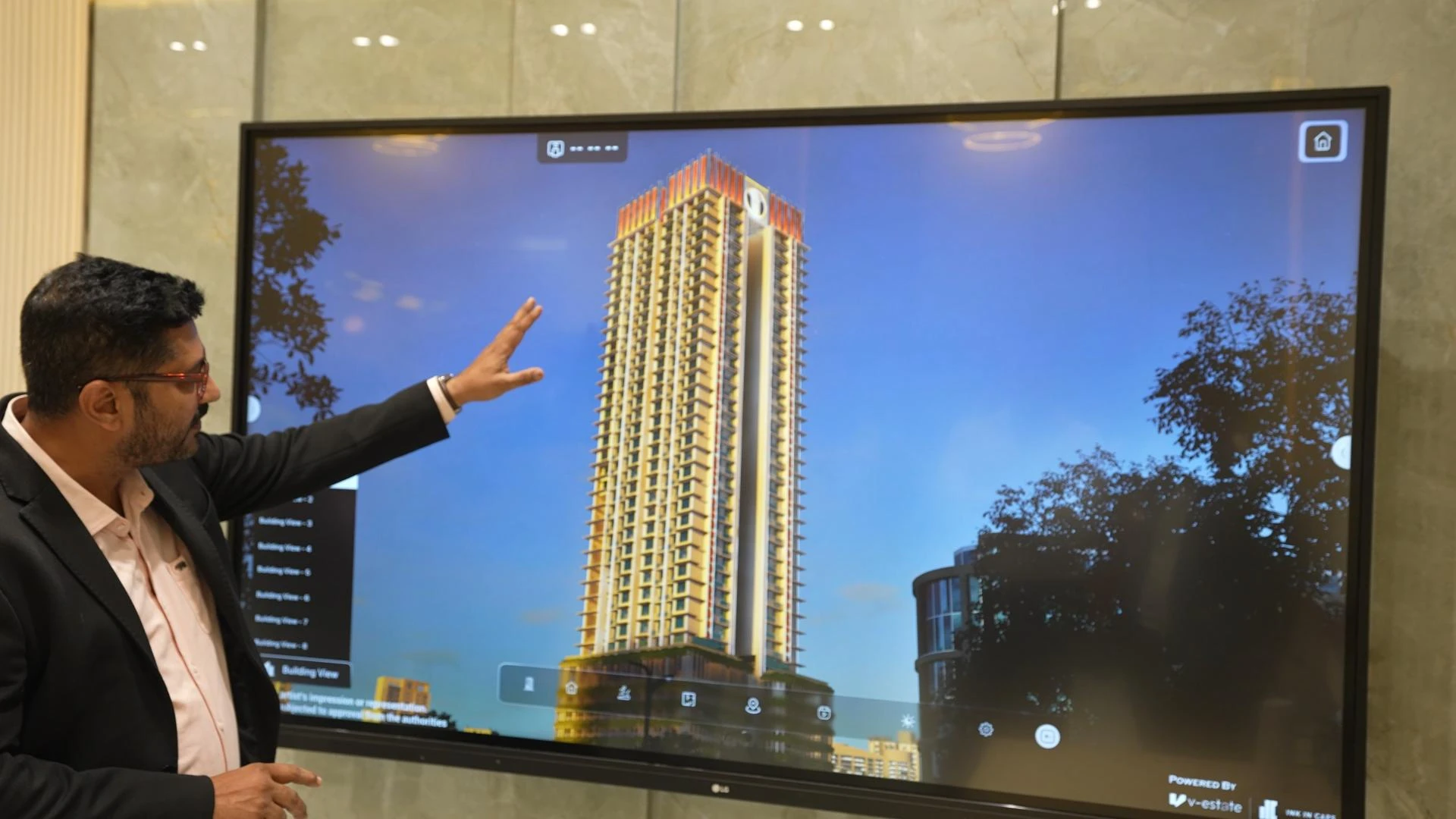
Sales team adoption came fast. Once 25+ executives, closers, and partner organizations used the 3d real estate walkthrough in live conversations, skepticism vanished. The iPad control meant flexibility—zoom into the forest, pan across the plaza, highlight unit features—without breaking the flow. Trainable. Repeatable. Confident.
How to Replicate This in Your Next Sales Gallery
If this resonates, here's what to operationalize:
- Mandate the AV first touchpoint. Don't make it optional. It's the narrative baseline for every prospect.
- Storyboard your camera pipeline. Work backward from your sales script. Every camera move should serve a narrative beat.
- Design the AV room for control. Lighting, acoustics, seating proximity—these multiply the impact of what's on screen.
- Invest in technical stability. A gallery workstation is not cost; it's insurance. GPU spec matters. RAM matters. Uptime matters.
- Train your team with repetition. Role-play the iPad control with sales staff. Show them how to pause, zoom, and emphasize without losing credibility.
- Plan your phased installation. Coordinate with construction timelines. Downtime during gallery build is acceptable; downtime after launch is not.
The Shift From Static to Interactive
The real estate sales process hasn't fundamentally changed in decades. But the tools have. Buyers today expect clarity before commitment. They want to see scale, proximity, and lifestyle with their own eyes—not imagine it from a static image.
3D visualization technology makes that possible. It transforms a sales gallery from a compliance checkpoint into a confidence machine. For developers, it means faster conversion cycles and higher buyer satisfaction. For sales teams, it means fewer objections rooted in uncertainty. For prospects, it means genuine conviction before signing.
Chandivali Valley proved the model. The next phase is scaling it.
Ready to see it in action? Book a 15-minute walkthrough of our 3d real estate software platform and gallery setup to discover how this framework accelerates your next sales campaign.










Sign in to leave a comment.