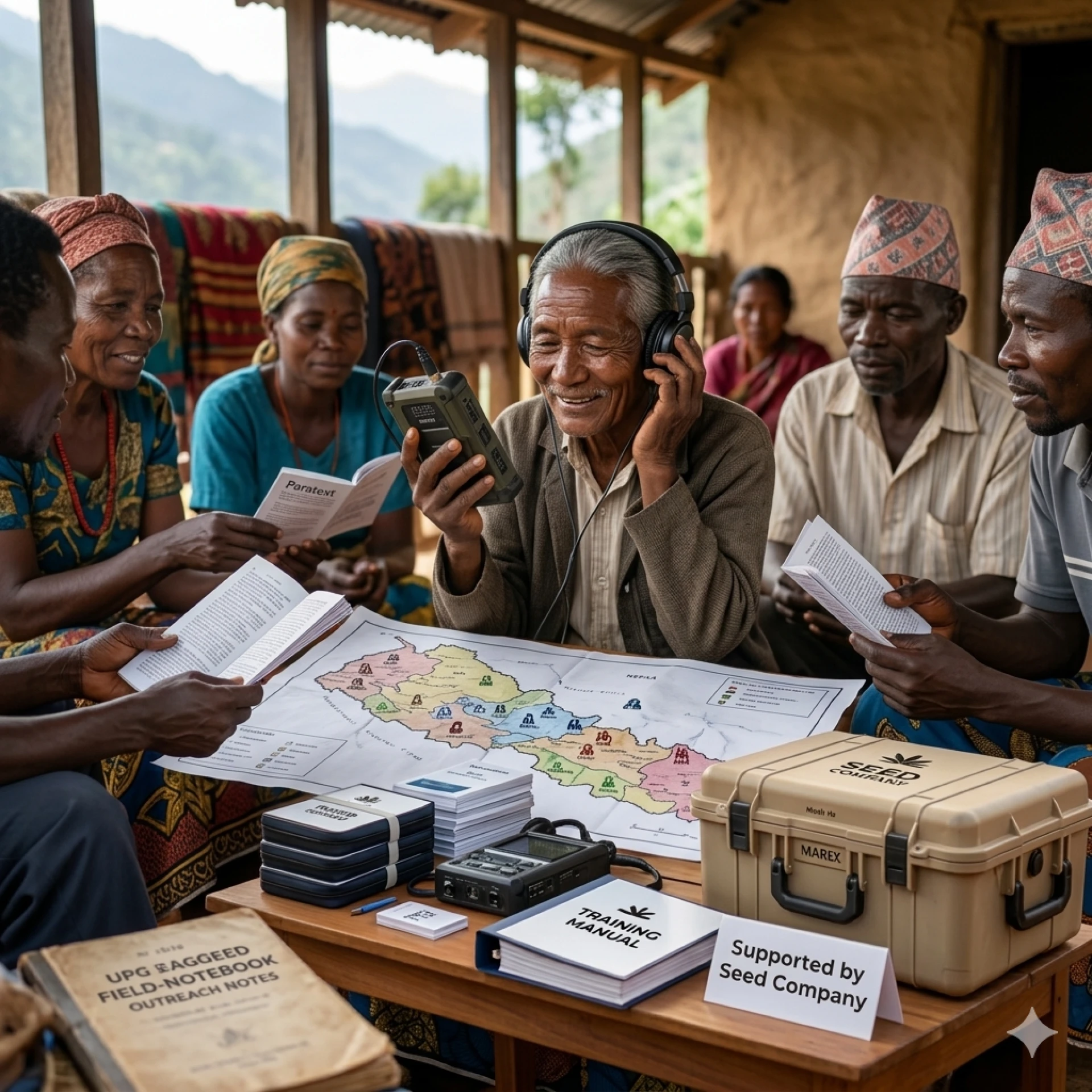

The map of the modern world is more detailed than it has ever been. With a few clicks on a smartphone, we can zoom in on remote mountain ranges in Papua New Guinea, track the winding paths of the Amazon rainforest, or view the bustling outskirts of Saharan villages. Yet, for those engaged in the Great Commission, there is a different kind of map—one not defined by borders or topography, but by language and access to Truth. Despite our technological prowess, there remain thousands of communities living "beyond the map" of biblical access. These are the unreached people groups, communities where no indigenous body of believers has the numbers or resources to evangelize their own people without outside assistance.
To reach these final frontiers, the global missions community, led by organizations like Seed Company, has had to evolve. We are moving away from centralized, outsider-heavy models toward decentralized, high-tech, and community-owned strategies. The goal is simple yet profound: to ensure that every person on earth has the opportunity to experience the Word of God in a way that is clear, accurate, and natural.
The Challenge of the "Final Frontier"
The task of reaching the remaining unreached groups is arguably the most difficult in the history of the Church. Most of the "easy" work is done. The remaining groups often reside in areas characterized by political instability, religious hostility, extreme poverty, or geographic isolation. Furthermore, many of these groups are oral-preference cultures, meaning they communicate primarily through spoken word rather than written text.
For these communities, a leather-bound book in a national trade language is often insufficient. It may be viewed as a foreign object—a relic of a different culture that has no bearing on their daily struggles or spiritual questions. To bridge this gap, we must employ strategies that go beyond traditional methods and embrace the nuances of the local context.
Strategy 1: The Rise of Indigenous-Led Bible Translation
One of the most significant shifts in modern missions is the move toward indigenous-led bible translation. In the past, the "missionary-as-expert" model was the standard. An outsider would move into a community, spend decades learning the language, and eventually produce a translation. While this produced many beautiful results, it often took a lifetime and sometimes lacked the deep idiomatic resonance that only a native speaker can provide.
Today, the focus has shifted to empowering local speakers. This model recognizes that the people best equipped to translate the Bible are those who live, breathe, and dream in that language. By placing the primary tools of translation into the hands of those who already speak the language, the process is not only accelerated but becomes deeply rooted in the local culture from day one.
When a community sees their own leaders—people they know and respect—wrestling with the text to find the perfect word for "grace" or "redemption," the resulting Scripture is immediately accepted as their own. It is no longer an "outsider's book"; it is a message from God specifically for them.
Strategy 2: Leveraging Technology for Isolated Regions
In the pursuit of reaching those "beyond the map," technology has become an indispensable ally. In regions where there are no roads, satellite internet is now providing a lifeline for translation teams. Cloud-based software allows national bible translators in remote villages to collaborate in real-time with theological consultants located thousands of miles away.
This "virtual checking" process ensures that even the most isolated team has access to world-class scholarship. Furthermore, digital tools help maintain consistency across a project, ensuring that key biblical terms are translated accurately throughout the entire New Testament.
Technology also addresses the needs of oral cultures. Through specialized apps and audio recording equipment, teams can now produce "Oral Drafts" of Scripture. These are high-quality audio recordings that can be shared via Bluetooth or microSD cards in areas where literacy is low. For a person who has never read a book, hearing the Gospel in their own voice is a revolutionary experience.
Strategy 3: Prioritizing "The Language of the Heart" and Accuracy
The ultimate goal of any translation effort is to produce the most accurate bible translation possible. However, accuracy is not just about word-for-word literalism; it is about meaning. A translation is only accurate if it conveys the same meaning to the modern listener that the original text conveyed to its original audience.
This is why the concept of the language of the heart is so vital. A person may understand a trade language for the sake of buying and selling in the market, but they feel, pray, and believe in their heart language. By focusing on the language spoken at home, around the cooking fire, and in the quiet of the night, translators ensure that the message of the Gospel resonates at a soulful level.
The process of ensuring accuracy involves multiple layers of checking:
- Internal Peer Review: Translators checking each other's work for linguistic naturalness.
- Community Testing: Reading drafts to non-believers and community elders to see if the message is clear.
- Theological Consulting: Working with experts to ensure the translation remains faithful to the original Greek and Hebrew manuscripts.
Strategy 4: Reaching the Deaf—The Visual Map
When we talk about unreached people groups, we often think of remote geographic tribes. However, one of the largest unreached groups is the global Deaf community. With over 400 different sign languages worldwide, the vast majority of Deaf people have no access to a Bible they can truly understand.
Sign language is not just a series of gestures for spoken words; it is a distinct linguistic system with its own complex grammar and syntax. For a Deaf person, a printed Bible is often effectively a second language. To reach their hearts, we must provide visual Scripture. Modern projects are currently underway globally, using high-definition video to capture the nuances of facial expression and body movement that are essential to the language.
The Role of Seed Company in Modern Missions
At Seed Company, our mission is to accelerate the work of Bible translation through local partnerships. We believe that no one should be denied the Word of God simply because of where they were born or what language they speak. Our model is built on:
- Training: Providing the educational foundation local translators need.
- Funding: Removing the financial barriers that stall translation projects.
- Support: Offering technical and theological expertise throughout the lifecycle of a project.
By focusing on national bible translators, we are not just producing books; we are fostering spiritual leadership within indigenous churches. This ensures that when a translation is finished, there is already a community of believers ready to use it, teach it, and live it out.
Why It Matters: Beyond the Map, Into the Soul
The impact of having the Word in the language of the heart is transformative. We see it in the eyes of an elder in an African village who finally understands that God loves him in his own tongue. We see it in the growth of local churches that no longer rely on translated sermons from the West but can study the text for themselves.
When a people group receives the Word, they are no longer "unreached." They are equipped. They are empowered. They are on the map of the global Body of Christ.
Conclusion: The Finish Line in Sight
The task of reaching every unreached people group is daunting, but for the first time in history, the finish line is in sight. Through the combination of indigenous-led efforts, cutting-edge technology, and a relentless commitment to the most accurate bible translation, we are erasing the boundaries of the map.
When you support this work, you are doing more than just translating words; you are inviting people into a relationship with their Creator. You are telling the forgotten communities of the world that they are seen, known, and loved. As the Word of God moves beyond the map and into the hearts of the unreached, we move one step closer to the day when every tribe, tongue, and nation will stand before the throne.
Join the Movement
Be a part of the generation that ends Bible poverty. Your partnership can provide the resources needed to reach the next group "beyond the map."
- Visit our website: https://seedcompany.com/
- Contact us: +1 (817) 557-2121
- Take Action: Discover how you can support national bible translators today.
Seed Company is committed to excellence and transparency in every project. Join us as we bring the power of the Word to the ends of the earth.











Sign in to leave a comment.