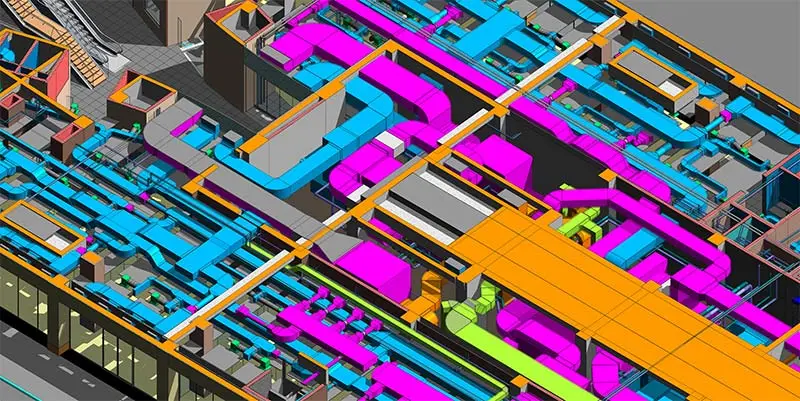
Budgets break down when information is vague. A drawing revision here, a late supplier quote there, and suddenly, numbers no one trusts dictate decisions. The practical fix is straightforward: make the design measurable and feed that measured data straight into cost planning. Combining BIM Modeling Services with disciplined Construction Estimating Services builds a single, auditable path from concept to cash flow. When teams treat the model as the canonical dataset, budgets stop being guesswork and start becoming decision tools.
Why measurable inputs matter
An estimate is a chain of linked facts: quantities, units, productivity, and rates. If the first link — quantities — is weak, every downstream judgment is shaky. Good BIM Modeling Services give you repeatable counts because elements are objects with attributes (material, unit, finish). Those attributes are the raw material for an estimator. When Construction Estimating Services consume that raw material directly, the task shifts from rebuilding numbers to applying local judgment: choosing suppliers, setting productivity rates, and phasing procurement. That shift reduces errors and speeds consensus.
A short, repeatable handoff that works
You don’t need a long playbook to get this right. Adopt a compact workflow and enforce it at each milestone.
- Agree Level of Detail (LOD) and the minimal parameter set at kickoff.
- Publish a one-page naming and tagging guide and attach it to every handover.
- Run a pilot extract on a representative floor or zone to surface gaps early.
- Condition the export and map families to your WBS/cost codes.
- Apply dated local unit rates and lock a procurement baseline.
The pilot extract is the highest-value step: it finds small problems while fixes are cheap. When BIM Modeling Services produce a clean, versioned export, Construction Estimating Services can price quickly and defensibly.
How traceability tightens budgets
Traceability means each priced item links to a model object and a rate source. That provenance matters in three ways: it shortens clarifications, reduces disputed items, and helps owners see where contingency is truly needed. When BIM Modeling Services and Construction Estimating Services work from the same snapshot, disagreements become technical checks — show the model view, show the extracted line, show the rate — rather than weeks of argument. The outcome is a budget that clients and contractors can trust.
Practical checks that stop the usual failures
Most costly mistakes come from small, repeatable failures. Avoid them with a few lightweight controls:
- Minimal parameter gate: reject extracts missing material, unit, or finish.
- Naming convention enforced across disciplines.
- Versioned model snapshots are stored in a common environment.
- Dated price library with source notes for every unit rate.
- Short assumptions log attached to every estimate.
These small rituals are cheap to run and high-return. They turn messy exports into usable inputs for Construction Estimating Services, and they free estimators to focus on judgment rather than cleanup.
Scenario testing becomes practical
One of the biggest day-to-day wins is speed when testing alternatives. Want to compare two cladding systems or swap finishes on a wing? Update the model, re-extract, and reprice. Where manual methods turned scenario work into a multi-day task, integrated workflows often give results in hours. That capability lets designers explore trade-offs with real cost consequences, and it lets owners choose with clarity instead of faith.
Mapping model vocabulary into commercial reality
Models speak a technical language; estimators work in procurement units and cost codes. The bridging step is mapping: convert model family/type names into WBS items and procurement units. Maintain a living mapping table — model family/type → WBS/cost code → unit — and use a lightweight conditioning pass before importing into the pricing tool. When BIM Modeling Services and Construction Estimating Services agree on mapping, the handoff becomes predictable rather than brittle.
Where the real savings appear
The most visible savings show up in three areas. First, fewer omissions mean fewer costly change orders. Second, time-phased quantities reduce emergency purchasing and yard returns. Third, faster scenario testing lets teams optimize value rather than guessing at where cuts should be made. Over a program of work, those compound into meaningful improvements in margin and schedule certainty.
The human layer remains essential
Models make counting reliable; people make the counts realistic. A model won’t know about a local festival that delays deliveries or a parking restriction that complicates crane lifts. That contextual knowledge lives with estimators and logistics planners. The best outcomes come when model-derived quantities from BIM Modeling Services are combined with the market and site judgment embedded in Construction Estimating Services. Keep assumptions visible, and small disputes become quick clarifications.
Measure and iterate
If you want to scale this approach, measure a handful of practical metrics during pilots:
- Hours per takeoff before vs. after model adoption.
- Number of conditioning iterations per QTO.
- Variance between the estimate and procurement quantities.
- Frequency and value of scope-related change orders.
Early pilots typically show clear gains. Use those wins to refine tag rules, mapping logic, and your one-page guide.
Start with a low-risk pilot
Begin with a single representative floor or a repeatable trade. Share the naming guide, run the pilot extract, compare results to a manual takeoff, fix gaps, update mapping, and repeat. Small, repeatable successes build trust far faster than top-down mandates.
Conclusion
Clear budgets are the product of clear inputs and disciplined handoffs. BIM Modeling Services produce measurable, auditable quantities. Construction Estimating Services translates those quantities into priced, time-phased plans that reflect reality. Enforce a few simple rules — agreed LOD, consistent naming, pilot extracts, and dated rates — and you move from defensive budgeting to cost-driven planning. The result is budgets that stakeholders respect and projects that finish closer to plan.










Sign in to leave a comment.