
For many parents, breast pumping quickly turns from a helpful tool into a painful, frustrating experience. Milk output feels low. Nipples hurt. Sessions take longer than expected. The natural assumption?
“Something must be wrong with my pump.”
In reality, research and clinical experience point to a much simpler — and often overlooked — cause:
Incorrect breast pump flange size.
Flange fit plays a bigger role in pumping comfort and milk removal than pump brand, motor strength, or price. Yet most parents are sent home with standard flanges that don’t fit their bodies at all.
This article breaks down why flange size matters, how to find the right fit, and how correcting it can dramatically improve pumping outcomes.
What Is a Breast Pump Flange (and Why It Matters)?
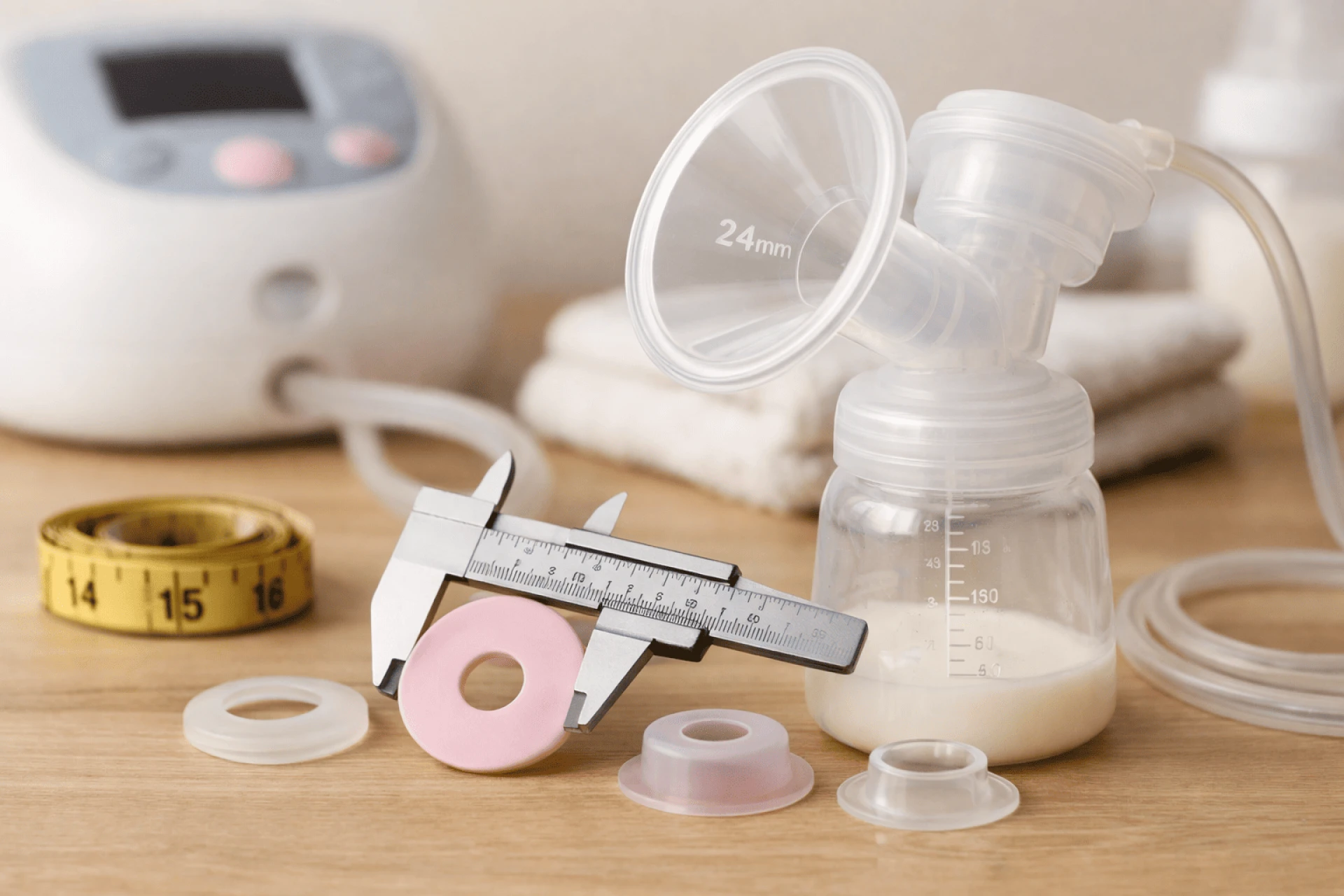
The flange (also called a breast shield) is the funnel-shaped part of the pump that fits over the nipple and areola. Its job is simple but critical:
- Create a proper seal
- Allow the nipple to move freely in the tunnel
- Stimulate milk flow without compressing tissue
When the flange size is correct, pumping should feel comfortable and efficient, not painful or exhausting.
When it’s wrong, problems compound quickly.
Why Flange Size Is the Most Common Pumping Problem
Most breast pumps ship with 24 mm or 28 mm flanges. These sizes are often described as “standard,” but research and clinical data suggest otherwise.
Studies and lactation consultant reports consistently show that the majority of pumping parents need smaller flanges, often between 17 mm and 21 mm.
Despite this, many parents are never measured or educated on fit.
As a result:
- Milk removal is incomplete
- Pumping becomes painful
- Supply may drop over time
- Parents assume pumping “doesn’t work for them”
The pump isn’t failing — the fit is.
How Incorrect Flange Size Affects Milk Supply
Milk production relies on effective and regular milk removal. If the pump cannot remove milk efficiently, the body receives the signal to make less.
Here’s how incorrect flange sizing interferes:
1. Restricted Milk Flow
A flange that is too small compresses the nipple, slowing milk movement and preventing full emptying.
2. Areola Pull-In
A flange that is too large pulls excess areola into the tunnel, reducing suction efficiency and causing swelling.
3. Pain and Shorter Sessions
Pain leads many parents to pump less frequently or stop sessions early — both of which directly impact supply.
4. Inflammation and Tissue Damage
Repeated friction can cause swelling, which further worsens fit over time.
Over days or weeks, these issues add up.
Signs Your Flange Size Is Wrong
Many parents don’t realize their flange size is incorrect because they assume discomfort is “normal.” It isn’t.
Common signs include:
- Nipple rubbing against the sides of the tunnel
- Whitening, blanching, or deep redness after pumping
- Areola being pulled deeply into the flange
- Sharp pain or burning sensations
- Swelling that worsens throughout the day
- Consistently low milk output despite frequent pumping
If pumping hurts or feels ineffective, flange size should be the first thing evaluated.
How to Measure for the Correct Flange Size (Evidence-Based Method)
Accurate flange sizing starts with nipple diameter, not breast size.
Step-by-Step Measurement
- Measure the nipple only, not the areola
- Measure after pumping or stimulation, when the nipple is at its largest
- Use a ruler or nipple sizing tool
- Measure across the base in millimeters
Add Clearance
Most experts recommend adding 2–4 mm to the nipple diameter to determine flange size.
Example:
- Nipple diameter: 15 mm
- Recommended flange: 17–19 mm
This allows free movement without excess tissue being pulled in.
Flange Size Can Change Over Time
Another overlooked fact: flange size is not permanent.
Changes may occur due to:
- Early postpartum swelling decreasing
- Hormonal shifts
- Increased pumping frequency
- Pregnancy or return to work schedules
Parents should re-measure if:
- Pumping becomes uncomfortable
- Milk output suddenly drops
- Nipples appear swollen or misshapen
What fit at two weeks postpartum may not fit at three months.
Why Stronger Suction Doesn’t Fix a Bad Fit
A common mistake is increasing suction to compensate for low output. Research and clinical guidance are clear:
Stronger suction does not equal better milk removal.
In fact, excessive suction with an incorrect flange can:
- Increase pain and tissue damage
- Trigger vasospasm
- Reduce letdown reflex
- Lead to early pumping burnout
Comfortable, rhythmic suction paired with correct flange size is far more effective.
What Research and Clinicians Agree On
While flange sizing has historically been under-researched, recent lactation studies and professional guidelines emphasize:
- Proper fit improves comfort and milk output
- Smaller flange sizes are more common than previously believed
- Pain during pumping is not normal or necessary
- Individual anatomy matters more than pump brand
Many lactation consultants now consider flange fitting a core intervention for pumping challenges.
Why Brands Still Ship “Standard” Flanges
Manufacturers face a logistical issue: including multiple flange sizes increases cost and complexity.
Unfortunately, this shifts the burden to parents — many of whom don’t know sizing options even exist.
The result:
- Parents blame themselves
- Pumps are returned unnecessarily
- Pumping is abandoned earlier than needed
Education, not equipment upgrades, often makes the biggest difference.
For a more detailed walkthrough and printable flange size chart and calculator, this flange sizing guide explains the process step by step.
Practical Takeaway for Pumping Parents
If pumping feels painful, inefficient, or exhausting:
- Do not assume your body is the problem
- Measure nipple diameter accurately
- Try a smaller or differently shaped flange
- Reassess fit as your body changes
For many parents, this single adjustment transforms pumping from a struggle into a sustainable routine.
Final Thoughts
Breast pumping success is not about having the most expensive pump or the strongest motor.
It’s about fit, comfort, and consistency.
Correct flange sizing is one of the simplest, most evidence-backed changes a pumping parent can make — yet it remains one of the least discussed.
By understanding and addressing flange fit, parents can protect their comfort, support their milk supply, and regain confidence in their pumping journey.
Author Bio
Charlotte Rose is a registered nurse, mom of two, and breast pump expert with hands-on experience testing and reviewing breast pumps in real-life parenting scenarios. Through her work at Breast Pumps Hub, she focuses on evidence-based education to help parents pump more comfortably, confidently, and effectively.













Sign in to leave a comment.