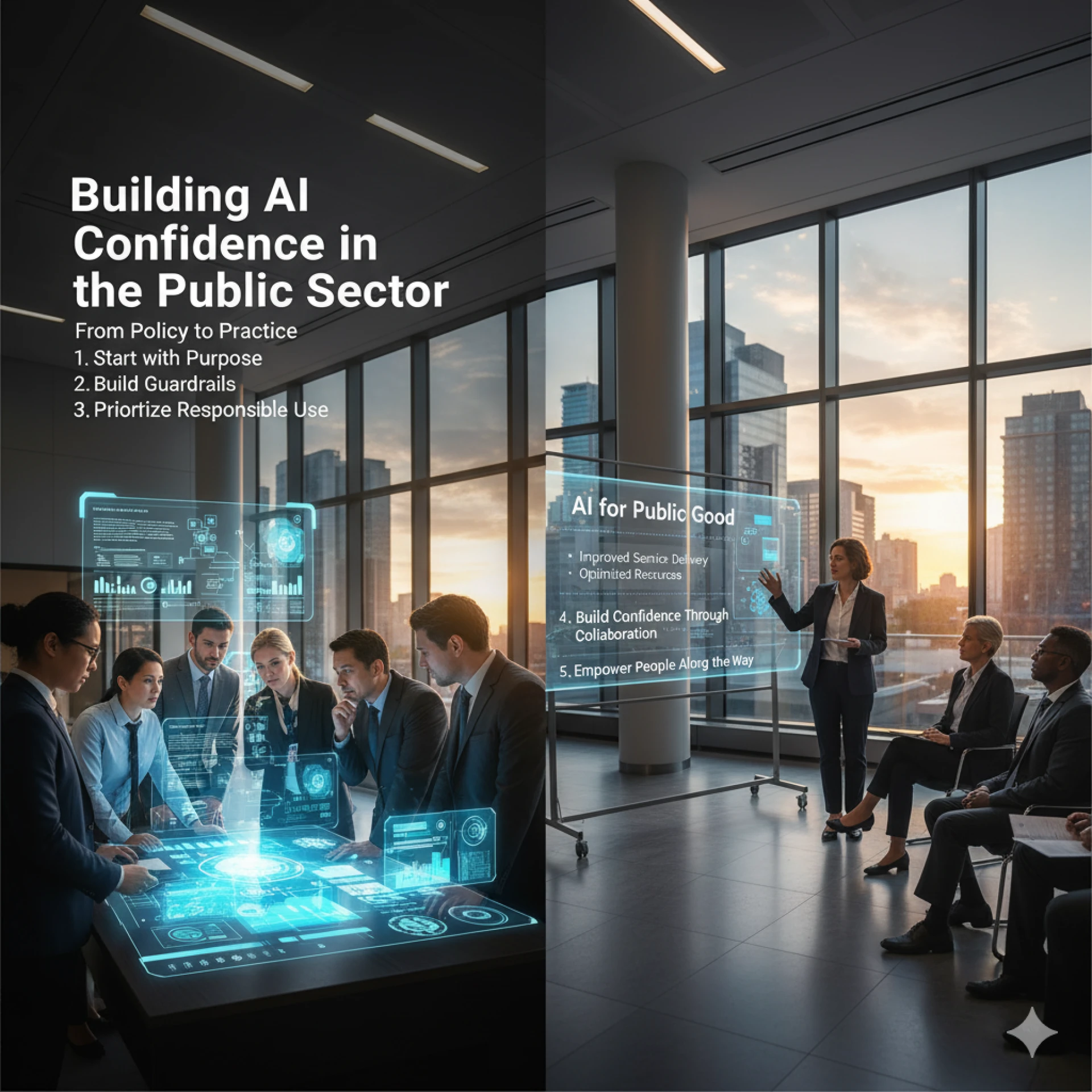

Across Canada, public sector organizations — from municipalities to non-profits and provincial agencies — are facing a growing pressure to adopt artificial intelligence (AI). Whether it’s improving service delivery, optimizing resources, or staying competitive with private innovation, the call to “use AI” is getting louder.
Yet for many public leaders, the real challenge isn’t the technology itself — it’s trust, compliance, and responsible implementation.
So, how can public sector organizations build AI confidence from policy to practice?
1. Start with Purpose, Not Pressure
AI adoption in the public sector shouldn’t begin with technology — it should begin with purpose.
Before piloting a single tool, leaders should ask:
- What problem are we solving?
- Who benefits from this change?
- How does this align with our public values and responsibilities?
Clarity of purpose ensures AI serves citizens — not the other way around.
2. Build Guardrails, Not Roadblocks
Public organizations are rightfully cautious about data privacy, compliance, and reputational risk. But waiting for “perfect certainty” often leads to missed opportunities.
The solution? Build practical guardrails — simple, transparent guidelines for how AI can and cannot be used.
Guardrails might include:
- Clear policies on data handling and consent.
- Approved AI tools for internal use.
- Ethical standards for transparency and fairness.
These policies allow innovation to happen safely, without sacrificing trust.
3. Prioritize Responsible Use Over Rapid Use
In the private sector, speed often wins. In the public sector, responsibility always does.
Responsible AI adoption means prioritizing accountability and inclusivity over quick wins. This includes:
- Conducting ethical impact assessments.
- Ensuring algorithms are explainable and unbiased.
- Keeping human oversight at every stage of decision-making.
When AI use aligns with public values, it strengthens — not weakens — citizen trust.
4. Build Confidence Through Collaboration
Public sector AI success rarely happens in isolation. Confidence grows when leaders collaborate — sharing lessons, frameworks, and success stories across municipalities and non-profits.
Engaging with AI consultants, innovation hubs, or government networks can help translate high-level policy goals into practical, real-world strategies that work within tight budgets and timelines.
5. Empower People Along the Way
AI readiness in the public sector isn’t just about systems — it’s about people.
Employees must feel equipped, not threatened, by new technologies. Offering AI awareness training, workshops, and open discussions helps build comfort and confidence across teams.
When people understand the “why” and “how” behind AI decisions, they become champions for change, not barriers to it.
From Policy to Practice
Building AI confidence in the public sector doesn’t mean rushing into automation. It means aligning policy, people, and purpose — one thoughtful step at a time.
By creating clarity, guardrails, and shared understanding, municipalities and public organizations can move from hesitation to confident, responsible AI adoption.
Final Thoughts
At Aigility Hub, we help Canadian public sector leaders move from uncertainty to confidence — creating clear, compliant, and human-centered AI strategies that align with organizational values and public trust.










Sign in to leave a comment.