
Muscle growth is the result of structured training, sufficient recovery, and precise nutrition. During a bulking phase, the body requires a sustained calorie surplus and an adequate supply of protein to support muscle repair and growth. This is where bulk protein powder becomes an essential part of many strength-focused nutrition plans.
People searching for the best protein powder for bulking are typically not looking for shortcuts. Instead, they want clarity—how bulk protein works, how it supports muscle development, and whether it fits into long-term training goals. Understanding these factors helps ensure consistent progress without unnecessary fat gain.
What Is Bulk Protein Powder?
A bulk protein powder is a nutritional supplement designed to help individuals achieve a calorie surplus while supplying sufficient protein to support muscle protein synthesis. Unlike standard protein powders that focus mainly on lean recovery, bulk protein formulations combine:
- High-quality protein sources
- Carbohydrates for energy and weight gain
- Amino acids to support muscle repair
- Sometimes fats and performance nutrients
The purpose of bulk protein is not simply weight gain, but muscle-focused weight gain when paired with resistance training.
The Science Behind Bulking and Protein Intake
Muscle growth occurs through a process called muscle protein synthesis (MPS). Resistance training stimulates muscle breakdown, and dietary protein provides amino acids needed to rebuild muscle fibers stronger and larger.
Research consistently shows that:
- A calorie surplus is required for optimal hypertrophy
- Adequate protein intake improves lean mass gains
- Consistent daily protein distribution enhances results
A bulk protein powder helps meet these requirements by delivering predictable, measurable nutrition—especially useful for individuals who struggle to consume enough calories from whole foods alone.
Protein Requirements During a Bulking Phase
During bulking, protein needs increase due to:
- Higher training volume
- Increased muscle repair demand
- Greater body mass
Most fitness professionals recommend:
- 1.6–2.2g of protein per kg of body weight per day
Meeting this consistently can be challenging. This is why the best protein powder for bulking is not judged solely by protein quantity, but also by absorption rate, digestibility, and overall macronutrient balance.
Key Components of an Effective Bulk Protein Powder
1. Protein Quality and Source
High biological value proteins such as whey provide essential amino acids, including leucine, which plays a central role in muscle protein synthesis. A good bulk protein often uses a blend of fast and slow-digesting proteins to sustain amino acid availability.
2. Carbohydrate Profile
Carbohydrates replenish muscle glycogen, improve workout performance, and support recovery. Complex carbohydrates are preferred in a bulk protein powder to avoid sharp insulin spikes and unnecessary fat gain.
3. Amino Acid Support
BCAAs and EAAs reduce muscle breakdown and support endurance during intense training. Their presence enhances the effectiveness of bulk protein supplementation.
4. Digestibility
Digestive enzymes or easily digestible ingredients improve nutrient absorption and reduce bloating—an often overlooked factor when choosing the best protein powder for bulking.
Bulk Protein Powder vs Regular Protein Powder
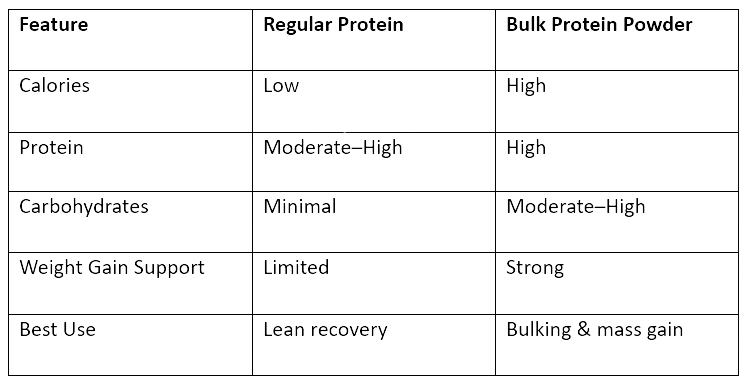
A bulk protein powder is better suited for individuals actively trying to gain size, while regular protein is ideal for maintenance or fat loss phases.
Clean Bulking and the Role of Bulk Protein
Clean bulking focuses on maximizing muscle gain while minimizing fat accumulation. Contrary to popular belief, excessive junk calories are not necessary for growth.
A well-formulated bulk protein supports clean bulking by:
- Providing controlled calories
- Supporting training performance
- Reducing reliance on processed foods
- Allowing precise nutrition tracking
This approach aligns with long-term health and sustainable muscle development.
Who Benefits Most From It
Bulk protein supplementation is particularly useful for:
- Hard gainers with fast metabolism
- Individuals with limited appetite
- Athletes with high energy expenditure
- Beginners struggling to gain weight
- Bodybuilders during off-season bulking
For these groups, bulk protein powder offers convenience without compromising nutritional quality.
How and When to Use
Optimal Timing
- Post-workout: Enhances recovery and muscle repair
- Between meals: Increases daily calorie intake
- Morning: Reduces muscle breakdown after fasting
- Before bed: Supports overnight recovery (if slow-digesting proteins are included)
Most users consume bulk protein 1–2 times daily, adjusted to calorie requirements.
Safety and Long-Term Use of It
Bulk protein supplements are generally safe when:
- Used within recommended servings
- Combined with resistance training
- Paired with whole-food nutrition
Hydration, fiber intake, and balanced meals remain essential. The best protein powder for bulking complements a diet—it does not replace real food.
Common Mistakes to Avoid
Even the best bulk protein powder will not deliver results if it is used incorrectly. Many people fail to see progress not because of the product, but due to avoidable mistakes in usage, diet, or expectations.
1. Relying Only on Bulk Protein Powder
Bulk protein is meant to supplement a balanced diet, not replace real meals. Depending entirely on shakes while neglecting whole foods like grains, vegetables, fruits, and healthy fats can lead to nutritional gaps and poor digestion.
2. Ignoring Total Calorie Intake
Consuming bulk protein without tracking overall calories can result in either stalled progress or unwanted fat gain. A calorie surplus should be controlled and adjusted based on training intensity and body response.
3. Taking More Than Needed
More protein does not automatically mean more muscle. Excessive intake beyond your body’s requirements does not increase muscle growth and may cause digestive discomfort. Consistency matters more than overconsumption.
4. Poor Timing Around Training
Skipping post-workout nutrition or spreading intake randomly throughout the day reduces the effectiveness of bulk protein. Strategic timing helps maximize muscle recovery and training performance.
5. Neglecting Hydration and Fiber
High-protein diets increase the body’s need for water and fiber. Inadequate hydration or low fiber intake can lead to bloating, fatigue, and poor nutrient absorption.
6. Expecting Results Without Training
Bulk protein powder supports muscle growth, but it cannot replace resistance training. Without progressive overload and recovery, additional calories will not translate into muscle gains.
Avoiding these common mistakes helps ensure that bulk protein supplementation contributes to clean, sustainable progress rather than frustration. Make it shorter
Choosing the Right Bulk Protein
Selecting a reliable bulk protein powder should be based on formulation transparency, ingredient sourcing, and practical usability rather than exaggerated claims. Elite Proteins fits into this framework by focusing on balanced nutrition principles commonly used by experienced lifters and fitness professionals—adequate protein dosage, structured macronutrient ratios, and formulations intended for real training demands. The emphasis on digestibility, consistency, and long-term use reflects an understanding of how bulk protein supplements are actually integrated into disciplined bulking routines, reinforcing trust through practical application rather than hype.
Final Perspective
A well-formulated bulk protein powder plays a meaningful role in muscle development by supporting calorie intake, protein availability, and recovery demands. For those evaluating the best protein powder for bulking, attention should be placed on nutrient balance, digestibility, and consistency rather than marketing promises.
When aligned with proper training, sleep, and whole-food nutrition, bulk protein supplementation contributes to sustainable muscle growth and improved performance.
FAQs
Q1: What is bulk protein powder mainly used for?
Bulk protein powder supports increased calorie and protein intake during muscle-building phases.
Q2: Can bulk protein powder be used daily?
Yes, daily use is common when aligned with training and dietary needs.
Q3: Is bulk protein suitable for beginners?
Yes, beginners often benefit due to higher nutritional demands during early training adaptation.
Q4: Does bulk protein powder replace meals?
No, it complements meals to help meet nutritional targets.
Q5: How does bulk protein differ from regular protein powder?
Bulk protein includes additional calories and carbohydrates to support weight and muscle gain.
#bulkproteinpowder #proteinpowder #musclegain #musclenutrition #gymsupplement







Sign in to leave a comment.