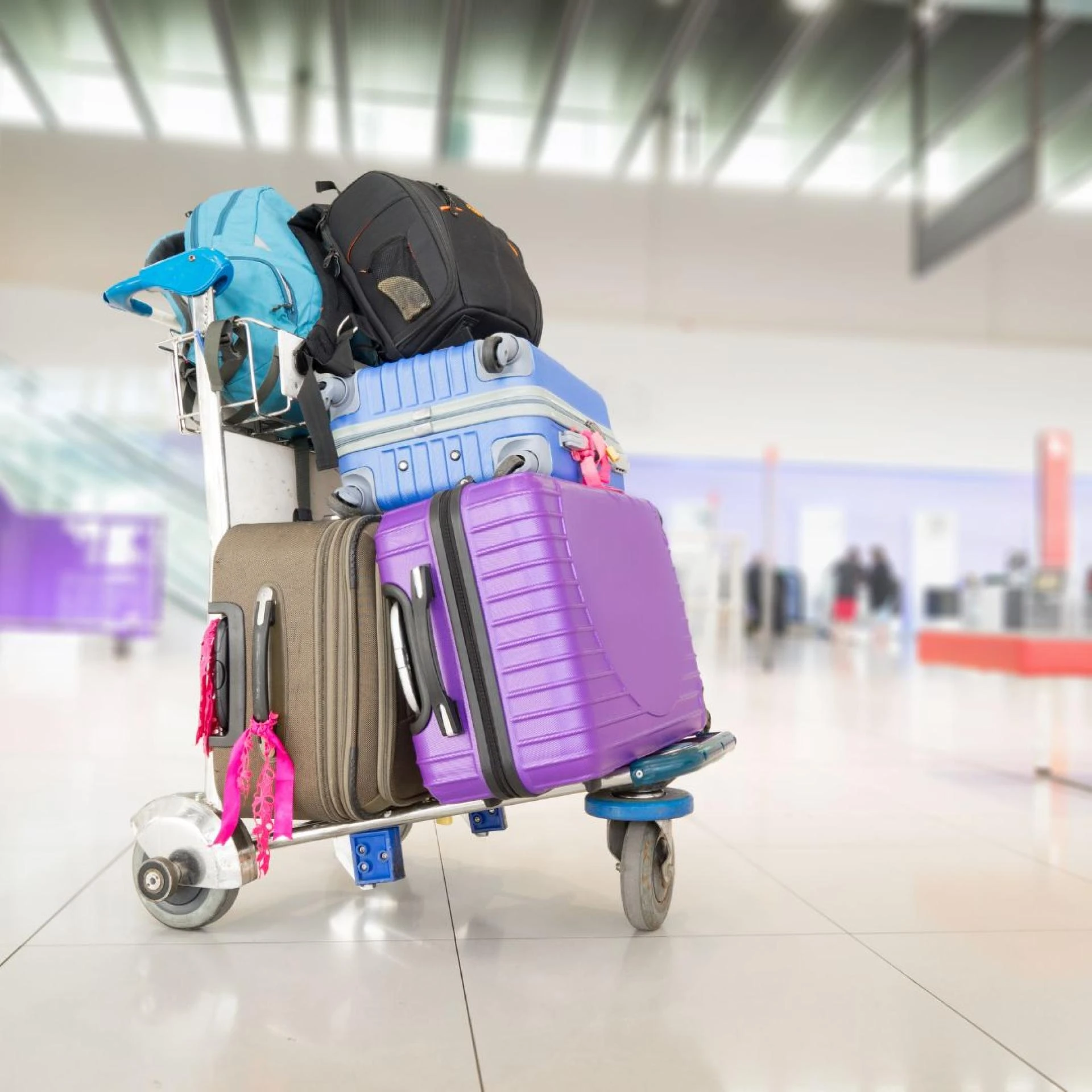

Travel sounds simple: pack, go, land. But if you’ve ever stood at the airport thinking “carry-on vs checked bag… which one should I take?” you already know it’s not that simple.
This guide will walk you through everything you need to know about the carry-on vs checked bag decision. We’ll compare size rules, airline fees, weight limits, safety, comfort, packing style, and even what happens if your plans change. By the end, you’ll know exactly which bag to take for your next trip and why.
We are going to keep the language very clear and direct. Think of this as a conversation at the airport gate, right before boarding, where you just want to know: “What is better for me right now?” Let’s start.
What Is a Carry-On vs Checked Bag?
Carry-on luggage (often called cabin bag or hand luggage) is the small suitcase or backpack you bring with you on the plane. You keep it with you. It goes in the overhead bin above your seat or sometimes under the seat in front of you.
Checked baggage (often called check-in bag or suitcase for the hold) is the bigger suitcase you give to the airline at the counter. They take it, tag it, and put it in the cargo hold under the plane. You do not see it again until you land and pick it up from baggage claim.
Here’s the basic difference between a carry-on vs checked bag:
- Carry-on bag:
- Smaller
- Stays with you
- Has tighter size limits
- No waiting at baggage claim
- No checked bag conveyor drama
- Checked bag:
- Bigger
- Not with you on the plane
- Can carry more clothes, shoes, liquids
- Can get delayed, damaged, or lost
When people search “carry on vs checked bag,” what they really want to know is: “Which one fits my trip, my budget, and my stress level?” We’re going to answer that step by step.
Carry-On vs Checked Bag Size and Weight Rules
Airlines care about size and weight because planes have limited space. This is one of the biggest differences in carry-on vs checked bag.
Carry-on size
Most airlines allow something around:
- About 55 cm x 35 cm x 22 cm
- Around 7–10 kg weight limit
Some airlines also allow a “personal item,” like a laptop bag, tote, or small backpack.
If your carry-on is even a little too big or too heavy, airline staff can force you to check it at the gate. This means:
- You may have to pay.
- You may have to wait at baggage claim later.
So with a carry-on, you have to pack tight and pack smart.
Checked bag size
Most full-size checked suitcases are:
- About 23 kg weight limit (some airlines allow 20 kg, some 32 kg in business class)
- Size can be much larger than a carry-on
- The limit is usually total dimensions (length + width + height), often around 158 cm
Why does this matter?
- A checked bag gives you space for full-size shampoo, winter boots, heavy coats, extra shoes, gifts, etc.
- A carry-on forces you to edit, and editing is hard for long trips.
Key point:
If you’re going on a short 2–4 day city trip with light clothes, a carry-on is usually enough.
If you’re going on a 10-day wedding trip with outfits, heels, hair tools, gifts, and makeup — you will almost always need a checked bag.
Carry-On vs Checked Bag Cost and Fees
Let’s talk money, because money changes the answer fast.
For many airlines now, luggage is not “included.” You pay for it.
- Some budget airlines charge for both carry-on and checked baggage.
- Some full-service airlines include one checked bag on international flights.
- Some airlines let you board with a small personal item for free, but charge for a full-size carry-on and charge again for a checked bag.
So how does carry-on vs checked bag cost play out in real life?
When carry-on is cheaper:
- You are taking only one small bag.
- You avoid all add-on fees by skipping checked baggage.
- You do not need to upgrade your ticket class.
This is common on short weekend trips.
When checked baggage is cheaper:
- You’re traveling with a friend or partner and can share one checked bag instead of paying for two same-size carry-ons.
- The airline includes one checked bag in the ticket anyway (common on long-haul flights).
- You’re bringing sports gear, winter gear, or gifts that would require buying extra carry-on space anyway.
Cost trap to watch out for in carry-on vs checked bag:
If you try to “cheat” and stuff too much into your carry-on, and the airline says it’s too big or too heavy, they can force you to check it last-minute. At that point, you often pay the highest fee because airport fees at the gate are usually more expensive than pre-booked baggage. So pushing the limit is risky.
Speed at the Airport: Which Bag Saves Time?
Time is also part of the carry-on vs checked bag decision.
Carry-on wins for speed because:
- You check in online.
- You go straight to security.
- After you land, you walk off the plane and leave the airport. No waiting at the carousel. No “bag delayed” drama.
This is very good for:
- Short work trips
- One-night stays
- Layovers where you have to recheck bags
- Domestic flights where you land late at night and want to go straight to sleep
Checked bag can slow you down because:
- You wait in the check-in line to drop luggage.
- You must arrive at the airport earlier because the bag drop counter closes before boarding.
- After landing, you wait at baggage claim, sometimes 20–40 minutes.
- Sometimes the bag is not on the belt and you have to file a claim.
That sounds annoying, and it is. But there’s another side.
Where checked bag can save time for you personally:
- Security. With a carry-on, you must take out liquids, sometimes laptops, sometimes batteries. You’re also dragging your bag through the line.
- With a checked bag, you can often glide through security with just a small personal item (like a tote with your passport and phone). This feels calmer.
So the question is: do you want to carry weight through the airport to save time after you land? Or do you want to move light through the airport and accept waiting after landing?
That is the real trade-off in carry-on vs checked bag.
What You Can Pack in a Carry-On vs Checked Bag
Packing rules are different for carry-on vs checked bag, especially for liquids and restricted items.
Carry-on packing limits:
- Liquids usually must be in small bottles (often 100 ml each) and all fit inside one clear zip bag.
- Sharp items like certain scissors or tools are restricted.
- Some batteries and power banks must stay with you (not checked).
You must also think about weight on your shoulders. You will lift this bag into the overhead bin by yourself. If you cannot safely lift it, it is not really “carry-on” for you, even if it fits airline rules.
Checked bag packing freedom:
- You can pack full-size shampoo, lotions, perfume, hair spray, gel, body wash, etc.
- You can pack heels, boots, sneakers, jackets, makeup kits, skincare bottles.
- You can pack gifts and souvenirs without worrying about liquid size rules.
- You don’t have to lift it above your head.
This is huge for special trips:
- Weddings
- Business conferences
- Ski trips / hiking trips
- Long trips with different weather in different cities
In those cases, the answer to carry-on vs checked bag is usually: bring a checked bag for sanity.
Simple way to decide:
If your trip needs “full bathroom counter energy,” you need a checked bag.
Safety, Stress, and Control: Which One Feels More Secure?
There’s an emotional part of carry-on vs checked bag that people don’t talk about enough: control.
Why people love carry-ons:
- The bag never leaves your side.
- You know exactly where your laptop, camera, medicine, and passport are.
- Your bag cannot get lost because you are physically carrying it.
- You avoid luggage damage like cracked shells or bent handles.
Carry-on is safer for:
- Important documents
- Prescription medicine
- Cash and jewelry
- Electronics
You should never put these in a checked bag.
Why people still use checked bags:
- They don’t want to drag a heavy bag through every airport hallway, bus, taxi, and hotel lobby.
- They want hands free while moving.
- They want to sit comfortably on the plane without a suitcase under their feet the whole time.
So with a checked bag:
- Your body is less tired.
- Your in-flight space is cleaner.
- You travel with only a small personal item, which feels calm.
But:
- You must trust the airline with your stuff.
- You must wait for your suitcase later.
In short, carry-on = more control, checked bag = more comfort. When comparing carry-on vs checked bag, ask yourself: which do you care about more on this specific trip — control or comfort?.
Trip Type: When to Use a Carry-On vs Checked Bag
Now let’s match real trip types to bag types. This is where people usually get clarity.
Use a carry-on if:
- You are going on a 2–4 day work trip with one climate (for example, all warm weather or all cool weather).
- You don’t need dress shoes or special outfits.
- You can re-wear jeans or basics.
- You’re OK with travel-size toiletries.
- You cannot risk luggage delays (for example, a same-day meeting when you land).
- You have tight layovers and might need to run to catch the next flight.
Carry-on is also helpful if you plan to move a lot between places. Example: 3 days in one city, 2 in another, 1 in another. Rolling a big checked suitcase across cobblestone streets or up hostel stairs is not fun.
Use a checked bag if:
- You are going somewhere for 7+ days.
- You need outfits for different settings: beach, evening dinner, family event, workout.
- You are attending a wedding or formal event and must pack heels, suit, lehenga, blazer, makeup kit, hair tools.
- You are traveling with kids. Kids = extra clothes, snacks, diapers, wipes, jackets, toys. A carry-on vs checked bag debate ends fast when you are packing for a child. You need volume.
- You’re bringing gifts back for family.
In these cases, a checked bag wins because it lowers daily stress during the actual trip. You don’t spend energy trying to “pack like a minimalist.” You just pack what you actually need.
Mistake 1: Overstuffing the carry-on
People think, “If I roll my clothes tight enough, I can still carry on.” But then:
- The zipper strains
- The bag bulges
- The airline can say it’s too big
- You’re forced to check it at the gate and pay more
If you are right on the limit, you are not “saving money.” You are gambling.
Mistake 2: Ignoring weight, only checking size
Some airlines care more about weight than size. You may pass the “fits in the box” test but still get flagged for being overweight. This happens a lot on smaller regional flights.
Mistake 3: Forgetting liquids rules
For carry-ons, large shampoo bottles, big perfume bottles, big sunscreen tubes — these get taken away at security if they are above the limit. With checked bags, you can bring full-size.
So if skincare and haircare matter to you (for example, heat protectant spray, curl cream, setting spray, face serum), a checked bag is safer, cleaner, and less stressful.
Packing Strategy: How to Choose Smartly and Avoid Stress
Here is how to actually make the decision fast before every trip.
Ask yourself these questions:
- How long am I going?
- 1–4 days → carry-on usually works
- 5+ days → checked bag is usually easier
- Do I need special clothes?
- Formal wear, heels, blazers, jackets, gifts → checked bag
- Do I need full-size toiletries?
- Yes → checked bag
- No → carry-on
- Do I need to move fast after landing?
- Yes, I have no time to wait → carry-on
- Do I care more about comfort on the plane or speed at the airport?
- Comfort → checked
- Speed → carry-on
- Would losing this bag ruin my trip?
- If yes, keep it with you. Go carry-on.
This is how frequent travelers make the call. It’s not random. It’s based on needs, not mood.
Frequently Asked Questions
Is it better to take only a carry-on or to check a bag?
It depends on your trip needs. A carry-on is better if you want speed, control, and less risk of lost luggage. You get off the plane, and you’re done. A checked bag is better if you need more clothes, full-size liquids, or special outfits like suits, blazers, or heels. So for short trips with simple packing, carry-on wins. For long trips or mixed events (work + wedding + dinner), a checked bag wins because you can pack without stress.
What cannot go in a carry-on bag?
Most airlines limit liquids in a carry-on to small bottles (often 100 ml each) inside one clear plastic bag. You also cannot bring certain sharp tools. Very large perfume bottles, big sunscreen tubes, and full-size hair sprays may be taken away at security. This is one big reason people choose checked baggage for longer trips: you can bring normal bottles without throwing things out.
Do checked bags get lost often?
Bags can get delayed or misrouted, especially with tight layovers or when you change planes in a rush. It does not happen every time, but it happens enough that you should never put passports, medication, or electronics in a checked suitcase. Those should stay with you in your carry-on or personal item. If your checked suitcase is delayed, you can still function.
Is a backpack considered a carry-on or a personal item?
It depends on size. A small backpack can count as your “personal item” and go under the seat. A large travel backpack with wheels or a frame may count as your main carry-on. Airlines usually allow one carry-on plus one personal item, but if your “personal item” is too big, they can make you count it as your carry-on. If you then also have a suitcase, they can force one of them to be checked.
Can I lock my checked bag?
Yes, but use a lock that airport security can open if they need to inspect the bag. If you use a non-approved lock, they may cut it. A lock does help protect against casual opening, but it does not fully remove risk. So do not lock high-value items in a checked bag. Those should be with you.
Which is cheaper: carry-on or checked bag?
For short trips, carry-on is usually cheaper because you skip bag fees and skip baggage claim. For long trips, sharing one checked bag between two people can be cheaper than buying two separate large carry-ons, depending on the airline. Also, on many international flights, one checked bag is already included in the ticket price. So you are not always saving money by avoiding checked luggage. The cheapest choice depends on how your specific ticket is priced and how much you are packing.
Final Takeaway: How to Decide Between a Carry-On vs Checked Bag
Here’s the bottom line.
Choose a carry-on if:
- You’re traveling light.
- You want speed.
- You cannot risk losing the bag.
- You’re OK with tiny liquid bottles and repeating outfits.
Choose a checked bag if:
- You need space for shoes, jackets, gifts, or gear.
- You need full-size skincare and hair products.
- You want to move through the airport hands-free, without dragging a heavy wheeled carry-on.
- You’re staying longer, dressing for multiple situations, or traveling with family.
In the end, carry-on vs checked bag is not really “which is better.” It’s “which is smarter for this exact trip.” If you match the bag to the job, you travel calmer, spend less, and get where you’re going in the mood you want.










Sign in to leave a comment.