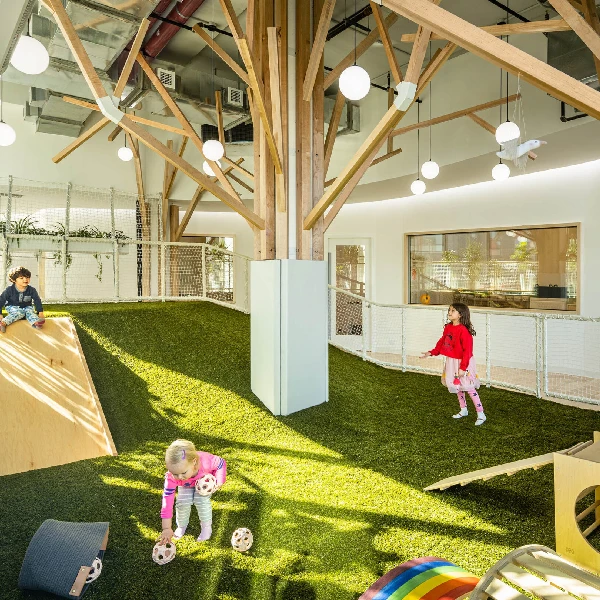

The decision to enroll a child in a Chicago private kindergarten rarely begins as a philosophical exercise. It often starts with a practical concern, how to choose a kindergarten in Chicago that does more than meet baseline expectations. Over time, that question evolves into something more nuanced. It becomes about the kind of environment that shapes how a child learns, adapts, and relates to others in an increasingly interconnected world.
What initially seemed like a logistical choice gradually revealed itself as a formative one. The experience of selecting and engaging with a school that brings together diverse cultures and languages reshaped not only my child’s development, but also my understanding of what early education can accomplish.
What We Thought Mattered at First, and What Actually Did
Most families begin their search with a familiar checklist.
Curriculum strength, safety, teacher credentials, and location tend to dominate early conversations. These are necessary considerations, but they are not sufficient. They capture what is visible, not what is transformative.
During the search for a Chicago private kindergarten, it became clear that many programs appeared similar on paper. The differentiators were subtle and often unarticulated. Open houses showcased facilities and lesson plans, yet offered limited insight into how children actually experience the environment day to day.
This created a disconnect. The metrics used to evaluate schools did not fully align with the outcomes we hoped to see. The question shifted from “Is this a good school?” to “What kind of learner will this environment shape?”
The Moment the Usual Checklist Fell Short
The turning point came with a realization that early education is less about content and more about context.
Children do not simply absorb information. They interpret it through social interaction, language, and cultural cues. A classroom that reflects a narrow range of experiences may deliver strong academics, yet still limit exposure to the diversity of thought that defines modern life.
This is where the value of a culturally and linguistically diverse kindergarten in Chicago became more apparent.
A school that functions as a melting pot does not just introduce children to different languages or traditions. It normalizes difference. It makes curiosity about others an everyday experience rather than an occasional lesson.
From a developmental perspective, this matters. Early exposure to diversity shapes how children process unfamiliar situations. It reduces hesitation and builds confidence in navigating complexity.
Why the Right Environment Quietly Shapes Everything
What stood out most was not a single program or feature, but the accumulation of small, consistent interactions.
Children greeting each other in multiple languages. Conversations that naturally incorporated different perspectives. Classroom activities that drew from a range of cultural references without feeling forced.
These moments created a rhythm that extended beyond structured learning.
In a Chicago private kindergarten environment designed this way, diversity is not an add-on. It is embedded in the daily experience. The effect is subtle but powerful. Children begin to see difference as a resource rather than a barrier.
An analogy comes to mind from organizational theory. Teams that operate across diverse viewpoints tend to produce more resilient solutions. The same principle applies here, at a much earlier stage. Exposure to varied perspectives strengthens cognitive flexibility long before it is formally taught.
Inside the Classroom, Where the Real Learning Happens
Daily classroom life revealed how thoughtfully designed environments translate into development.
There was no rigid separation between academic instruction and social interaction. Learning unfolded through conversation, collaboration, and shared exploration. Children were encouraged to express themselves, but also to listen and respond to others.
This created a dynamic that felt less like instruction and more like engagement.
In this kind of kindergarten in Chicago, learning becomes participatory. It moves beyond memorization into application. Children are not just absorbing information, they are actively interpreting it within a social context.
That distinction matters. It is the difference between knowing something and understanding how to use it.
The Small Decisions That Changed the Entire Experience
Several decisions distinguished this environment from other options considered.
First, the integration of language was organic. There was no sense of separation between “learning time” and “language time.” Communication flowed naturally, allowing children to engage without pressure.
Second, the social structure encouraged collaboration rather than competition. Group activities were designed to require input from different perspectives, reinforcing the value of listening as much as speaking.
Third, the educators demonstrated a level of attentiveness that extended beyond instruction. They observed how children interacted, where they hesitated, and how they responded to unfamiliar situations. Adjustments were made quietly, often before challenges became visible.
These elements combined to create an experience that felt cohesive rather than fragmented.
Many schools offer strong individual components. Few integrate them in a way that consistently reinforces a broader developmental objective.
The Outcomes We Never Thought to Look For
The most significant outcomes were not the ones initially anticipated.
Academic readiness improved, as expected. However, the more meaningful changes were behavioral and emotional.
There was a noticeable shift in how unfamiliar situations were approached. Instead of hesitation, there was curiosity. Instead of withdrawal, there was engagement.
This extended beyond the classroom.
Interactions in everyday settings became more confident and adaptive. Whether meeting new people or encountering different environments, there was a sense of ease that had not been present before.
From a broader perspective, this reflects an underappreciated benefit of culturally diverse early education. It does not just prepare children for school. It prepares them for variability.
In a world where change is constant, this may be one of the most valuable capabilities to develop early.
Why Early Exposure to Difference Isn’t Optional Anymore
The recommendation to choose a school that brings together multiple cultures and languages is often framed in idealistic terms.
In practice, it is a pragmatic decision.
The modern environment, whether academic or professional, is defined by interaction across differences. The ability to navigate this complexity is not innate. It is developed through repeated exposure and guided experience.
A kindergarten in Chicago that reflects this reality provides a form of preparation that is difficult to replicate later.
The benefits are not limited to language acquisition or cultural awareness. They extend to problem-solving, empathy, and adaptability. These are foundational skills that influence how individuals learn and collaborate over time.
What becomes clear is that diversity in early education is not simply about inclusion. It is about capability building.
Rethinking Kindergarten as the Start of Something Larger
Looking back, the initial search for a Chicago private kindergarten was framed too narrowly.
The focus was on finding a strong program. The outcome was discovering an environment that reshaped how learning itself is approached.
The distinction is subtle but important.
A program delivers content. An environment shapes behavior, perspective, and confidence.
The experience reinforced a broader insight. Early education is not just preparation for the next academic stage. It is the foundation for how children will engage with complexity throughout their lives.
Choosing a school that functions as a true melting pot is not simply an educational preference. It is an investment in a way of thinking, one that values openness, adaptability, and the ability to find meaning in difference.
That shift, once understood, becomes difficult to overlook.












Sign in to leave a comment.