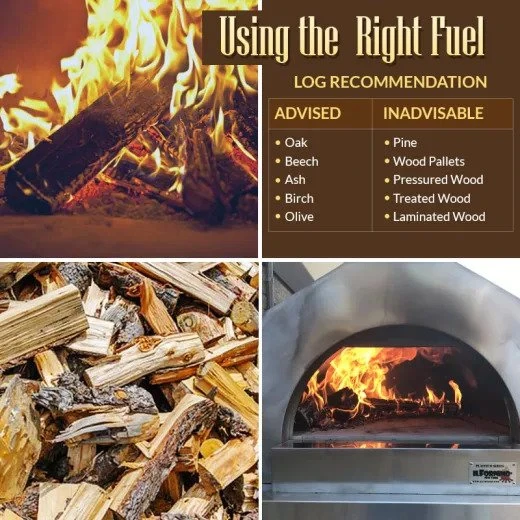

While a large variety of wood is available for various applications, using a wood-fired oven calls for the proper choice of wood for fuel. The most preferred variety is the properly seasoned kiln-dried hardwood with the right moisture content. We can also use fruitwood for extra flavor and scent.
A few prominent characteristics of an ideal wood for a wood-fired oven are-
It must burn clean, without too much smoke and soot.
The wood must not emit toxic chemicals.
The wood must produce an ample amount of heat for the oven and the type of food being baked.
It must be seasoned to the right moisture content, usually less than 20%. If not, it may not combust to generate any heat.
The hardwood should be readily available to the user at a reasonable price.
It should have a pleasing flavor profile that compliments the food.
It is also important to determine which type of wood-fired pizza oven is to be fueled. There are two types of wood-fired ovens namely, black ovens and white ovens.
In the case of a black oven, wood or coal is burned in the same chamber where food is to be cooked. That is to say, the burning wood and flames are close to the food. In the case of a white oven, the fuel is burned in a separate chamber, external to the baking area. The food in the oven chamber is sealed and is heated indirectly.
While both types of ovens can bake pizza, as an example, only the black oven can duplicate the conditions for authentic Neapolitan style pizza. As the wood and flame share the same space, it is necessary to choose the right kind of wood, since the flavor is a factor, as well as temperature.
https://youtu.be/YqM9xPlnpA0
Below are some types of kiln-dried, seasoned firewood to consider-
- Olive
- Oak
- Ash
- Birch
- Beech
- Maple
- Dogwood
Hardwood is preferred over softwood as it weighs heavier (up to 3 times more) and high BTUs are obtained from burning it therefore, more heat can be generated from it. Also, hardwoods burn cleaner and provide longer-lasting heat.
Olive wood
Olive wood is considered to be one of the best options as pizza oven firewood though it is more expensive than other varieties. It burns great, delivers extensive heat, and releases a unique fragrance, which allows for an authentic Neapolitan pizza experience.
Oak Wood
Another fine option is oak, which is strong, durable, and easy to split, resistant to fungi, readily available, and burns for the longest time. It is also safe to use and easy to source particularly in the North American region. Oak is known for imparting a good aroma to the food.
Ash Wood
When you want to start a fire immediately and easily, you must consider ash wood. It produces very little smoke and minimal sparks with a neutral aroma. The heat output for ash lies between mid to high-range but it burns clean.
Birch Wood
Amongst the species of birch, yellow and black birch proves to be the best firewood, producing an ideal heat and bright flame. It burns quickly, just like paper therefore, it is better to burn birch in combination with another kiln-dried hardwood variety, which burns slow, like oak.
American Beech Wood
The American Beech is an excellent seasoned firewood, which produces high BTU levels and very thin smoke. It mostly smells nutty or faint. The nature of this wood is ideal for several purposes as it is low on natural moisture content. Being dense hardwood, it doesn’t produce a lot of sparks and burns hot and clean.
Maple Wood
Maple wood allows for a slow and steady burn, which lasts long. A mid-priced fuel, which is extensively available in the continental United States, produces real good coals and has a very pleasant, sweet, and fresh odor. Hard maple must be avoided as it generates high levels of smoke.
Fruitwoods
Fruitwoods like almond, apricot, plum, apple, cherry, pear, hickory, and pecan have also gained prominence as popular firewood. Their fragrance adds flavor and a pleasing aroma to the food.
There are also a few varieties of softwood (oily), which can be used in wood-fired ovens namely, fir, eucalyptus, white birch, and cedar. Fir proves to be the best for kindling as it is very easy to split. The only condition is that they must be free of resinous bark and must not contain more than 20% moisture (seasoned firewood) or excess sap content. Softwood burns quickly but when combined with hardwood, it helps to slow the rate of burn.
Whichever wood you opt for, it is important to note that one must always buy local wood. Transported wood runs the risk of being diseased and proves to be expensive. The native variety is much more resourceful and fruitful.
It is inadvisable to use the below-mentioned varieties as firewood for wood-fired oven.
Processed wood like wood pellets
Laminated wood like plywood
Chemically treated or glued wood
Pressure-treated wood
Any of the above woods will produce dangerous toxins. Also, it is recommended to avoid the use of charcoal in wood-fired ovens because charcoal produces large amounts of carbon monoxide. This is not to be confused with the glowing coals that are created while the appropriate wood is being burned during the cooking cycle. All the resinous woods, which have high sap content, or oil, will produce excessive soot.
Therefore, we suggest you buy a good-quality fuel, within your budget. Having a moisture meter can help you check which pieces have been seasoned enough before you place them in the oven.
Depending on where your wood-fired oven is located, hone your technique of starting and maintaining a clean burn, as you should be mindful of your neighbors.
You should alert them that you have a wood-fired oven, so as not to trigger an unexpected visit by your local fire department.
Let this information help you enjoy your oven with repeatable success









Sign in to leave a comment.