

For decades, circadian rhythm research has been grounded in highly controlled laboratory environments. While lab-based protocols remain essential for understanding biological mechanisms, they do not always reflect how patients and participants actually live. Sleep schedules fluctuate. Light exposure varies. Social obligations, work demands, and environmental cues shape circadian rhythms in ways that are difficult to replicate inside a sleep lab.
For physicians and sleep researchers, this creates a critical challenge: how do we capture meaningful circadian outcomes in the real world without compromising scientific rigor?
This is where actigraphy has become an indispensable research and clinical tool.
Why Real-World Circadian Data Matters
Circadian rhythm disruptions often develop gradually and are influenced by daily routines. Factors such as irregular sleep schedules, rotating shifts, late-night light exposure, and lifestyle changes can alter circadian timing in ways that are difficult to capture in short, controlled assessments.
When circadian outcomes are only observed in artificial environments, important information can be missed:
- Daily variability in sleep–wake timing
- Weekday versus weekend rhythm shifts
- Behavioral patterns that contribute to circadian misalignment
- Long-term changes in rhythm stability
Real-world data provides a more complete picture of how circadian rhythms behave across typical environments. This perspective is especially valuable for understanding persistent rhythm disruptions and evaluating whether interventions lead to meaningful improvements in daily functioning.
How Actigraphy Supports Naturalistic Circadian Studies
By using a wearable actigraph, continuous rest–activity patterns can be observed across multiple days, offering insight into circadian timing as it unfolds naturally. It's used alongside subjective reporting tools such as a sleep diary. While diaries capture personal experience and perceived sleep quality, actigraphy provides objective, time-stamped data on rest–activity patterns.
This allows circadian outcomes to be observed as they naturally evolve, rather than as snapshots captured in short observation windows.
Key advantages include:
Longitudinal insight
Multi-day and multi-week monitoring reveals rhythm stability, timing shifts, and variability patterns that are invisible in single-night assessments.
Ecological validity
Data collected during normal routines reflects real behavior rather than performance shaped by laboratory conditions.
Objective measurement
Continuous movement data provides consistent, time-stamped indicators of sleep–wake timing and activity rhythms, reducing reliance on self-report alone.
Feasible large-scale deployment
Actigraphy supports data collection across larger populations and longer protocols without disrupting daily life.
Together, these strengths make actigraphy well-suited for circadian research focused on real-world outcomes, treatment monitoring, and behavioral rhythm analysis.
Clinical and Research Use Cases Beyond the Sleep Lab
Actigraphy has become especially valuable in circadian-focused research and clinical monitoring across several domains:
Circadian Rhythm Disorders
Clinicians can objectively assess sleep–wake timing and variability in patients with suspected circadian rhythm disorders, supporting diagnosis and treatment planning over extended periods.
Shift Work and Occupational Health
Researchers studying rotating shifts, night work, or extended duty hours can quantify circadian disruption in real-world occupational settings rather than relying solely on self-reported sleep logs.

Mood Disorders and Circadian Disruption
Longitudinal activity and sleep–wake data provide insight into how circadian misalignment correlates with mood fluctuations, treatment response, and functional outcomes.
Treatment Monitoring
For interventions such as light therapy, behavioral sleep interventions, or schedule adjustments, actigraphy supports objective evaluation of whether circadian alignment improves over time.
Importantly, actigraphy does not replace in-lab assessments. Instead, it complements them by extending circadian measurement into daily life, where treatment adherence, environmental exposure, and behavior patterns actually occur.
The Importance of Reliable Measurement Tools
When circadian outcomes inform clinical interpretation or research conclusions, data quality becomes critical. Device reliability, participant comfort, and consistent data capture all influence the strength of resulting insights.
Reliable actigraphy systems must support:
- Continuous long-term wear
- Stable data storage
- Consistent time alignment
- Practical deployment in field-based protocols
Well-designed instrumentation ensures that naturalistic monitoring yields interpretable, reproducible results. This foundation is essential when rhythm patterns are used to guide treatment evaluation or inform research outcomes.
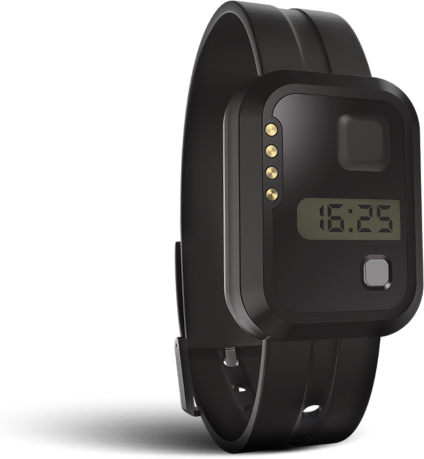
How Condor Instruments Supports Real-World Rhythm Monitoring
Condor Instruments develops actigraphy and light-monitoring solutions that support longitudinal circadian research outside traditional laboratory settings. Their systems are designed to enable consistent data capture across extended protocols, helping teams monitor rhythm patterns as they unfold in daily environments.
Their two flagship actigraph devices, ActiLumus and ActTrust 2, provide reliable, continuous data collection that enables researchers and clinicians to capture meaningful rhythm patterns outside the lab.
ActiLumus is a compact, versatile actigraph that combines movement monitoring with a light sensor, making it ideal for studies that require both activity and environmental light data. Its user-friendly design ensures participant comfort while delivering precise, time-stamped recordings over extended periods.
ActTrust 2 offers enhanced memory capacity and extended battery life, allowing for longer monitoring protocols without interruption. With multiple integrated sensors, including activity and light measurement, ActTrust 2 supports complex longitudinal studies and provides detailed insights into real-world circadian patterns.
By supporting real-world deployment, Condor Instruments allows circadian outcomes to be observed in the contexts where environmental cues, behavioral routines, and lifestyle factors shape biological rhythms. This enables more meaningful interpretation of rhythm stability, timing changes, and intervention response over time.
For projects that require continuity of data across natural settings, reliable instrumentation becomes central to achieving dependable research outcomes.
To learn more about tools designed for real-world circadian rhythm monitoring, visit Condor Instruments or contact their team.













Sign in to leave a comment.