
Introduction
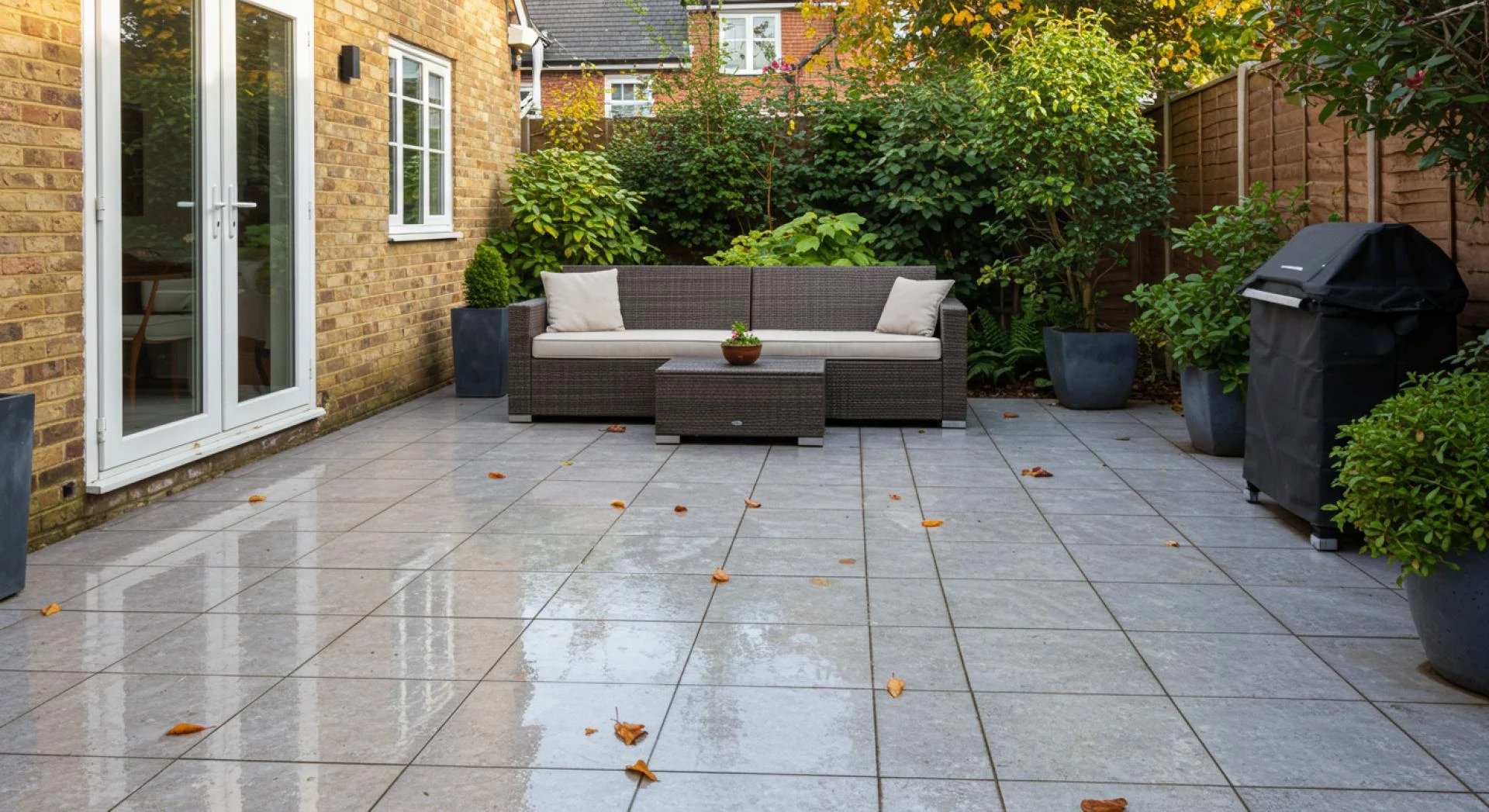
Porcelain paving has become one of the top choices in UK for garden patios and courtyards, offering both style and durability. With its stylish finishes, frost resistance, and low porosity, it promises decades of use with minimal upkeep. But let’s be clear, low maintenance doesn’t mean no maintenance. Even the toughest outdoor porcelain tiles need occasional cleaning to stay safe and beautiful.
Think about it: UK gardens face constant challenges, muddy footprints in spring, BBQ grease spills in summer, fallen leaves in autumn, and frost or moss growth in winter. Left unattended, these can dull the finish of even the most durable porcelain paving slabs.
That’s why regular cleaning is essential.The Royal Horticultural Society notes that algae, moss, and other growths on hard garden surfaces such as patios and drives can make them slippery, increasing the risk of slips and falls. In this ultimate guide, we’ll break down everything UK homeowners need to know about cleaning porcelain patio slabs, from daily care routines to eco-friendly hacks and seasonal maintenance. By the end, you’ll know exactly how to keep your garden patio fresh, safe, and ready for every season.
Why Cleaning Outdoor Porcelain Tiles Matters
Porcelain paving is engineered to be tough, but cleaning still matters. Here’s why:
Safety in Wet Weather
Slippery moss and algae can quickly build up during the UK’s damp months. Even though most porcelain paving slabs are anti-slip, letting organic matter accumulate increases the risk of accidents.
Protecting Longevity
Unlike natural stone, porcelain won’t erode with frost or absorb deep stains, but dirt left for months can become harder to remove. A little routine care extends the pristine look of your tiles.
Value
Outdoor porcelain comes in a wide range of styles—from marble-effect like Volkas Bianco to rustic designs like Rustic Copper Slate. Regular cleaning preserves those colours and textures, keeping your patio looking new.
Step-by-Step: How to Clean Porcelain Patio Slabs
Cleaning porcelain is simple when done correctly. Here’s a step-by-step method tailored to UK conditions:
Step 1: Sweep Away Debris
Leaves, soil, and grit are common in British gardens. Start by sweeping your patio with a stiff outdoor broom. This prevents scratching and avoids organic stains when wet leaves decompose.
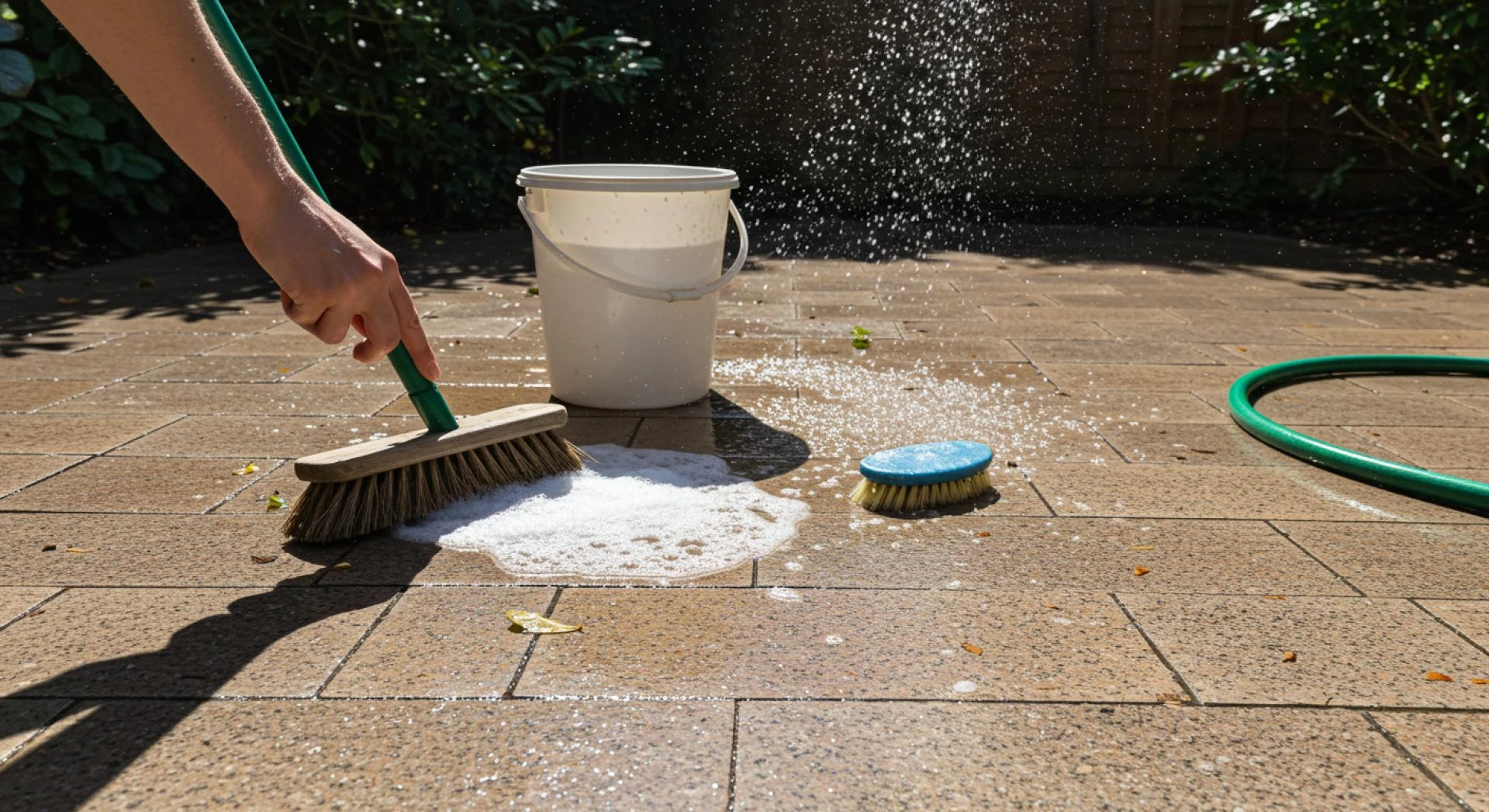
Step 2: Mix Warm Water and Mild Soap
Fill a bucket with warm water and add a small amount of pH-neutral dish soap. Harsh acidic cleaners are unnecessary for porcelain paving, as it doesn’t absorb like natural stone.
Step 3: Scrub with a Soft Brush
Dip a soft-bristle brush or mop into the soapy water and scrub gently. For stubborn patches, use circular motions. Avoid wire brushes as they can leave marks on the surface.
Step 4: Rinse Thoroughly
Rinse the patio with clean water. If you’re using a garden hose, make sure to direct water away from grout lines to avoid erosion.
Step 5: Spot Clean Stains
Porcelain is naturally stain resistant because of its vitrified, low-porosity surface. Studies on porcelain tiles confirm that they absorb less than 0.5% water, which prevents most stains from penetrating the surface. However, occasional marks such as grease or red wine may still need attention. In these cases, use a porcelain-safe cleaner, apply it directly to the stain, scrub gently with a soft brush, and rinse thoroughly.
Step 6: Refresh the Grout
Often it’s not the slabs but the grout that looks dirty. Products like Ultrascape Flowpoint Grout or can be topped up or replaced if heavily stained.
If you’re still confused, discover here the additional methods for cleaning porcelain patio slabs.
Eco-Friendly Ways to Clean Your Patio
UK homeowners are increasingly eco-conscious, and cleaning patios is no exception. Instead of harsh chemicals, try these methods:
- Soapy Water Only: For most routine cleans, mild soap is enough.
- Biodegradable Cleaners: If you need extra cleaning power, choose eco-friendly detergents safe for plants.
- Rainwater Rinse: Collect rainwater in barrels and use it for rinsing—it’s free and reduces tap water usage.
- Algae Prevention: Regularly brushing shaded areas prevents algae buildup without chemicals.
Avoid vinegar or bleach. While these are often recommended for natural stone, they’re unnecessary for outdoor porcelain tiles and may harm nearby plants.
Common Mistakes to Avoid When Cleaning Porcelain Paving
Overusing Pressure Washers
While porcelain can handle jet washing, blasting at high pressure can damage grout. Use a wide nozzle and keep the lance at least 30cm from the surface.
Using Acidic or Harsh Chemicals
Porcelain doesn’t absorb stains, so strong acids or bleach aren’t needed. These can even cause discolouration of grout.
Ignoring Spills
Grease, wine, or coffee spills may not stain porcelain deeply, but leaving them creates surface slicks that can be unsafe. Wipe them immediately.
Not Rinsing Properly
Soapy residue attracts dirt faster. Always rinse thoroughly with clean water.
Seasonal Care Routine for UK Porcelain Patios
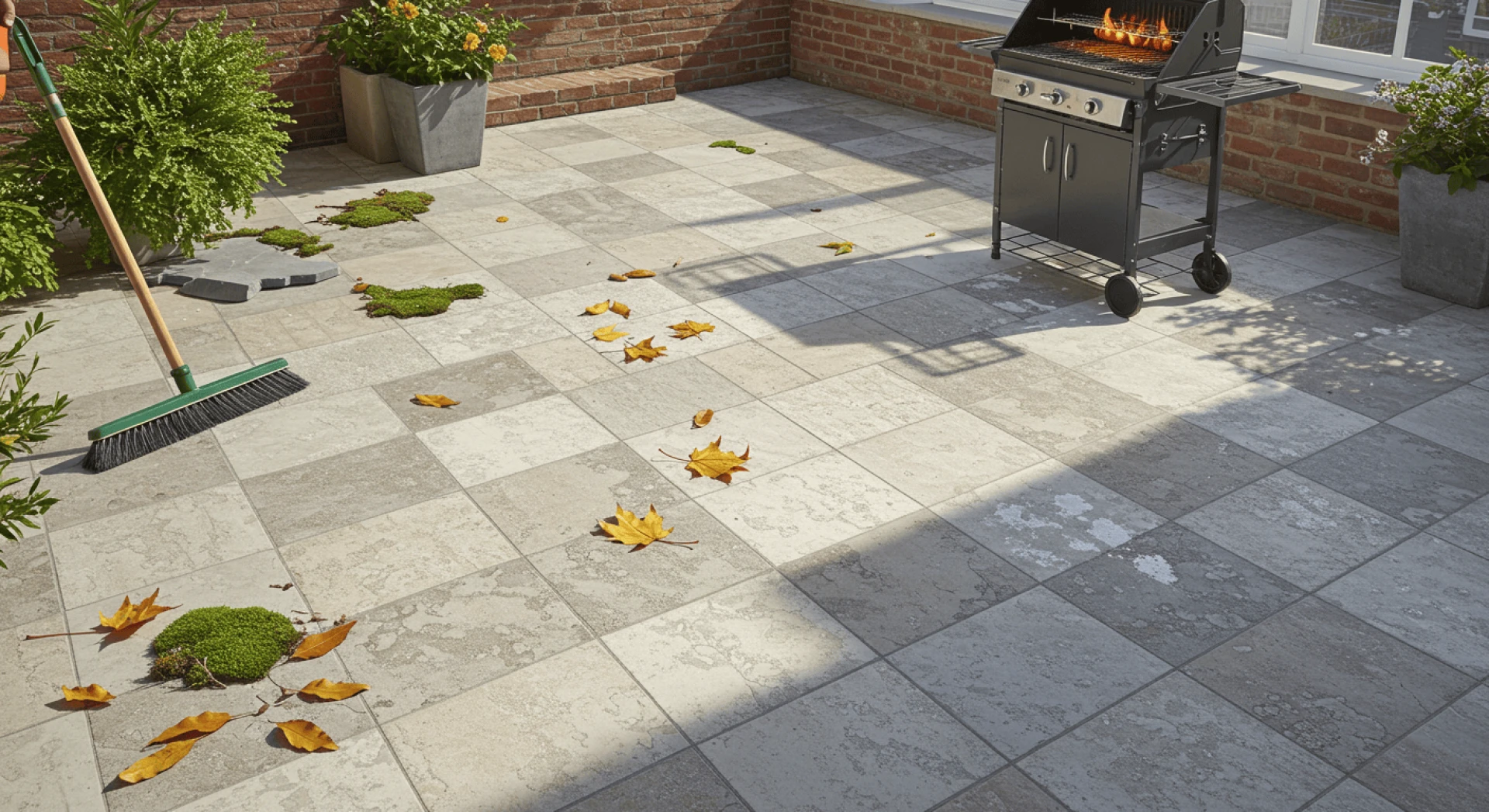
The UK’s four seasons bring unique challenges to patios. Here’s how to adapt your cleaning routine:
Spring
- Sweep away moss and debris.
- Wash with warm soapy water to remove algae.
- Inspect grout for frost damage and reapply if needed (products like Romex Rompox Easy Grout Mortar are frost-resistant).
Summer
- Rinse the patio after BBQs to avoid grease slicks.
- Use mild degreasers for stubborn patches.
- Sweep weekly to manage pollen and dust.
Autumn
- Sweep regularly to stop wet leaves from staining.
- Check drainage to avoid water pooling.
- Spot clean after heavy rains.
Winter
- Sweep snow and apply grit sparingly.
- Don’t use harsh rock salt (unnecessary for porcelain).
- Regularly check anti-slip finish by lightly brushing.
Following this seasonal rhythm keeps your patio safe, clean, and long-lasting.
Benefits of Choosing Porcelain Paving for Easy Cleaning
Why is porcelain so much easier to maintain compared to other materials like sandstone or limestone?
- Low Porosity: Absorbs less than 0.5% water, meaning stains and frost can’t penetrate.
- Durability: Manufactured at high temperatures for toughness.
- Anti-Slip Surfaces: Perfect for the UK’s rainy climate.
- Colour Stability: UV-resistant, so finishes like Opal White or Travertino Gold stay vibrant for years.
- Minimal Chemicals Required: Just soap and water for most cleans.
Outdoor porcelain tiles are built to give homeowners in the UK a patio that lasts. They resist stains, frost, fading and stay stylish with very little effort. A simple routine of sweeping, washing with soapy water, and occasional grout care is all it takes to keep them looking fresh for decades. By following eco-friendly cleaning methods and adjusting your routine for each season, you protect your investment and enjoy a safe, beautiful garden space all year round.
Porcelain paving is not just low maintenance. It is peace of mind. A little attention ensures your patio remains both practical and elegant in every season. If you are still wondering whether porcelain is the right choice for your garden, you can also learn more about why porcelain paving is the best option for UK patios.
FAQs
1. Can I use a pressure washer on porcelain paving slabs?
Yes, but keep the setting moderate. Use a fan nozzle and avoid spraying directly into grout lines.
2. What is the best cleaner for outdoor porcelain tiles in the UK?
In most cases, warm soapy water is enough. For tougher stains, choose a pH-neutral porcelain cleaner. Avoid strong chemicals like bleach or vinegar.
3. How do I remove BBQ grease stains from porcelain paving?
Blot the spill immediately, apply a mild degreaser, scrub gently with a soft brush, and rinse well. Thanks to porcelain’s stain resistance, this is usually straightforward.
4. Are porcelain tiles prone to moss and algae?
The tiles themselves do not absorb moisture, so moss and algae cannot grow inside them. However, shaded or damp areas can still develop surface growth, which can be prevented with regular sweeping.
5. How often should I clean outdoor porcelain slabs?
Sweep weekly, wash once a month, and aim for a seasonal deep clean four times a year. This routine keeps patios looking fresh with very little effort.
Related Articles:
If you found this guide useful and want to explore more Outdoor Porcelain tiles, be sure to check out these related articles:
Outdoor Porcelain Tiles: Maintenance in All Seasons
Why Porcelain Paving is the Smartest Investment for Your Outdoor Space
Why Permeable Paving & Porcelain Paving Are the Future of Sustainable Landscaping in 2025











Sign in to leave a comment.