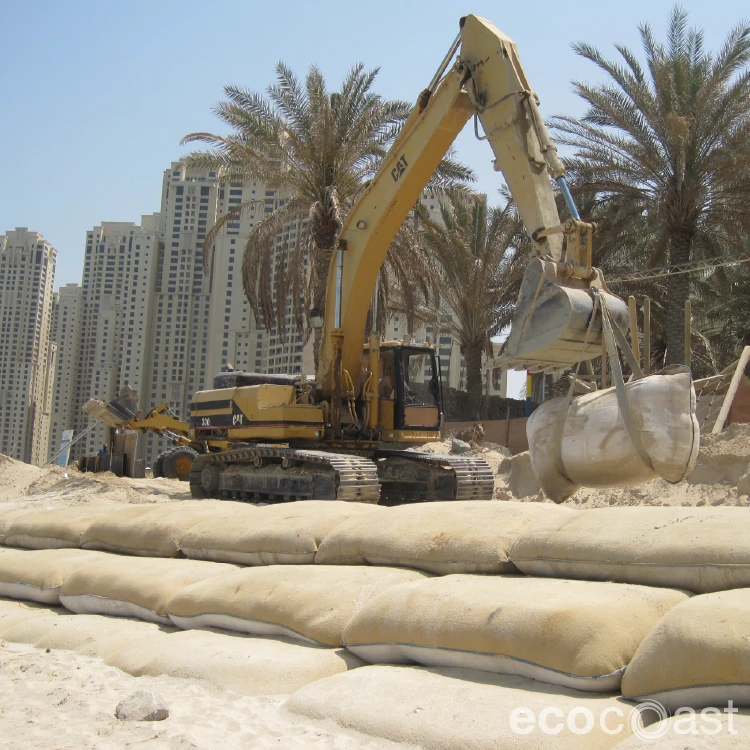

Coastal erosion is a rising challenge driven by rising sea levels, frequent storms, and human activities along the shorelines. To combat this, innovative solutions like geotextile sandbags are increasingly being used. Unlike traditional methods such as rock groynes and concrete seawalls, geotextile sandbags offer a versatile, cost-effective, and environmentally friendly approach to coastal protection.
What Are Geotextile Sand Containers?
Geotextile sand containers, also known as geotextile sandbags or geosynthetic sand containers, are durable bags or tubes made from high-strength geotextile fabric filled with sand or other locally sourced materials. These containers are flexible and adaptable, making them suitable for a variety of coastal protection applications, including groynes, seawalls, breakwaters, and artificial reefs.
Key Benefits of Geotextile Sand Containers
- Adaptability and Flexibility: Geotextile sand containers can be customized to fit different coastal environments. Their modular design allows for easy installation, removal, and modification as project requirements evolve.
- Cost-Effectiveness: Compared to traditional materials like rock and concrete, these containers are more economical. They can be filled on-site with local materials, reducing transportation and material costs.
- Environmental Compatibility: Geotextile sand containers can support marine life. Their surfaces become colonized by marine flora, which can enhance local biodiversity.
- Safety for Recreational Areas: Their sand-filled composition provides a softer, hydraulically smooth structure, making them safer for beachgoers compared to hard structures.
- Quick Installation: Ideal for urgent erosion control projects, these containers can be rapidly deployed, providing immediate protection while more permanent solutions are developed.
Applications of Geotextile Sand Containers
Geotextile sand containers are highly versatile, making them suitable for various coastal protection projects:
- Low-Crested Structures: Perfect for areas with high recreational use, providing safe and effective erosion control.
- Temporary and Emergency Installations: Their modular design allows for quick assembly, making them ideal for temporary or phased projects.
- Remote and Sensitive Locations: In areas where transporting heavy materials is challenging, these containers offer a practical solution using locally available sand.
- Artificial Reefs: They can be used to create habitats for marine life, contributing to environmental restoration efforts.
Key Challenges and Considerations
While geotextile sand containers offer numerous advantages, they also present certain challenges:
- Durability Issues: Although engineered for strength, they may degrade over time due to UV exposure, sharp debris, and high-energy wave environments.
- Displacement Risks: In extreme weather conditions, they may shift or become damaged if not properly designed and installed.
- Maintenance: Regular inspection and maintenance are essential to ensure long-term performance. Neglect can lead to reduced effectiveness and potential structural failure.
- Quality Variations: The performance of these containers heavily depends on the quality of the geotextile fabric used. Low-quality materials can lead to quicker degradation, emphasizing the importance of sourcing from reputable suppliers.
Geotextile sand containers offer a sustainable, cost-effective, and flexible approach to combating coastal erosion. Their ability to adapt to various environments, support marine biodiversity, and provide immediate protection makes them a valuable tool in modern coastal management. As part of comprehensive coastal protection solutions, these containers not only safeguard shorelines but also promote environmental resilience in the face of climate change and human impact.













Sign in to leave a comment.