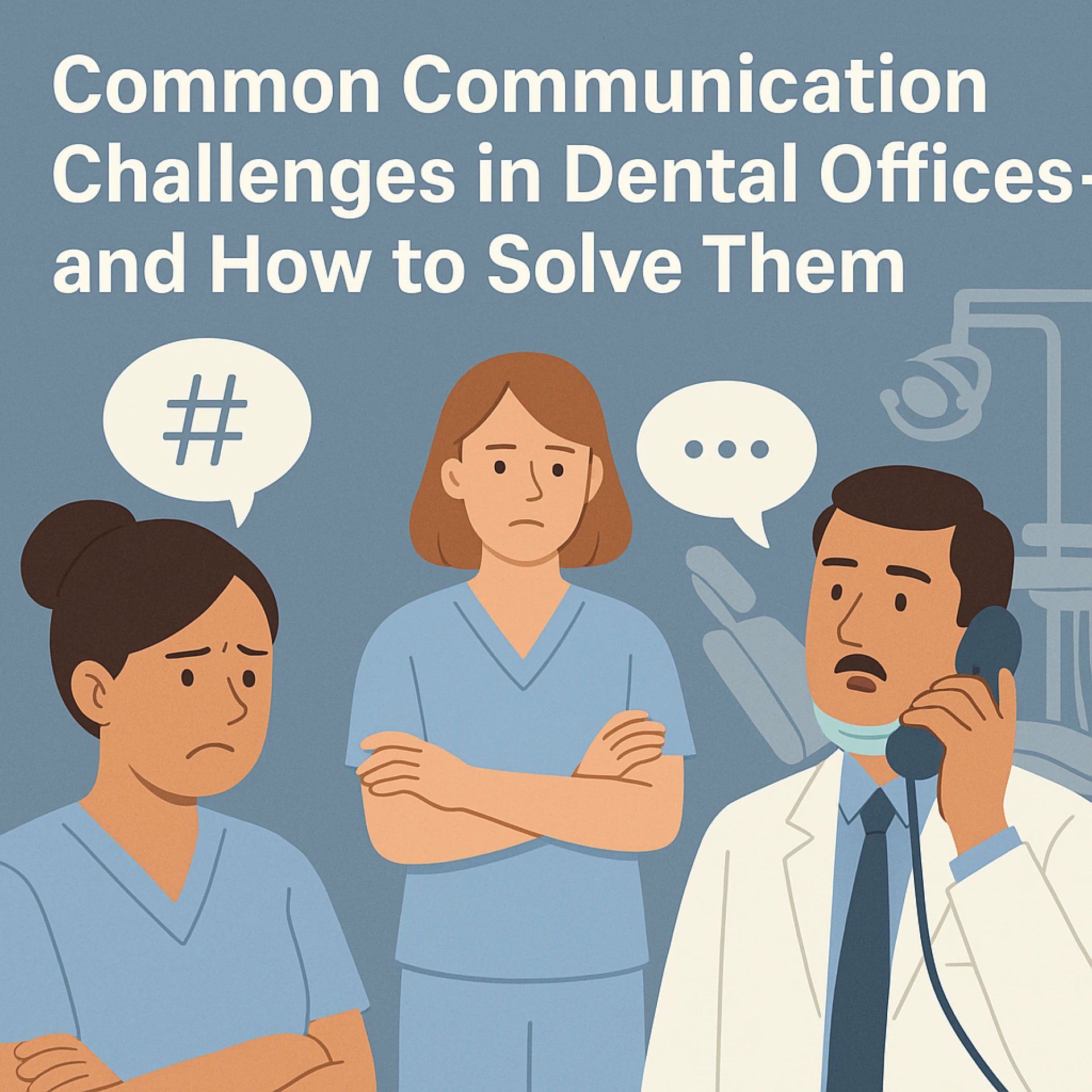

Communication is the backbone of every successful dental practice. Whether it’s between front-desk staff and patients, hygienists and dentists, or the office and external partners, clear communication ensures smooth operations and satisfied patients. Yet many dental offices still face daily communication hurdles that lead to scheduling mishaps, frustrated patients, and missed opportunities. The good news? With the right dental office communication system, strategies and tools, these challenges are easy to identify and overcome.
1. Miscommunication Between Team Members
Dental offices are busy environments where information must travel quickly between multiple people—receptionists, hygienists, dental assistants, and dentists. Unfortunately, verbal updates or handwritten notes often get lost in the shuffle, leading to confusion or duplicated tasks. A hygienist may not realize a patient has already been prepped, or a dentist might miss an update about a patient’s allergies.
To solve this, invest in a unified internal communication system or practice management platform where all staff can share updates in real time. Many modern systems offer instant messaging, appointment alerts, and task assignments that eliminate guesswork and streamline collaboration.
2. Inefficient Appointment Scheduling and Follow-Up
One of the most common pain points in dental offices is poor scheduling communication. Patients might forget appointments, misunderstand instructions, or fail to confirm their time slots. This results in no-shows and wasted chair time that impacts both patient care and revenue.
Implementing automated appointment reminders via text, email, or phone can dramatically improve attendance rates. Additionally, providing online booking options empowers patients to schedule or reschedule without back-and-forth calls. This not only saves staff time but also improves patient satisfaction by making the process easier and more flexible.
3. Confusion About Treatment Plans
Patients often leave their appointments uncertain about their treatment plans or costs. This happens when clinical explanations are rushed or filled with technical jargon. The result? Misunderstandings, delayed treatments, and reduced trust in the practice.
Dentists and hygienists can fix this by breaking down complex procedures into simple, relatable terms. Visual aids—like digital images or 3D models—help patients understand what’s happening and why. Sending a post-visit summary through the practice’s communication software also reinforces key details, ensuring patients leave informed and confident.
4. Gaps in Communication During Emergencies
Dental emergencies can happen anytime, and how quickly the office responds can make all the difference. Unfortunately, without a structured communication protocol, messages about urgent situations might not reach the right person in time.
To address this, dental offices should have a clear emergency communication plan. This includes designating point-of-contact staff, using call routing features to forward emergency calls directly to on-call dentists, and ensuring after-hours voicemails or texts are monitored. Cloud-based phone systems and mobile apps make this easier by keeping staff connected even outside regular office hours.
5. Patient Communication Barriers
Not all patients are the same—some may struggle with language differences, hearing impairments, or anxiety about dental visits. These communication barriers can cause misunderstandings or prevent patients from asking important questions about their care.
Dental offices can overcome these obstacles by offering multilingual support, visual aids, or printed instructions. For patients with dental anxiety, compassionate communication and clear explanations can go a long way in making them feel at ease. Even small gestures, like asking if they have questions before starting treatment, can strengthen trust and loyalty.
6. Lack of Consistency in Messaging
When multiple staff members handle patient communication, inconsistencies can occur—one person might quote a different price, or another might explain policies differently. This inconsistency can erode patient confidence and cause frustration.
Creating standardized communication templates for appointment reminders, billing explanations, and post-treatment instructions can solve this issue. Training staff regularly on tone, language, and procedures ensures everyone delivers a consistent, professional message that reflects the practice’s values.
7. Overreliance on Manual Communication Methods
Sticky notes, phone calls, and paper charts were once staples in dental offices—but in today’s fast-paced world, they often create bottlenecks. Manual communication is prone to delays and errors that could easily be avoided with digital tools.
Adopting an integrated dental communication system—complete with chat features, patient portals, and secure document sharing—saves time and reduces mistakes. These systems centralize communication so that everyone, from reception to chairside staff, stays on the same page.
Building a Communication-First Culture
The most successful dental practices don’t just rely on tools—they foster a culture that values communication at every level. When staff feel comfortable sharing information and patients feel heard, efficiency and satisfaction naturally improve. By identifying common challenges and implementing the right mix of training, systems, and empathy, dental offices can build stronger relationships, smoother workflows, and a more positive experience for everyone who walks through the door.














Sign in to leave a comment.