
Introduction
Audiobooks have transformed from a niche product into one of the fastest-growing segments of the publishing industry. According to the Audio Publishers Association (APA), audiobook sales have shown double-digit growth for 11 consecutive years, generating over $2 billion in revenue in the U.S. alone (2024). More than 50% of American adults listened to an audiobook in the past year, with younger audiences leading the trend.
For authors, this surge presents an incredible opportunity—but creating an audiobook involves much more than simply reading your book aloud. From choosing narration options to recording quality, production costs, and distribution platforms, each step can impact your audiobook’s success.
This guide walks you through everything you need to know about creating an audiobook in 2025, covering the creative, technical, and business aspects of production.
1. Why Authors Should Consider Audiobooks
Audiobooks are no longer optional—they’re a vital part of an author’s publishing strategy.
Benefits of Audiobook Publishing:
- Expands audience reach: Many readers now prefer listening on the go.
- Increases revenue streams: Authors earn royalties from audiobook sales on top of print and eBook formats.
- Builds accessibility: Great for visually impaired readers or those with reading difficulties.
- Enhances brand authority: Professional narration boosts credibility.
👉 Fact: In 2024, audiobook listeners completed more books per year (15) compared to eBook or print-only readers (average 8).
2. Should You Narrate Your Own Audiobook?
One of the biggest decisions in audiobook creation is choosing between self-narration or hiring a professional voice actor.
Narrating Yourself:
✅ Pros:
- Authenticity—your voice tells your story.
- Lower costs (if you have recording equipment).
- Best for memoirs, personal development, or niche nonfiction.
❌ Cons:
- Requires voice training to avoid monotone delivery.
- Demands professional recording gear.
- Time-consuming—average narration takes 6 hours of work per 1 finished hour of audio.
Hiring a Professional Narrator:
✅ Pros:
- Polished, engaging performance.
- Faster turnaround.
- Access to narrators with existing fan bases.
❌ Cons:
- Higher upfront cost.
- Less personal than the author’s voice.
👉 Industry Standard Costs: According to Voices.com (2024), audiobook narration typically costs $200–$500 per finished hour (PFH). For an 80,000-word novel (~9 hours), this ranges from $1,800–$4,500.
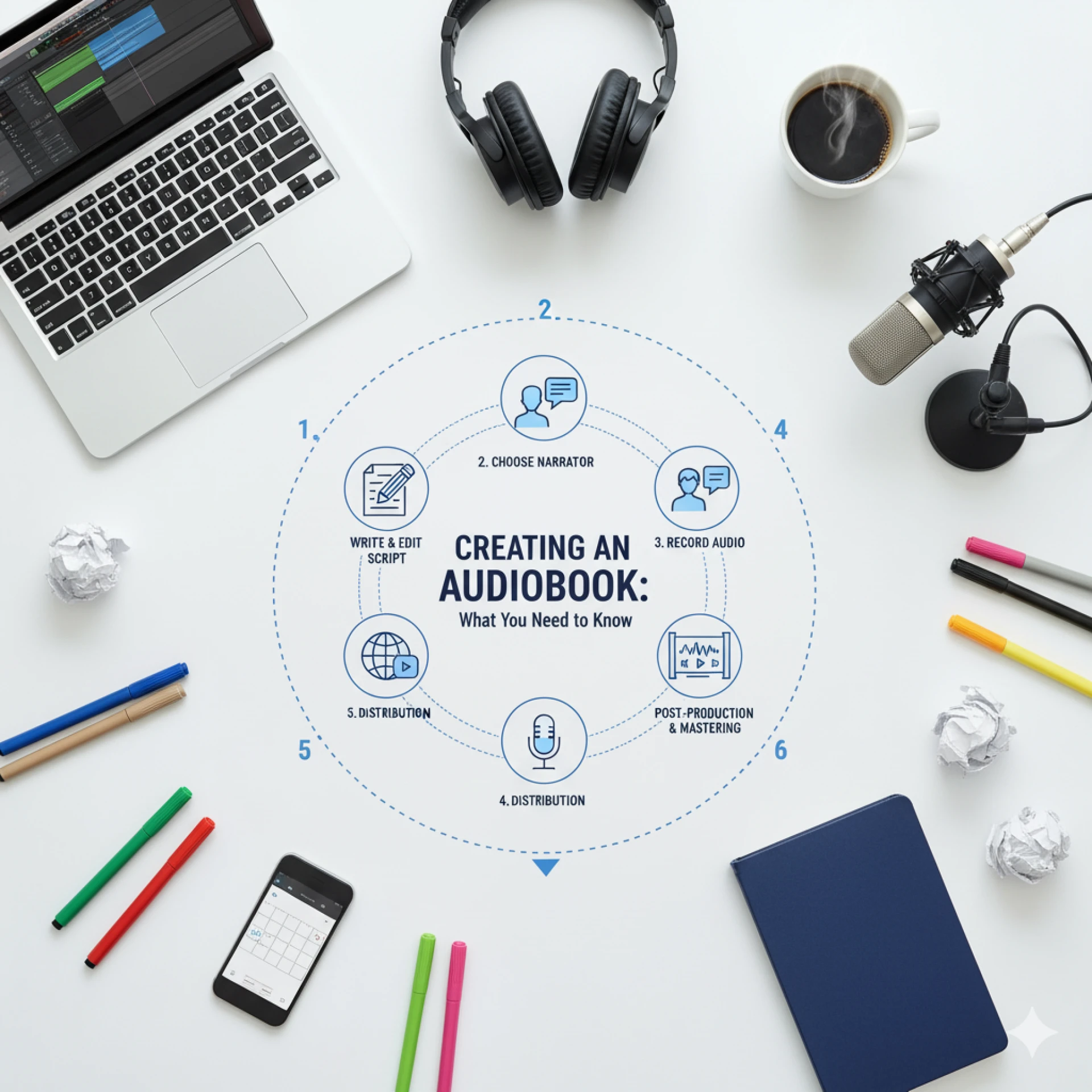
3. The Recording Process
Whether you narrate or hire someone, recording quality is crucial for listener satisfaction.
Home Studio Setup (If Self-Narrating):
- Microphone: A large-diaphragm condenser mic (e.g., Audio-Technica AT2020).
- Audio Interface: Converts sound into digital recording.
- Headphones: Closed-back studio headphones (no sound leakage).
- Soundproofing: Acoustic foam panels or DIY blankets.
- Software (DAW): Audacity (free), Adobe Audition, or Reaper.
👉 Tip: Always record in WAV format (44.1 kHz, 16-bit minimum) for ACX/Audible compliance.
4. Editing and Mastering Your Audiobook
Raw recordings require professional post-production:
- Editing: Removing mistakes, breaths, and background noise.
- Mastering: Adjusting EQ, volume levels, and consistency.
- File Formatting: Each chapter must be a separate file with proper labeling.
👉 ACX (Audible’s platform) Audio Requirements:
- RMS between -23 dB and -18 dB.
- Peak values not higher than -3 dB.
- Noise floor no higher than -60 dB.
Most authors outsource editing/mastering to engineers for $50–$200 per finished hour.
5. Platforms for Publishing Audiobooks
Choosing the right audiobook distribution platform determines your reach and royalties.
Major Options:
- ACX (Audiobook Creation Exchange)
- Owned by Audible (Amazon).
- Largest marketplace.
- 40% royalties (exclusive) or 25% (non-exclusive).
- Findaway Voices (Spotify-owned)
- Wide distribution (Apple, Google Play, libraries, Spotify).
- Author-friendly contracts.
- Non-exclusive royalties ~45%.
- Authors Republic
- Global distribution.
- Flexible pricing options.
👉 Fact: Spotify’s 2024 expansion into audiobooks makes Findaway Voices a growing alternative to Audible.
6. Marketing Your Audiobook
Producing an audiobook is only half the job—marketing determines sales.
Effective Audiobook Marketing Strategies:
- Leverage your eBook/print audience: Bundle discounts or Audible “Whispersync.”
- Give away promo codes: For early reviews.
- Podcast & radio interviews: Great for audio-focused audiences.
- Social media audio snippets: Share 1–2 minute teaser clips.
- Targeted ads: Amazon Ads and Spotify Ads for audiobook listeners.
👉 Stat: According to APA, word-of-mouth remains the #1 way listeners discover new audiobooks, making reviews critical.
7. Costs of Creating an Audiobook
Authors often underestimate the investment required.
ExpenseEstimated CostNarration (9 hrs PFH)$1,800 – $4,500Editing & Mastering$500 – $1,800Cover Design (Audiobook)$100 – $400Distribution SetupFree – $100Marketing & Ads$200 – $1,000+
👉 Total Cost Range: $2,600 – $7,500 depending on choices.
8. Common Mistakes to Avoid
Many first-time authors fall into audiobook publishing pitfalls:
- Skipping professional editing → poor sound quality.
- Using the wrong narrator → mismatched voice and story tone.
- Ignoring ACX technical requirements → rejection delays.
- No marketing plan → great book, no listeners.
- Assuming audiobook = instant success → requires strategy like print & eBook.
9. Trends in Audiobooks for 2025
The audiobook industry is evolving rapidly.
- AI Narration: Platforms like Google Play Books and ElevenLabs offer synthetic voices. While cheaper, they lack human nuance.
- Streaming Growth: Spotify’s audiobook integration opens massive new audiences.
- Short-Form Audio: Serialized audio content and podcasts merging with audiobooks.
- Multilingual Narration: Demand for translated audiobooks is increasing worldwide.
👉 Prediction: By 2027, global audiobook revenue may surpass $5 billion, making it a core publishing format.
10. Is an Audiobook Right for Your Book?
Not every book translates well into audio.
✅ Works well for:
- Fiction (romance, thriller, fantasy).
- Nonfiction (memoirs, business, self-help).
- Children’s stories (with sound effects/music).
❌ More challenging for:
- Academic or heavily referenced texts.
- Books with charts, diagrams, or extensive visuals.
👉 Tip: If visuals are essential, offer a downloadable companion PDF for audiobook listeners.
Conclusion
Creating an audiobook is both an art and business decision. From narration choices to production costs, distribution platforms, and marketing, every step matters. While the upfront investment can be significant, the long-term rewards in audience reach, revenue, and brand authority make it worthwhile.
In today’s market, not having an audiobook means leaving money and readers on the table. Whether you narrate yourself or hire a professional, plan strategically and treat your audiobook as a professional product.
Remember: your words deserve to be heard—literally.












Sign in to leave a comment.