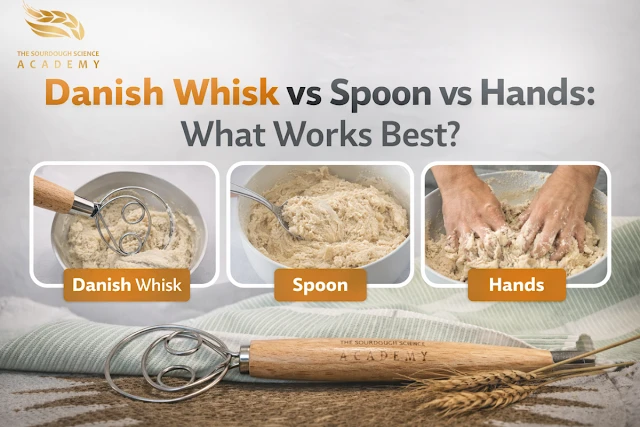

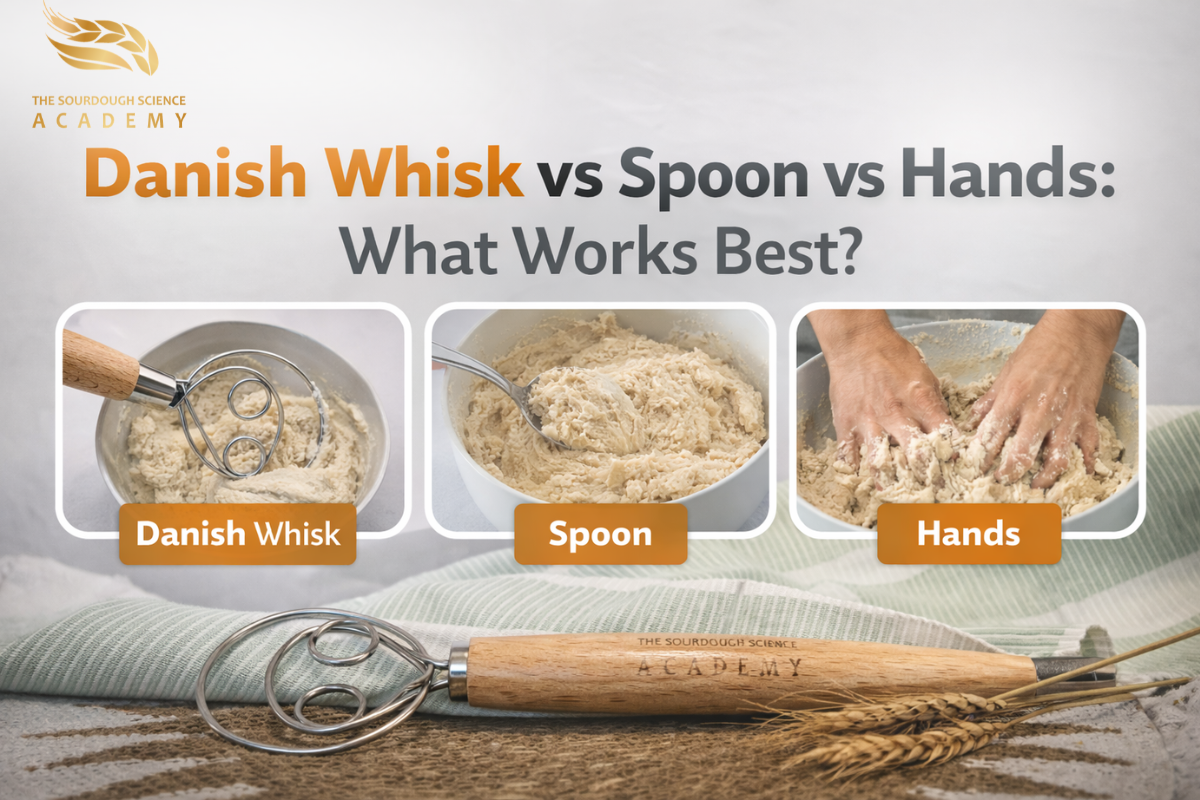
Danish Whisk vs Spoon vs Hands: What Works Best?
If you’ve ever made sourdough, you already know this truth:
👉 Mixing dough is where everything begins… and where most mistakes happen.
Sticky hands. Uneven dough. Overmixing. Frustration before fermentation even starts.
At first glance, mixing seems simple. Just combine flour and water, right?
But here’s what most bakers don’t realize:
How you mix your dough directly impacts gluten development, texture, and final bread quality.
And that leads to a big question…
What’s the best way to mix sourdough dough?
- A spoon?
- Your hands?
- Or a Danish Whisk?
Let’s break it down honestly, no fluff, no hype, just real results.
🧠 Why Mixing Method Matters More Than You Think
Before comparing tools, let’s understand why this even matters.
Sourdough isn’t just about ingredients; it’s about technique.
When you mix dough, you’re:
- Hydrating flour
- Developing gluten
- Distributing the starter evenly
- Controlling structure
If you mess this up:
- The dough becomes too sticky
- Gluten weakens or overdevelops
- Bread turns dense or flat
So yes, your mixing tool matters more than you think.
🥄 Option 1: Mixing With a Spoon
✔️ The Good
Using a spoon is often where beginners start.
Why?
- It’s convenient
- Everyone already has one
- No extra tools needed
At first, it feels like the easiest option.
❌ The Problems
But quickly, issues show up:
1. Dough Gets Stuck… Everywhere
Sticky dough clings to the spoon like glue.
You spend more time scraping than mixing.
2. Uneven Mixing
Spoons struggle to:
- Cut through thick dough
- Blend ingredients evenly
Result:
👉 Dry patches + overworked sections
3. Too Much Effort
As the dough thickens:
- Stirring becomes hard
- Your wrist does all the work
🚫 Verdict on Spoons
Spoons are:
- OK for very early mixing
- Not ideal for full dough development
👉 They’re simply not designed for dough.
✋ Option 2: Mixing With Hands
Now let’s talk about the “traditional” method.
✔️ The Good
Mixing by hand gives:
- Full control
- Better feel of the dough
- Direct connection to texture
Many bakers love this method.
❌ The Problems
But here’s the reality most beginners face:
1. Sticky Mess
Your hands become:
- Covered in dough
- Hard to clean
- Frustrating to manage
2. Inconsistent Mixing
Without experience, it’s easy to:
- Overwork dough
- Miss proper gluten development
3. Overmixing Risk
Hands make it easy to:
- Keep going too long
- Damage structure
And in sourdough…
Overmixing = weaker bread
🚫 Verdict on Hands
Hands are:
- Great for experienced bakers
- Challenging for beginners
👉 Control comes with skill, not instantly.
🌀 Option 3: Danish Whisk (The Game-Changer)
Now let’s talk about the tool most people don’t know they need…
The Danish Whisk.
✔️ What Makes It Different?
Unlike spoons or hands, this tool is designed specifically for dough.
Its unique coil structure:
- Cuts through thick mixtures
- Combines ingredients quickly
- Prevents overworking
🔥 Key Benefits
1. Faster, Even Mixing
The open coil design:
- Blends flour and water smoothly
- Eliminates dry pockets
2. Less Sticking
Unlike spoons or hands:
- Dough doesn’t cling as much
- Cleanup is easier
3. Better Dough Control
You can:
- Mix gently
- Stop at the right time
- Avoid overmixing
4. Strong & Durable
With:
- Stainless steel build
- Wooden handle grip
It’s built to last.
🧠 Why It Actually Improves Your Bread
This isn’t just about convenience.
It’s about control over your dough.
Better mixing leads to:
- Stronger gluten structure
- Better fermentation
- Improved rise
- Airier crumb
👉 Better dough = better bread.
⚖️ Side-by-Side Comparison
| Feature | Spoon | Hands | Danish Whisk |
| Mixing Speed | Slow | Medium | Fast |
| Dough Sticking | High | Very High | Low |
| Even Mixing | Poor | Medium | Excellent |
| Effort Required | High | Medium | Low |
| Overmixing Risk | Medium | High | Low |
| Beginner Friendly | Yes | No | Yes |
🏆 So… What Works Best?
Let’s be honest.
- Spoon → Too weak for dough
- Hands → Messy + skill-dependent
- Danish Whisk → Built for the job
👉 Winner: Danish Whisk
Not because it’s fancy.
Because it solves real problems:
- Sticky hands
- Uneven mixing
- Overworked dough
🍞 Real Talk: Do You Need a Danish Whisk?
No.
You can bake without it.
But here’s the better question:
👉 Do you want easier, cleaner, better results?
If yes, then it’s worth it.
Especially if you:
- Bake regularly
- Struggle with sticky dough
- Want consistent results
🧩 A Small Tool That Makes a Big Difference
Most people think better bread comes from:
- Better flour
- Better starter
But often…
The difference is in the process.
And mixing is the first step.
The right tool doesn’t just make things easier, it makes them better.
💡 Practical Tips (No Matter What You Use)
Even with the best tool, technique matters.
✔️ Keep these in mind:
- Don’t overmix; stop when combined
- Let autolyse do the work
- Use gentle movements
- Focus on consistency, not force
🎯 Final Verdict
If you’re serious about improving your sourdough:
- Skip the spoon
- Be careful with your hands
- Use a tool designed for dough
👉 The Danish Whisk gives you:
- Control
- Efficiency
- Better results
And in sourdough baking…
Small improvements create big differences.
👋 From The Sourdough Science
At The Sourdough Science, Roberto focuses on one simple idea:
👉 Make sourdough easier, smarter, and more consistent.
Because great bread shouldn’t feel complicated.











Sign in to leave a comment.