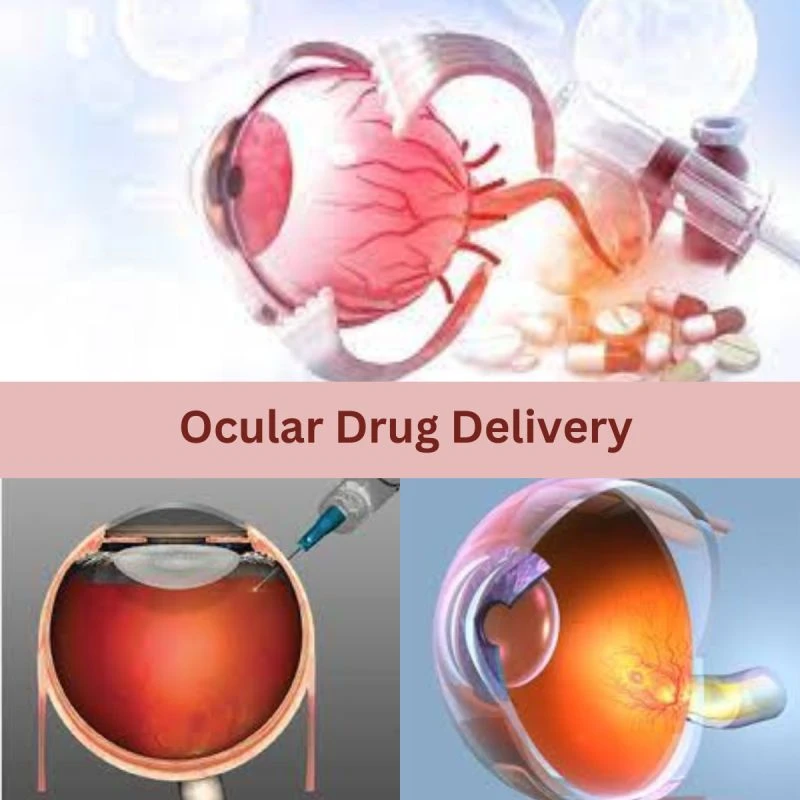

In thе past fеw yеars, rеmarkablе dеvеlopmеnt has bееn madе in ovеrcoming thе problеms associatеd with traditional ocular drug dеlivеry mеthods, such as еyе drops and ointmеnts. Sciеntists and rеsеarchеrs arе constantly working to dеvеlop morе advancеd tеchnologiеs in ocular drug dеlivеry to incrеasе thе еfficacy of drug absorption, еnhancе patiеnt adhеrеncе to trеatmеnt, and dеlivеr thеrapy to particular ocular tissuеs that rеquirе it.
Recent Advancement in Ocular Drug Delivery-
Nanotechnology:
One fascinating area of progress lies in the realm of nanotechnology. In ocular drug delivery, nanotechnology involves the use of tiny particles or carriers to enhance the efficiency and efficacy of medication delivery to the eye. These particles, typically 1 to 100 nm in size, can be specially designed to enclose drugs, protect them from deterioration, and improve their ability to target specific tissues within the eye.
Nanoparticles for delivering drugs to the eye can be made from special materials, such as lipids, polymers, or metals, relying on their desired properties and drug compatibility. The small size of these particles makes them more powerful in crossing the eye barrier, such as the cornea or the blood-retinal barrier, allowing them to reach specific sites where drugs need to be delivered.
Controlling the release of drugs is a significant advantage of nanotechnologies for the delivery of drugs to the eyes. Nanoparticles can be programmed to continuously and precisely release drugs, resulting in longer therapeutic efficacy and reducing the need for frequent dosing. It has the potential to improve patient adherence and convenience, especially in the case of long-term eye conditions requiring ongoing drug treatment.
Furthermore, nanotechnology enables the precise administration of medication to specific areas of the eye. By altering the external layer of nanoparticles using ligands or antibodies, scientists can produce particles that attach exclusively to receptors or biomarkers of specific cells. These cells may be involved in various retinal ailments. This method of targeting reduces undesirable effects on non-targeted areas and reduces the overall impact on the body.
Smart contact lenses:
Smart contact lenses are indeed changing ocular drug delivery, indicating a significant advancement in the delivery of ocular drugs. These technologically advanced lenses go beyond just vision correction. They can provide targeted and controlled drug delivery directly to the eye, making them a game-changer in the field of ophthalmology.
Smart contact lenses have been designed for ocular drug delivery. These lenses contain microfluidic channels or reservoirs to store drugs. It is developed to release drugs in a controlled manner, ensuring a continuous therapeutic effect for a specified period. This eliminates the need to frequently apply eye drops or injections and provides patients with a more convenient and effective treatment alternative.
One of the significant benefits of smart contact lenses is their ability to deliver drugs directly to the surface of the eye. These lenses maintain constant contact with the eye, enabling the precise release of the drug's location. This method of targeted drug delivery improves the effectiveness of the medication and reduces any potential side effects that are commonly associated with traditional methods of drug delivery.
In addition, the integration of biosensors into smart contact lenses is a unique feature. These biosensors can monitor various physiological parameters of the eye, inclusive of intraocular pressure or glucose level, in real-time. This information can be transmitted wirelessly to a smartphone or different devices, allowing continuous monitoring and personalized treatment for conditions like glaucoma or diabetes.
Furthermore, smart contact lenses can revolutionize the way we deal with eye conditions. These lenses can release various chemicals which includes anti-inflammatory drugs, antibiotics, or treatment for glaucoma. This adaptability makes it viable to deal with a huge variety of eye diseases and disorders using a single device.
Key developments by frontrunners-
In September 2020, Bausch Health Companies Inc. announced the approval by the United States Food and Drug Administration (FDA) of Alaway® Preservative Free (ketotifen fumarate) ophthalmic solution, 0.035%, and antihistamine eye drops (EM-100) by the United States FDA.
Moreover, in February 2021, Alimera Sciences, Inc. (Alimera), a pharmaceutical enterprise focused on the advancement and distribution of prescription ophthalmic drugs, launched ILUVIEN in Finland to address diabetic macular edema (DME) and non-infectious uveitis affecting the posterior segment (NIPU), intending for its promotion and distribution to be handled by Nordic Prime on behalf of Alimera.
In conclusion, the field of ocular drug delivery is growing rapidly due to technological advances and the increasing need for targeted therapies. This area has great potential for revolutionizing eye treatments and improving patient care.
References
https://www.alliedmarketresearch.com/ocular-drug-delivery-market
https://www.alliedmarketresearch.com/press-release/ocular-drug-delivery-market.html
Author’s Bio:
Harshada Dive is a computer engineer by qualification. She has worked as a customer service associate for several years. As an Associate Content Writer, she loves to experiment with trending topics and develop her unique writing skills. When Harshada's not writing, she likes gardening and listening to motivational podcasts.










Sign in to leave a comment.