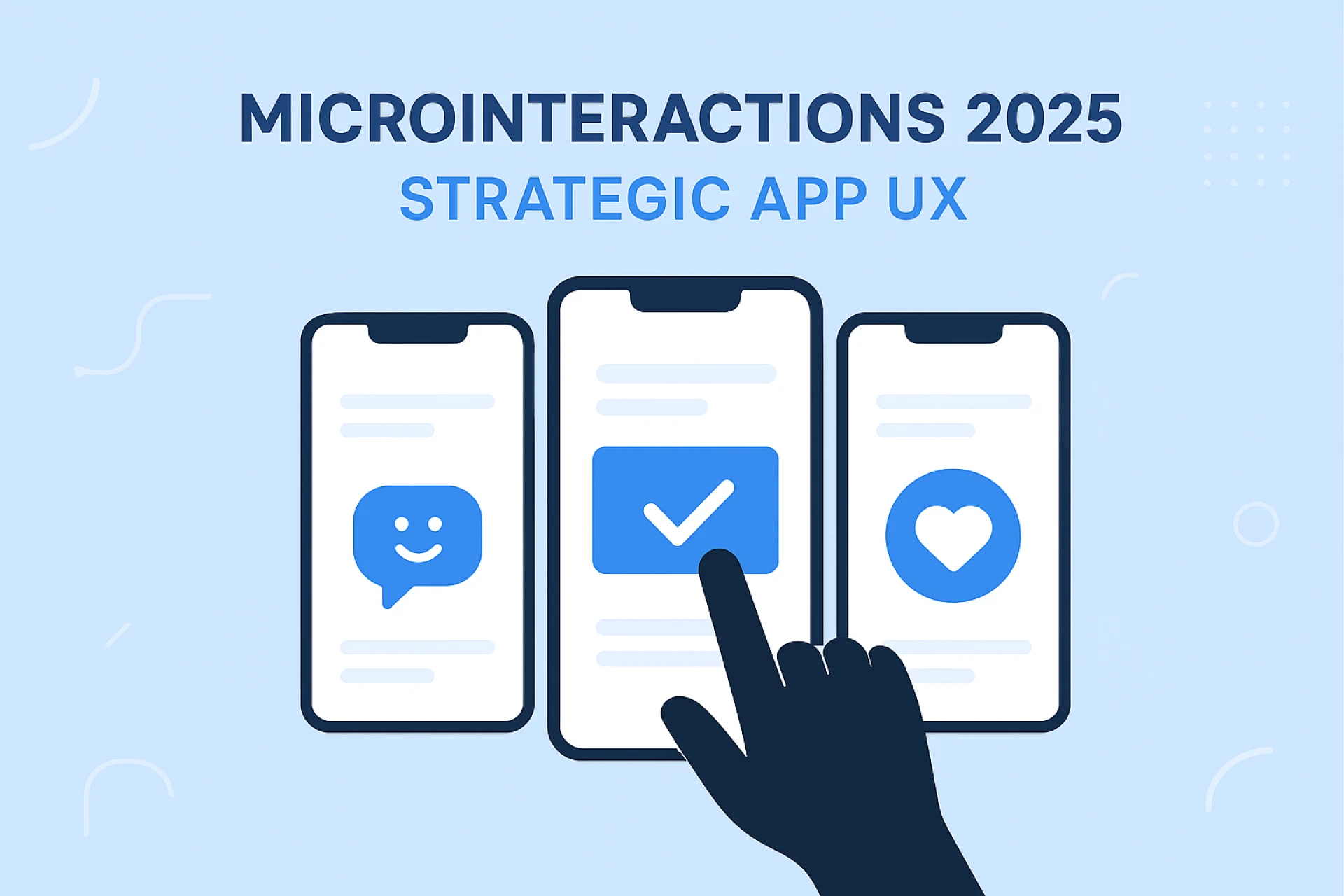

In the fast-evolving world of digital experiences, success is often determined not just by how functional a product is, but by how it feels to use. Subtle animations, interactive cues, and thoughtful design touches play a critical role in shaping these experiences. These seemingly small details, known as micro interactions, are at the heart of what makes digital products intuitive, enjoyable, and memorable. As we move toward Micro Interactions 2025, businesses and designers alike must embrace evolving trends to deliver delightful user experiences that go beyond mere usability.
What Are Micro Interactions?
Micro interactions are the subtle, moment-to-moment design elements that guide users, give feedback, and make digital experiences engaging. Think of the “like” button animation on social media, the typing indicator in a chat app, or the smooth transition when switching tabs on a mobile app. While they may appear small, these details shape the user’s emotional connection with a product.
In UX design, micro interactions serve four main purposes:
- Providing feedback – showing users the outcome of their action.
- Guiding behavior – directing users through tasks and flows.
- Improving system status visibility – showing progress, errors, or waiting times.
- Adding personality – humanizing the interface to make it more engaging.
Why Micro Interactions Matter in 2025
As digital platforms become increasingly competitive, businesses are focusing on creating experiences that not only work but also resonate emotionally. Micro Interaction Trends in UX 2025 highlight how brands are leveraging design details to:
- Build trust: Clear, responsive feedback reduces user uncertainty.
- Increase engagement: Playful touches encourage users to explore more.
- Enhance accessibility: Subtle cues make apps easier to navigate for all users.
- Differentiate products: Unique micro interactions create memorable brand signatures.
With AI-driven personalization and immersive technologies like AR and VR on the rise, the next wave of Micro Interactions 2025 will be smarter, context-aware, and seamlessly integrated.
Essential Principles of Effective Micro Interactions
To design micro interactions that truly delight, consider these foundational principles:
1. Clarity Over Clutter
Micro interactions should simplify the user experience, not overwhelm it. For instance, a progress indicator while uploading a file should be clear, subtle, and unobtrusive. The goal is to reduce cognitive load, not add distractions.
2. Consistency Across the Ecosystem
Consistency builds familiarity. If button animations differ across pages, it can confuse users. A cohesive set of micro interactions ensures that users know what to expect, making navigation more seamless.
3. Feedback with Purpose
Micro interactions should communicate meaningful information. For example, a vibration when entering the wrong password or a color change when toggling settings ensures users immediately understand system responses.
4. Emotional Engagement
Humans respond emotionally to subtle design cues. Playful animations—like a heart “popping” when liked—create delight and strengthen brand connection. However, balance is key: avoid making interactions gimmicky or excessive.
5. Accessibility and Inclusivity
Micro interactions must cater to all users. Motion-based cues should have alternatives for users with visual impairments, and haptic feedback should support those with accessibility needs. Designing with inclusivity in mind ensures a universal experience.
6. Context Awareness
With AI and machine learning, micro interactions are becoming smarter. Imagine an app that adjusts the complexity of its guidance based on whether a user is new or experienced. This personalization is a defining aspect of Micro Interaction Trends in UX 2025.
Examples of Micro Interaction Trends in UX 2025
- AI-Driven Adaptive Interactions
- Apps will increasingly use AI to personalize micro interactions. For example, predictive text suggestions will not only be functional but visually adaptive, highlighting the most relevant choice dynamically.
- Gesture-Based Micro Interactions
- With AR, VR, and wearable tech expanding, gestures and motion recognition will influence how users interact. A wave, nod, or glance may trigger micro interactions in immersive environments.
- Haptic Feedback Enhancements
- From mobile apps to gaming, haptic micro interactions will simulate touch-like sensations, offering a more tactile and realistic experience.
- Sustainability-Driven Design Cues
- Eco-conscious design is making its way into UX. Subtle prompts, like animations showing reduced energy use when dark mode is enabled, connect micro interactions with broader values.
- Minimalist Animation Patterns
- With growing emphasis on accessibility and speed, lightweight and minimalist animations are trending. These ensure performance efficiency while still enhancing user delight.
Best Practices for Designers in 2025
- Prototype Early: Test micro interactions in wireframes or mockups before final implementation.
- Prioritize Performance: Heavy animations can slow apps. Keep micro interactions lightweight.
- Gather Feedback: Conduct usability testing to see how users respond emotionally and functionally.
- Balance Subtlety and Impact: Too subtle and users may miss it, too flashy and it becomes distracting.
- Evolve with Technology: Stay updated on AR, VR, and AI-driven personalization tools shaping micro interaction design.
Conclusion
As we step into the future of Micro Interactions 2025, design details are no longer optional—they’re essential. These small moments of feedback and engagement determine whether a digital product feels frustrating or delightful. By embracing emerging Micro Interaction Trends in UX 2025—from AI-powered personalization to inclusive, accessible design—businesses can create experiences that stand out in a crowded digital landscape.
In UX design, details matter. And when micro interactions are designed with clarity, consistency, and emotional intelligence, they transform digital products into experiences users love to return to.










Sign in to leave a comment.