
The Pressure to Deliver Has Never Been Higher
In today’s hyper-digital world, enterprises are under constant pressure to innovate, deploy faster, reduce costs, and maintain system reliability. Customers expect new features in weeks, not months. Downtime is unacceptable. Operational inefficiency leads to competitive loss. For most large organizations, the legacy models of development and deployment simply can’t keep up. This is where DevOps for Enterprise comes into play not as a buzzword, but as the backbone of modern software delivery and operations.
Breaking Down the Barriers Between Teams
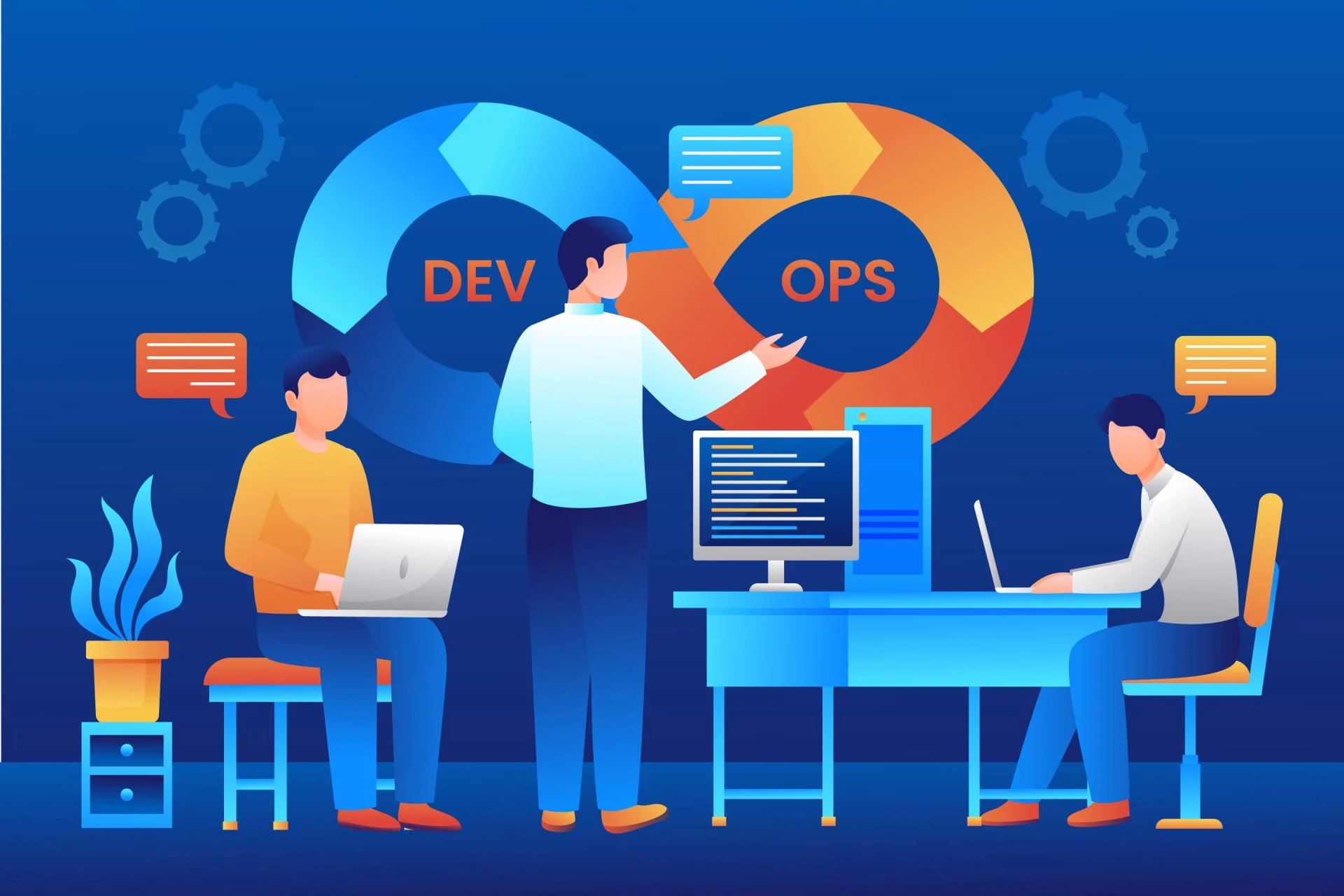
DevOps for Enterprise removes traditional barriers between development, testing, and IT operations. Instead of treating these as isolated silos, DevOps builds a collaborative culture where continuous integration, automated testing, and real-time feedback loops allow teams to work together seamlessly. For enterprises, this collaboration results in faster releases, fewer errors, and more reliable services across the board.
Scaling with Automation and Efficiency
Enterprises often operate across multiple teams, business units, and geographies. DevOps enables them to implement automated workflows that scale across code deployment, environment provisioning, monitoring, and incident resolution. This level of automation significantly reduces manual overhead and allows large businesses to focus on innovation, rather than repetitive maintenance tasks. As cloud-native architecture and microservices become the norm, DevOps becomes a necessity to orchestrate these complex, distributed systems.
Enabling Smarter, Data-Driven Decision Making
DevOps doesn’t just improve code releases, it improves intelligence. With continuous monitoring and analytics built into DevOps pipelines, enterprises gain real-time visibility into performance, user behavior, and infrastructure health. This empowers IT leaders and business units to make data-backed decisions on feature releases, capacity planning, and risk mitigation. In an era where data is the differentiator, this visibility is invaluable.
DevOps as a Pillar of Enterprise Resilience
The need for digital resilience, whether against cyber threats, system crashes, or market volatility, has never been greater. DevOps for Enterprise introduces the ability to detect, diagnose, and resolve issues in near real-time. Automated rollback mechanisms, robust CI/CD pipelines, and active monitoring ensure that enterprises can recover quickly, adapt instantly, and maintain trust with users and partners. It’s not just about uptime, it’s about business continuity.
Future-Ready Infrastructure Starts with DevOps
As enterprises move toward AI, ML, IoT, and edge computing, the complexity of infrastructure continues to grow. DevOps provides the operational agility required to support experimentation, deploy machine learning models at scale, and run multi-cloud applications securely. Enterprises that invest in DevOps are not just improving current operations, they are building a future-ready digital core that can handle what’s next.












Sign in to leave a comment.