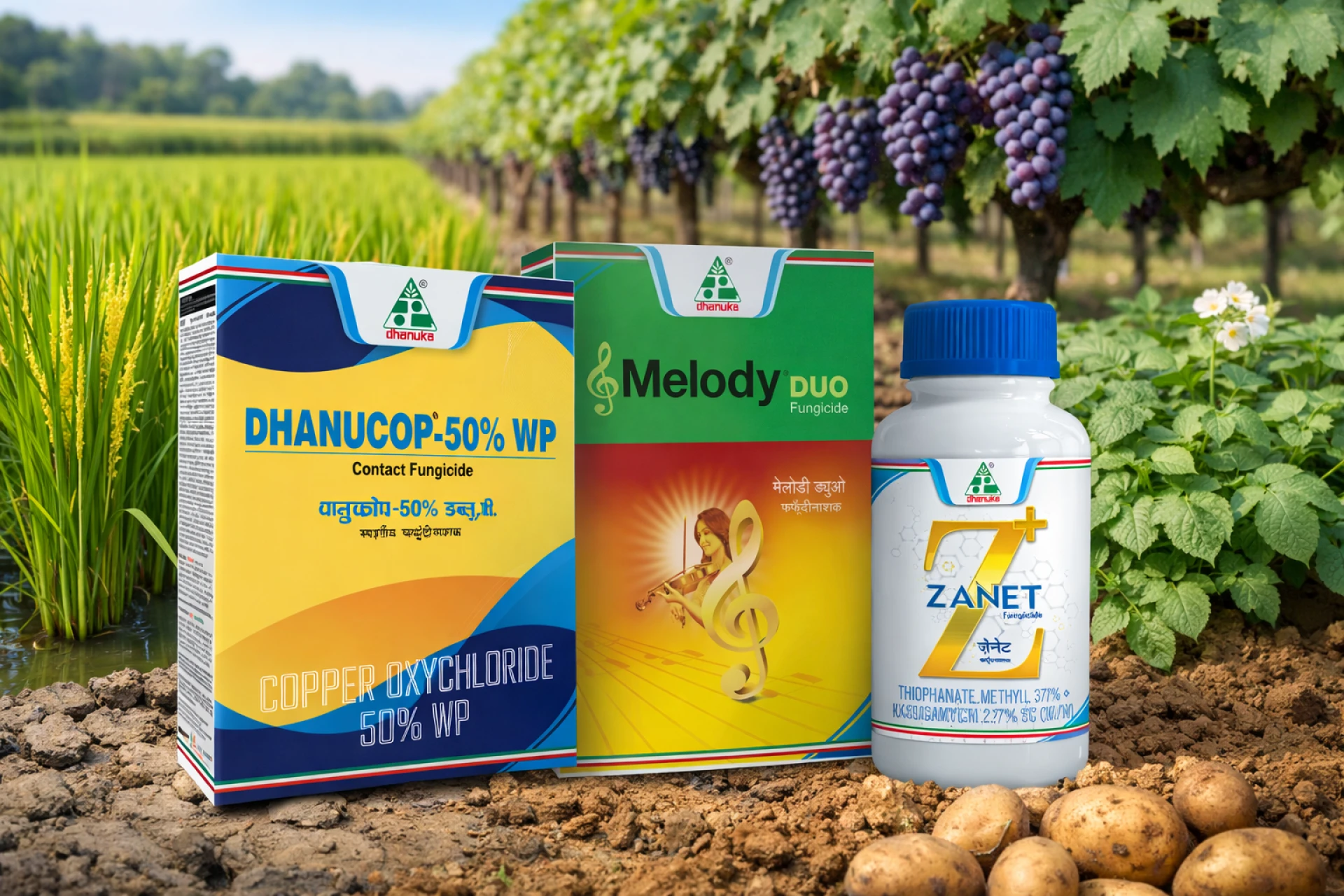
Fungal diseases are one of the biggest challenges farmers face today. Left unchecked, they can destroy crops, reduce yield, and affect quality. That’s why effective crop protection is more important than ever. Fungicides play a crucial role in maintaining healthy fields, and Dhanuka provides a wide range of solutions tailored to different crops, including rice, grapes, potatoes, and more.
Why Fungicides Matter?
Crops are constantly exposed to fungal threats that attack leaves, stems, fruits, and roots. Without proper intervention, these infections can spread quickly, damaging entire fields. Using high-quality fungicide products is not just about saving a crop; it’s about securing the farmer’s livelihood. Modern fungicides are designed to target specific pathogens, ensuring protection while minimizing negative impacts on soil and the environment.
Dhanuka’s formulations are made with reliable fungicide chemicals, providing farmers with effective tools to keep their crops strong and resilient. Knowing when and how to use them is key to achieving the best results.
Fungicides for Rice
Rice, being a staple for millions, is highly susceptible to fungal diseases like blast, sheath blight, and brown spot. Even minor infections can lead to serious yield losses. Dhanuka’s rice fungicides are formulated to protect plants from these threats while supporting healthy growth.
Applying fungicides at the right time helps prevent disease outbreaks, ensures uniform plant growth, and maintains grain quality. When combined with proper irrigation, spacing, and nutrition, Dhanuka fungicides become a cornerstone of successful rice farming.
Fungicides for Grapes
Grapes are a delicate crop, sensitive to powdery mildew, downy mildew, and anthracnose. These diseases affect both fruit quality and vine health. Dhanuka offers fungicide products for grapes that provide effective disease control without harming the crop.
Timing is crucial in vineyards. Applying fungicides during key growth stages and regularly monitoring the plants can prevent infections from taking hold. Dhanuka’s solutions help growers maintain high-quality fruit while reducing the risk of chemical overuse. Integrating these fungicides into a holistic crop care plan ensures healthier vines and better harvests.
Fungicides for Potatoes
Potatoes face threats like late blight, early blight, and leaf spot, which can severely affect tuber quality and market value. Dhanuka fungicides are designed to protect both the foliage and tubers, ensuring the crop remains healthy from planting to harvest.
Preventive and curative applications are essential. Fungicides keep the leaves free of infection, allowing the plant to develop strong tubers. Using Dhanuka’s products ensures long-lasting protection while supporting overall plant vitality and yield.
Fungicides for Other Crops
Dhanuka’s fungicides aren’t limited to rice, grapes, and potatoes. Vegetables, pulses, and horticultural crops also benefit from targeted protection. Tomatoes, cucumbers, okra, and other high-value crops are prone to fungal infections like leaf spot, powdery mildew, and damping-off. Applying the right fungicide at the right time can prevent losses and improve harvest quality.
The flexibility of Dhanuka’s range allows farmers to adopt a consistent approach to disease management across multiple crops. Understanding each crop’s unique needs and applying the appropriate fungicide ensures optimal growth and productivity.
Best Practices for Fungicide Use
Choosing the right fungicide is just the first step. Effective application requires attention to timing, dosage, and rotation. Here are some essential tips:
Identify Diseases Early: Timely recognition allows immediate action, reducing the severity of outbreaks.
Follow Recommended Dosages: Correct dosing maximizes effectiveness and minimizes resistance.
Rotate Fungicide Chemicals: Alternating products with different modes of action prevents pathogens from developing resistance.
Apply at Key Growth Stages: Protecting crops during vulnerable periods ensures better results.
Combine with Agronomic Practices: Good irrigation, soil management, and nutrition amplify the benefits of fungicide application.
By following these guidelines, Dhanuka fungicides can deliver maximum protection while promoting sustainable farming.
Why Farmers Choose Dhanuka?
Dhanuka’s fungicides are trusted by farmers because they are designed with both efficacy and crop safety in mind. With products tailored for a variety of crops, growers can achieve stronger, healthier plants and higher yields. From staple grains to high-value fruits and vegetables, Dhanuka provides practical solutions that fit into real-world farming conditions.
Using Dhanuka’s fungicides as part of a thoughtful disease management strategy helps farmers maintain productivity while minimizing environmental impact. These products combine science-backed protection with ease of use, making them a reliable choice for modern agriculture.
Last But Not Least
Protecting crops from fungal diseases is essential for healthy yields and sustainable farming. Dhanuka offers a comprehensive range of fungicides suitable for rice, grapes, potatoes, and other crops, providing farmers with the tools they need to succeed. By applying the right product at the right time and following best practices, growers can maintain healthier fields, improve crop quality, and safeguard their harvest.
Whether managing staple foods or high-value crops, Dhanuka fungicides provide effective protection and peace of mind. With the right fungicide chemicals and carefully formulated fungicide products, farmers can confidently face fungal threats and achieve productive, profitable fields year after year.
FAQs
1. What crops can be protected using Dhanucop® fungicide?
Dhanucop® is effective on a variety of crops like grapes, potatoes, and vegetables, protecting them from fungal diseases such as downy mildew and leaf spots.
2. How does Melody Duo® help in managing rice fungal infections?
Melody Duo® combines powerful active ingredients to control blast, sheath blight, and other rice diseases, ensuring healthy growth and improved yield.
3. Can ZANET® be used safely on high-value fruits?
Yes, ZANET® is formulated for fruits like grapes and tomatoes, providing broad-spectrum protection while maintaining fruit quality and safety.
4. What is the best application time for Dhanucop® in potato fields?
For potatoes, Dhanucop® should be applied at early signs of blight or leaf spot to prevent disease spread and maximize tuber health.
5. How often should Melody Duo® be applied to rice crops?
Melody Duo® is typically applied at critical growth stages or when fungal symptoms appear, following the recommended dosage for optimal results.
6. Is ZANET® suitable for organic farming practices?
ZANET® is effective for conventional crops; consult agronomic guidelines to integrate it safely into eco-friendly or integrated pest management systems.
7. Can Dhanucop®, Melody Duo®, and ZANET® be rotated to prevent resistance?
Yes, alternating these Dhanuka fungicide products helps manage fungal resistance while ensuring continuous protection across crop cycles.
8. Are Dhanuka products like Melody Duo® safe for the environment?
Dhanuka formulates Melody Duo® and similar products to target pathogens effectively while minimizing environmental impact when used as directed.
9. Which fungal diseases can ZANET® control in vegetable crops?
ZANET® protects against common vegetable fungal diseases such as leaf spots, powdery mildew, and damping-off, keeping plants healthy and productive.
10. How do Dhanucop® and Melody Duo® improve crop yield?
By controlling fungal infections early, these fungicides ensure healthier leaves, stems, and fruits, leading to stronger plants and higher, better-quality yields.













Sign in to leave a comment.