
There's a particular challenge that only developers of large-scale projects truly understand.
You're not building one apartment building. You're creating an entire ecosystem—multiple towers, phased developments, integrated amenities, mixed-use spaces, community areas. The scope is massive. The vision is complex. And explaining all of that to a buyer in a coherent, compelling way? That's genuinely difficult.
A buyer might be interested in Tower A, but the amenities they love are in Tower C, which won't be completed for another 18 months. They need to understand how the different phases connect. They need to see that the sports complex they're excited about will indeed be accessible from their unit even though it's being built in a later phase. They need confidence that the master plan makes sense, not just as a concept, but as a lived experience.
This complexity is exactly where digital twin technology for real estate becomes invaluable for large-scale developments. It's not just a sales tool—it's the infrastructure that lets you manage the narrative of an enormous project while keeping buyers informed and engaged.
The Complexity Problem in Large Developments
Let's think through what a typical large-scale real estate project involves.
You might have:
- Multiple towers with different unit configurations
- Phased construction timelines spanning 3-5 years or more
- Numerous amenities spread across the property
- Complex parking arrangements
- Retail spaces, office components, or other mixed-use elements
- Significant site features—landscaping, water bodies, recreational areas
Now imagine a buyer trying to grasp this with traditional tools. A floor plan shows one unit in one tower. A rendered image shows an amenity, but from what angle? How does it integrate with the rest of the property? If they're interested in Tower B but phases out in year three, how do they know if waiting is the right move?
The sales team tries to explain through multiple conversations, maybe with a physical model or aerial renderings. But even the best explanation still leaves gaps. The buyer might not truly understand sightlines between towers. They might not grasp the actual scale of the community. They're making a massive financial commitment based on incomplete spatial understanding.
This is particularly challenging when the buyer is relocating from another city or country. They can't just pop down for a site visit every few weeks. They're trying to make a decision based on limited on-site exposure and imperfect explanations. The dropout rate in these situations is often significant.
How Digital Twin Technology Unravels the Complexity
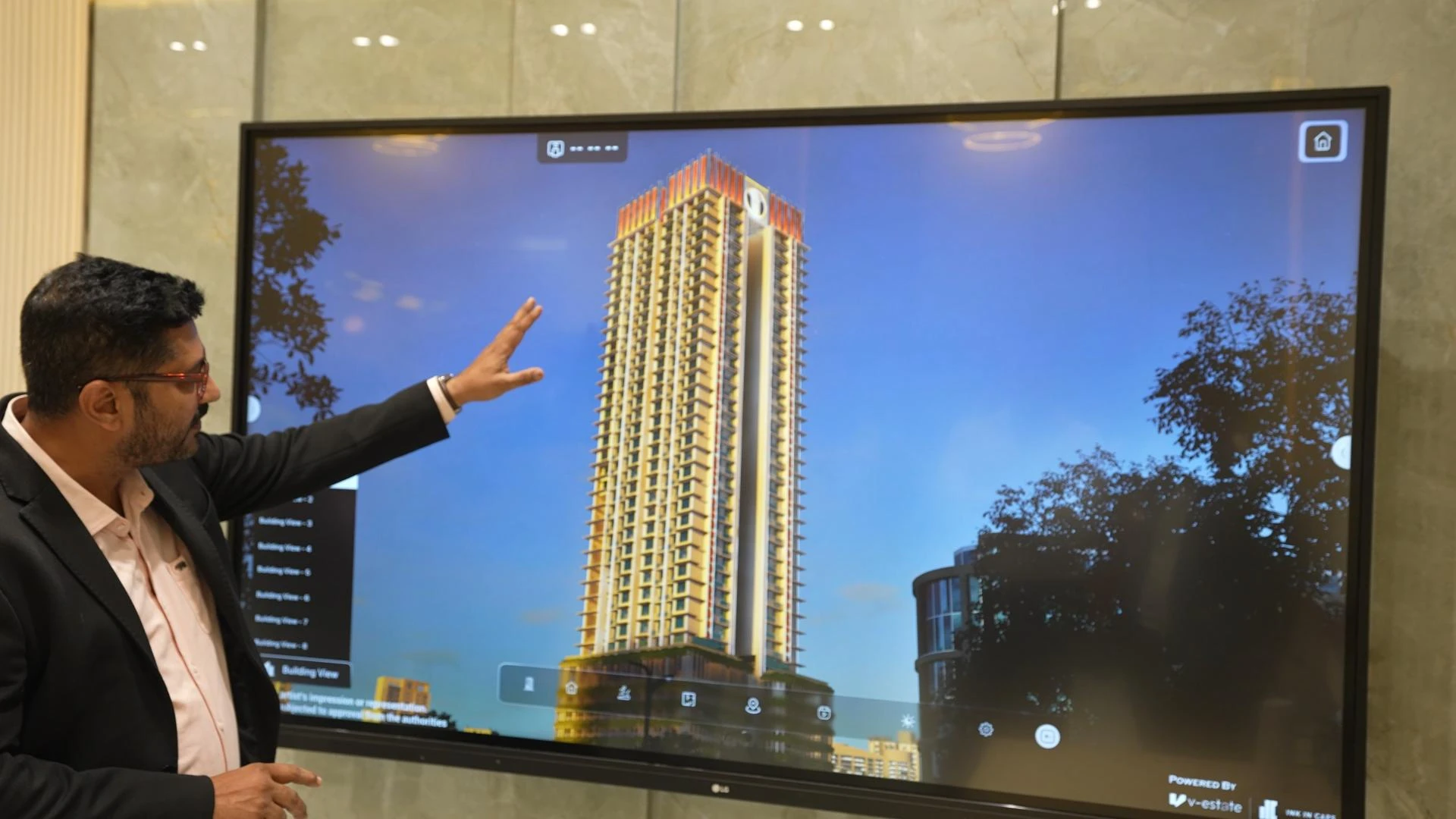
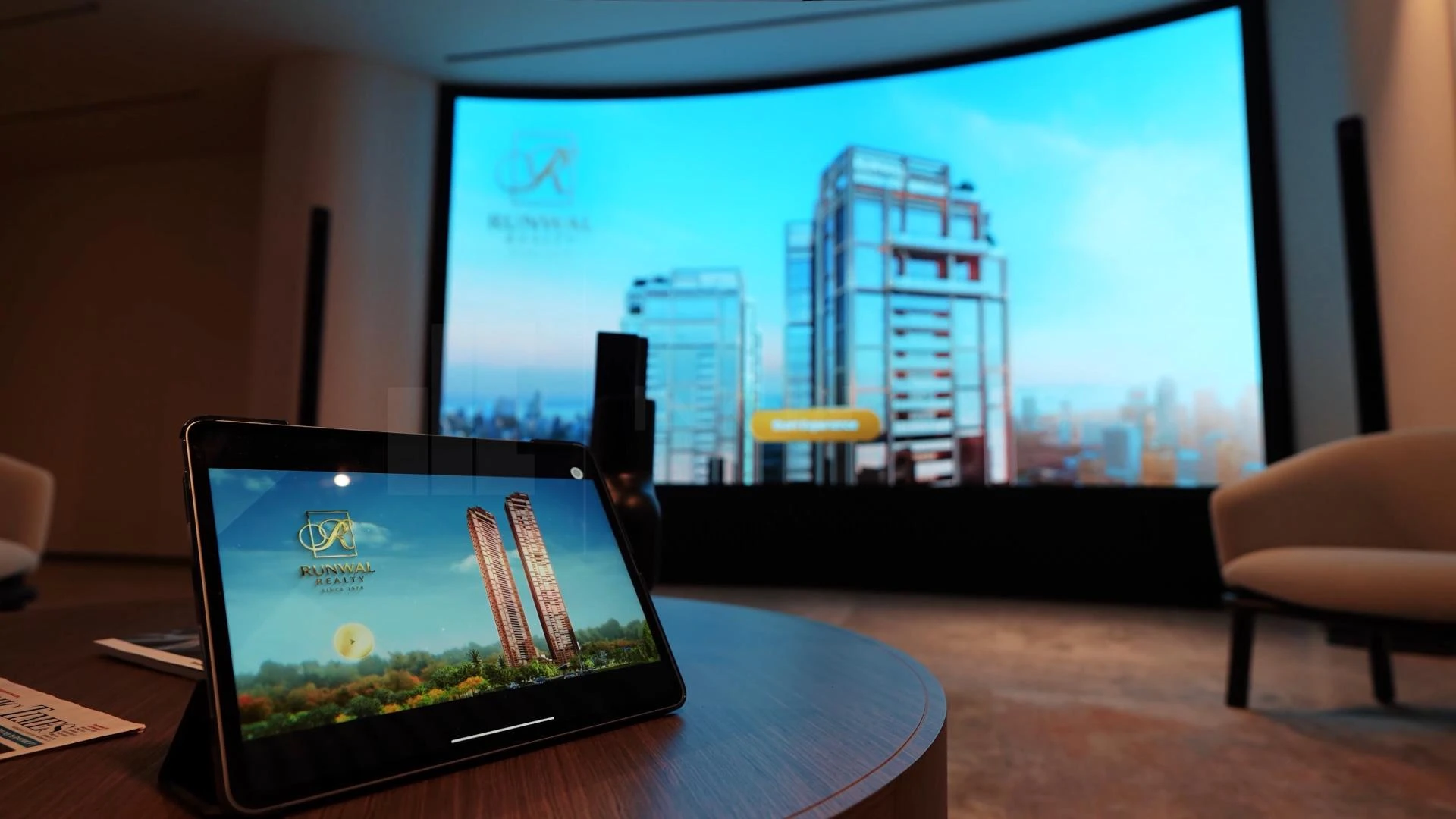
A comprehensive digital twin of a large-scale development does something remarkable: it makes the incomprehensible suddenly clear.
Imagine this: a prospect is interested in a mid-floor unit in Tower A. Using a quality digital twin, they can:
- Navigate through their specific unit and understand light patterns and views
- Walk through the lobby and common areas of their building
- Explore the main amenity zones and understand exactly how far they are from their residence
- See how Tower A relates spatially to other towers they might visit future phases in
- Understand connectivity—whether it's a pleasant walk to the shopping precinct or if they'll use the internal corridors
- Visualize how the landscaping and outdoor spaces create experience across the development
- See the parking level relative to the unit elevator, understanding daily access patterns
All of this can happen in a single session. The buyer isn't jumping between different renderings or trying to stitch together a mental picture. They're experiencing the complex environment as a integrated whole.
Real-World Application: The Adani Lit Example
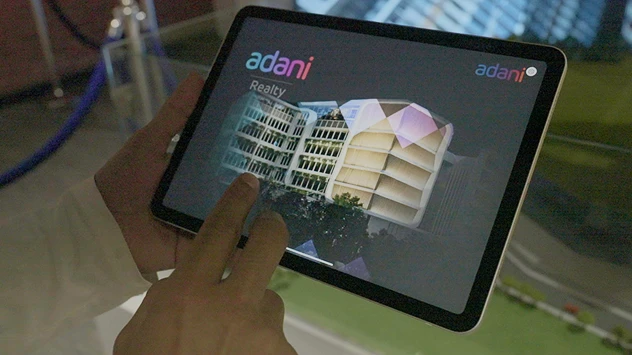
When Adani Realty conceptualized Code Name: Lit in Thane, they weren't building a simple multi-floor residential tower. They were creating a comprehensive lifestyle destination with multiple towers, extensive amenities, and a specific vision for community living.
The scale of the project made traditional sales presentation methods challenging. How do you convey the relationship between different towers? How do you explain the journey from a residential unit through the building and into the shared amenity spaces? How do you build confidence about a project that spans several phases?
By implementing digital twin technology for real estate across the entire development, Adani Lit transformed how they could present their vision.
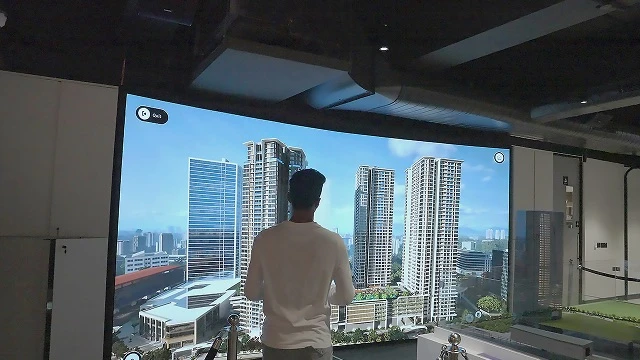
The digital twin wasn't just one building—it was the entire landscape. Buyers could navigate through multiple towers, understand the masterplan in three dimensions, and see how their specific unit fit into the broader community context. They could see Phase 1 and understand what Phase 2 would add. They could walk from their apartment through the corridors to the gymnasium, to the community center, to the outdoor gardens—all digitally, all accurately.
This became their competitive differentiator in a crowded market. Prospects visiting their sales office could explore more of the project in 30 minutes than they could experience in three physical site visits. The sales team could have conversations about lifestyle and community rather than spending time on basic orientation and explanation.
The Operational Impact
When you implement digital twin technology for large-scale developments, the benefits cascade through your entire sales operation:
Reduced Site Visit Requirements: Serious prospects come to the site already oriented. They're not walking blind. This means fewer logistics, shorter visit times, and more efficient use of site resources.
Faster Sales Cycles: Buyers who can navigate a complex development digitally reach confidence points much faster. They're not waiting for multiple site visits to piece together understanding. They're asking final questions, not foundational ones.
Better Inventory Management: When you can show all units, all configurations, and their actual placements within the development, buyers find their perfect fit faster. There's less "maybe we have something else" and more specific matching of buyer needs to actual inventory.
Team Productivity: Your sales team isn't spending 40% of their time on site orientation. They're working on meaningful selling conversations with qualified prospects who understand the project fundamentals.
Market Confidence: When a large-scale development can present itself with complete transparency—every phase, every amenity, every spatial relationship—it builds market credibility. It signals that the developer is confident in the vision.
The Sustainability of Digital Twin Presentation
Here's something often overlooked: as your project progresses and actual construction happens, your digital twin doesn't become obsolete. It becomes a reference point. New phases can be added to it. Completed sections can be updated to match final reality. If there are any changes to the plan, the digital twin becomes the tool for communicating that to both prospects and existing owners.
For large-scale developments where the entire project won't be complete for years, this continuity of presentation is valuable. Buyers who purchased in year one can refer back to see how the masterplan has evolved. Buyers joining in year three can see what's already been built and what's coming. The digital twin grows with the project.
Strategic Thinking for Large-Scale Development Sales
If you're involved in a significant real estate development—especially one with multiple phases or complex amenities—digital twin technology for real estate isn't a luxury feature. It's foundational sales infrastructure.
The Adani Lit project demonstrated that when you can show complexity clearly, complexity becomes your advantage. Instead of being something you explain away, the scale and comprehensiveness of the development becomes something buyers are excited about. They see a vision, a community, a lifestyle opportunity—not just a building.
The market for large-scale developments is competitive. The one advantage you absolutely need is the ability to help prospects truly understand what you're building. Digital twin technology for real estate gives you that advantage. It transforms overwhelming complexity into inviting clarity.
Make Your Large-Scale Vision Tangible
If your project spans multiple towers, multiple phases, or has a complex mix of uses and amenities, your sales team is probably spending excessive energy explaining what will eventually exist. Your prospects are probably struggling to visualize something this large on their own.
That's the moment to step back and ask: is there a better way to present this? With digital twin technology for real estate, the answer is invariably yes. Your development deserves to be experienced in its full complexity and beauty—not reduced to floor plans and promotional images.
The teams that are already doing this are closing faster and building stronger market presence. The question is whether you'll join them, or whether you'll continue explaining something that could simply be shown.










Sign in to leave a comment.