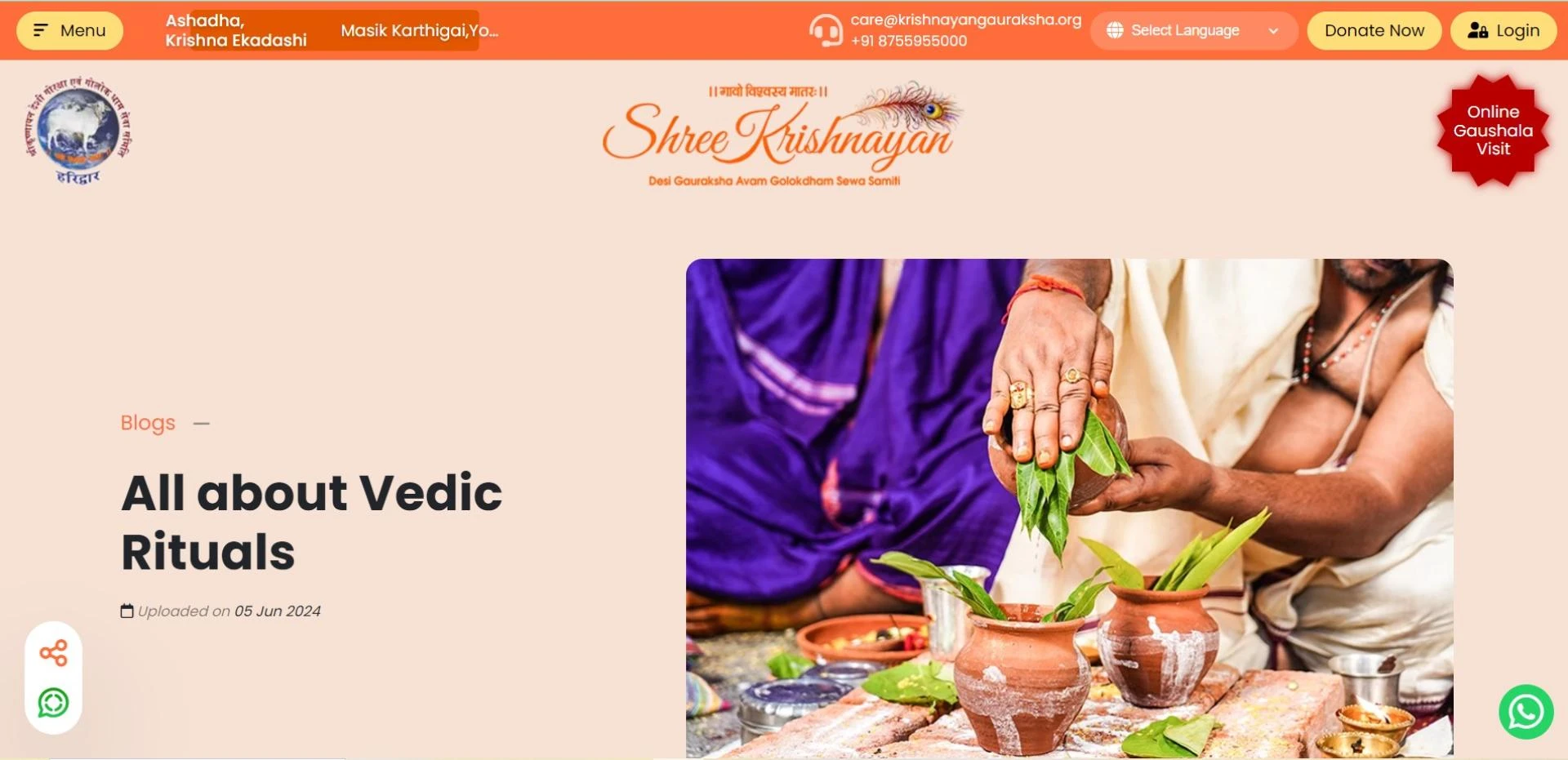

At Krishnayan Gauraksha, we are devoted to preserving and promoting the timeless wisdom of Vedic rituals. These rituals form the bedrock of Hindu spirituality, encompassing a wide range of practices that honor the divine, foster spiritual growth, and promote harmony with the cosmos. Our comprehensive blog on Vedic rituals delves into their significance, types, and benefits, providing valuable insights for those seeking to connect with their spiritual heritage.
What Are Vedic Rituals?
Vedic rituals are sacred ceremonies rooted in the ancient Vedas, the oldest and most revered scriptures of Hinduism. These rituals involve precise procedures, mantras, and offerings, designed to invoke divine energies and establish a connection between the individual and the cosmos. Vedic rituals are not merely religious practices; they are profound expressions of devotion, gratitude, and reverence for the natural and divine order.
Significance of Vedic Rituals:
The significance of Vedic rituals lies in their ability to bring about spiritual transformation and universal harmony. They are performed to seek divine blessings, purify the environment, and promote physical and mental well-being. Vedic rituals embody the principles of dharma (righteousness), artha (prosperity), kama (pleasure), and moksha (liberation), guiding individuals on a path of holistic living.
Types of Vedic Rituals:
There are numerous Vedic rituals, each serving specific purposes and catering to different aspects of life. Some of the most prominent Vedic rituals include:
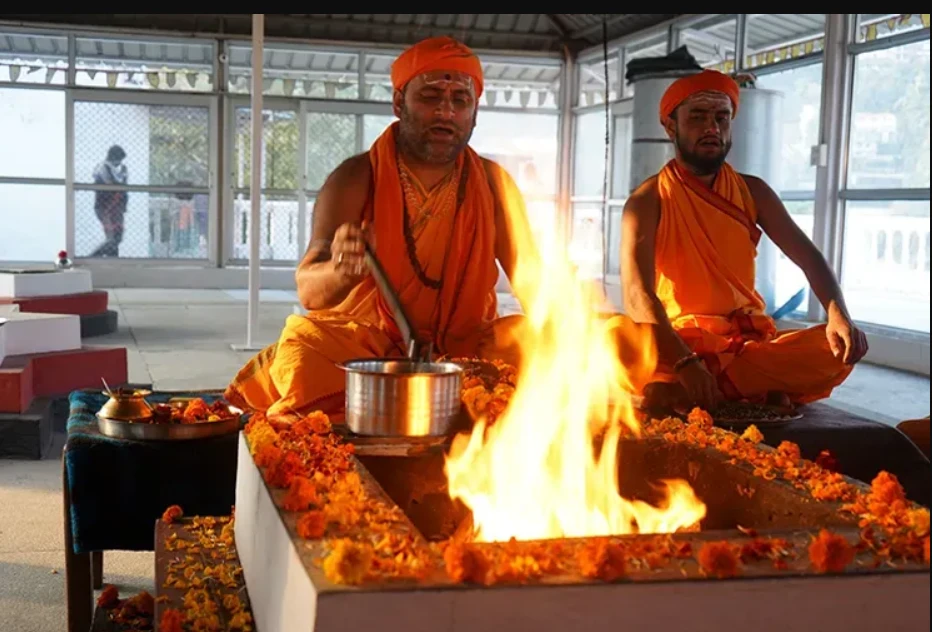
Agnihotra: A daily fire ritual performed at sunrise and sunset, Agnihotra purifies the environment and promotes physical and mental well-being. Sandhyavandanam: A daily practice involving the recitation of mantras and prayers during the transitions of the day (dawn, noon, and dusk), enhancing spiritual awareness and discipline. Puja: A devotional ritual involving offerings of flowers, food, and incense to deities, Puja fosters a deep connection with the divine and cultivates a sense of devotion and gratitude. Yagya: A fire ritual involving the chanting of Vedic mantras and offerings into the sacred fire, Yagya promotes harmony, prosperity, and spiritual growth. Homa: Similar to Yagya, Homa is a fire ritual performed for specific purposes such as health, wealth, and protection. Japa: The repetitive chanting of sacred mantras, Japa enhances concentration, purifies the mind, and fosters inner peace.Purpose and Benefits of Vedic Rituals:
Vedic rituals are performed for various purposes, ranging from personal well-being to universal harmony. The primary purposes and benefits of these rituals include:
Spiritual Growth: Vedic rituals facilitate spiritual awakening, helping individuals attain higher states of consciousness and deeper connection with the divine. Environmental Purification: The offerings and mantras used in Vedic rituals purify the environment, promoting overall health and well-being. Mental Peace: The vibrations created by the chanting of mantras have a calming effect on the mind, reducing stress and anxiety. Positive Energy: Vedic rituals generate positive energy, fostering harmony, prosperity, and success in personal and professional life. Health Benefits: The ingredients used in Vedic rituals have medicinal properties that promote physical health and vitality.Join Krishna Yan Gauraksha in Reviving Vedic Traditions:
At Krishna Yan Gauraksha, we are dedicated to preserving and promoting the rich Vedic traditions that have been passed down through generations. Our comprehensive blog on Vedic rituals provides valuable insights into these ancient practices, helping individuals understand their significance and incorporate them into their lives.
Visit [Krishnayan Gauraksha’s Vedic Rituals] Blog to explore the depths of Vedic rituals and discover how these ancient ceremonies can transform your life. Join us in our mission to revive these timeless practices and create a more harmonious and spiritually enriched world.








Sign in to leave a comment.