If you’ve ever wondered whether microneedling for large pores actually helps your skin look smoother and tighter, you’re not alone.
Many people struggle with visible pores that make skin look rough, shiny, or uneven, especially in oily zones like the cheeks and nose.
In this detailed guide, we’ll explain why microneedling works for enlarged pores, how the process helps your skin, what results you can expect, and how long it takes before you start seeing improvements.
By the end, you’ll understand whether this treatment could be the right solution for your skin goals and how to get started.
What Is Microneedling and How Does It Work for the Skin?
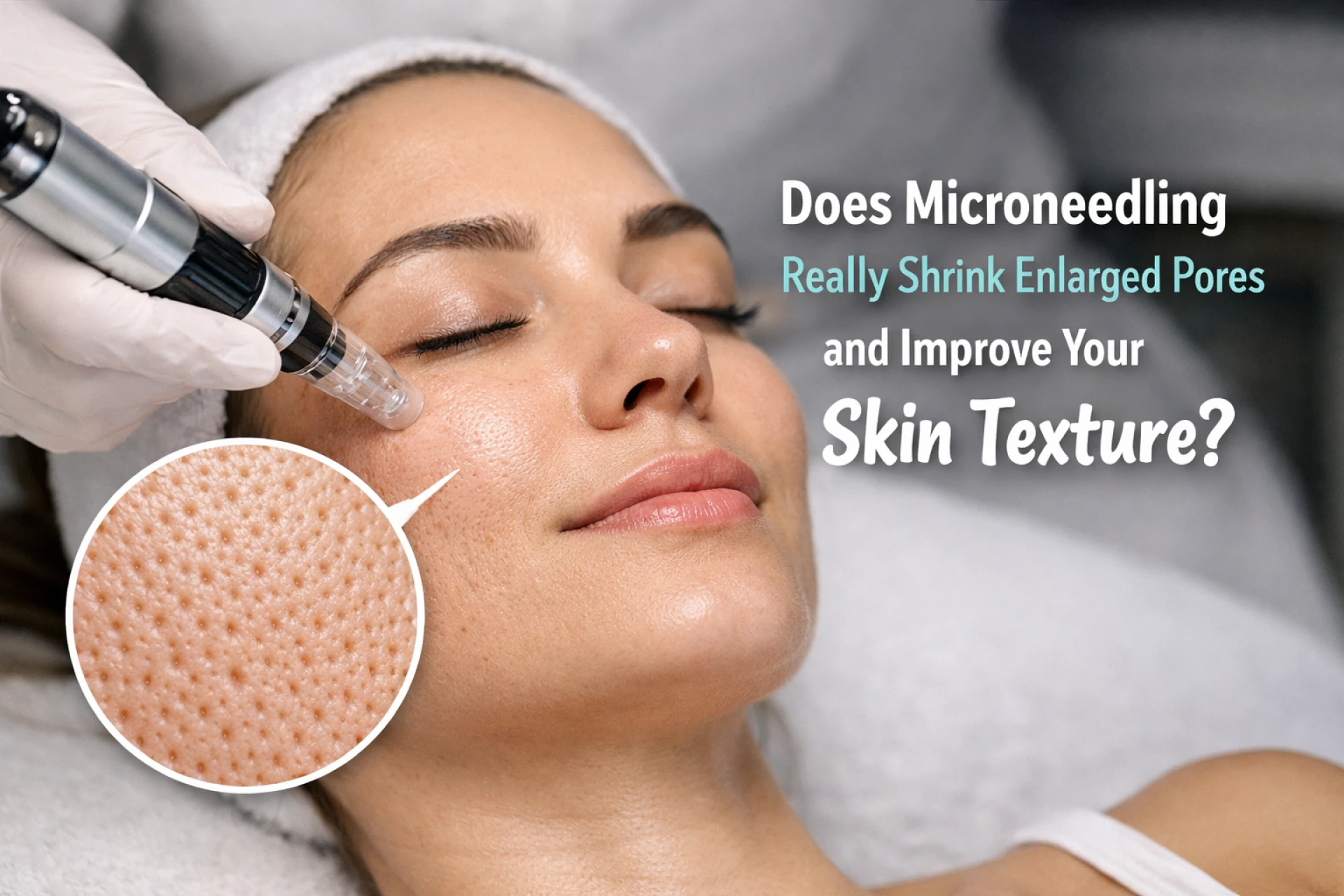
Microneedling, also known as collagen induction therapy, is performed with a medical-grade device that gently creates thousands of microscopic punctures in the top layer of your skin. These micro-injuries are so small you won’t see them, but your body’s healing response kicks in immediately. In response, your skin produces more collagen and elastin, essential building blocks that support skin structure and minimize imperfections like enlarged pores and rough texture.
Why Do Pores Get Large in the First Place?
Pores are tiny openings on your skin that release oil (sebum) and sweat. Genetics, hormones, age, sun exposure, and clogged skin cells can make pores appear larger over time. When oil mixes with dead skin cells, it can stretch the pore canal, causing visible widening. Loss of collagen and elastin around the pore opening, especially as you age, also contributes to that stretched-out look.
Here’s a simple way to understand it:
- Oily skin: More oil stretches pores.
- Sun damage & aging: Weakened skin supports make pores appear wider.
- Clogging & debris: Trapped oil and dead cells make pores look deeper and more visible.
Tip: Excessive squeezing, harsh exfoliation, or skincare products that irritate the skin can make enlarged pores more noticeable.
How Does Microneedling Help Reduce Large Pores?
When the microneedling device creates tiny channels in your skin, the controlled healing response stimulates new collagen and elastin formation. Over time, this rebuilds the skin’s structure around each pore and helps tighten the skin. As the skin tightens and becomes more elastic, enlarged pores contract and appear less visible.
Unlike topical products, which only affect the surface, microneedling works deeper in the skin giving it a chance to restructure itself from the inside out. That’s why many people notice not just temporarily smaller pores, but overall improved texture and firmness after a series of treatments.
Quick Fact: Studies show that microneedling increases collagen types that support skin strength and elasticity, which is linked to smoother skin and less visible pores.
Tip: Combining microneedling with curated professional skincare (like growth factor serums) can help amplify results.
What Results Can You Expect From Microneedling for Pore Reduction?
Most people see gradual but noticeable improvements in skin texture and pore visibility after multiple microneedling sessions including tighter, smoother skin. Here are a few results to expect from microneedling
1. Pore Appearance Gets Noticeably Smaller
The primary goal of microneedling for enlarged pores is to make them look less visible. As collagen remodels the skin around the pore opening, pores shrink back closer to their natural size.
2. Skin Texture Improves Overall
Because microneedling refines the surface of your skin and promotes cellular turnover, you’ll often notice smoother skin, reduced roughness, and more even tone.
3. Better Absorption of Skincare Products
Smaller pores and tighter skin mean your serums and treatments penetrate more effectively, helping with hydration and long-term maintenance.
4. Cumulative Improvements Over Time
Single sessions give mild improvement, while a series spaced weeks apart provides deeper, lasting benefits. Many clinics report best outcomes after 3–6 sessions depending on your skin’s starting condition.
Tip: Don’t expect dramatic results after only one session, think of microneedling as a skin building program, not a single quick fix.
How Long Does Microneedling Take to Shrink Pores?
The truth is, how long does microneedling take to shrink pores varies from person to person. However, here’s a general timeline:
- Immediately after treatment: Slight redness and warmth.
- 1–2 weeks: Beginning signs of skin tightening.
- 4–8 weeks: Noticeable texture improvements as collagen builds.
- 3–6 months: Best results as collagen matures and skin becomes firmer.
Collagen has a slow production and maturation cycle, so the deeper remodeling that causes pores to tighten takes time to develop.
Tip: Consistent spacing of treatments (about 4–6 weeks apart) gives your skin time to rebuild before the next session.
Is Microneedling Safe? What Are the Risks?
Microneedling is minimally invasive and well tolerated by most skin types. However, it’s important to understand possible side effects:
- Temporary redness or swelling immediately after treatment.
- Mild peeling or dryness as new skin forms.
- Risk of infection or irritation if not done under sterile conditions.
For safety and best outcomes, it’s essential to have microneedling done by a trained professional in a clinical environment — someone who understands how to adjust needle depth and technique for your unique skin.
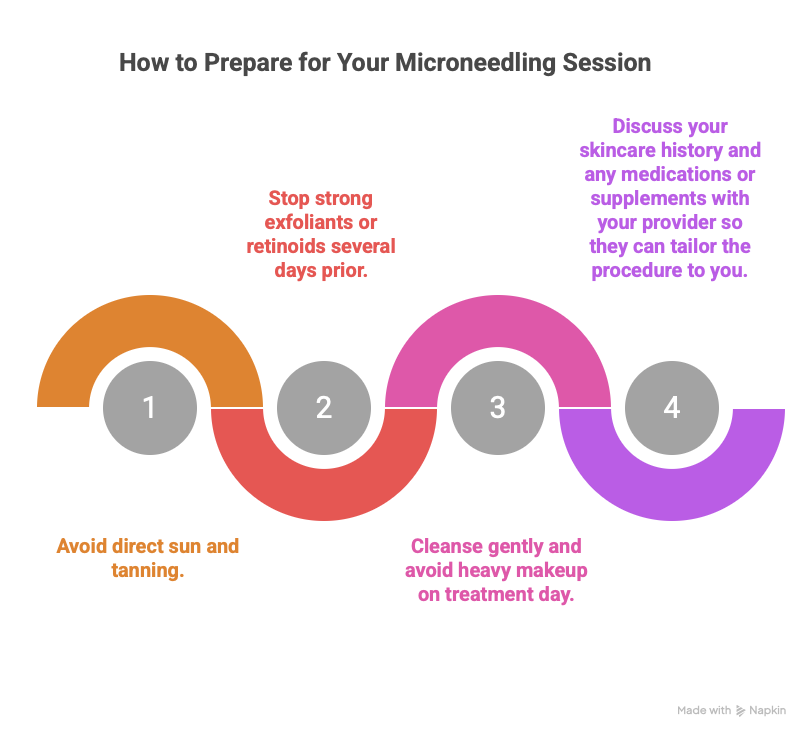
Tip: Avoid aggressive exfoliation, sunlight, or active ingredients like retinoids for a few days immediately after treatment.
How Does Microneedling Compare With Other Pore-Reducing Treatments?
There are several ways to address enlarged pores, including:
- Chemical peels: Improve surface texture but affect mostly the epidermis.
- Laser resurfacing: Strong results but higher risk of pigmentation issues.
- Exfoliation: Helpful but limited to superficial effects.
Microneedling stands out because it mechanically stimulates collagen deep below the surface without heat or aggressive chemicals, making it safe for a range of skin tones and sensitivities.
Who Is a Good Candidate for Microneedling for Large Pores?
Microneedling works best when you:
- Are free of active acne breakouts or open wounds.
- Have reasonable expectations about gradual improvement.
- Can commit to multiple sessions over a few months.
Not everyone is suited for microneedling, if you have active infections, certain skin diseases, or very sensitive skin, consult a dermatologist first.
Tip: Before booking, ask your provider about how often sessions should be spaced for your specific skin needs.
What to Expect During and After Treatment
During your session:
- A topical numbing cream is applied for comfort.
- The professional glides the device over problem areas.
- Most sessions take 30–60 minutes.
After treatment:
- Redness is common, like mild sunburn.
- You may feel tighter skin within days.
- Full results unfold as collagen rebuilds.
Patient satisfaction reviews from clinical studies show visible texture improvements and pore refinement as common outcomes.
Final Thoughts: Is Microneedling the Right Choice for You?
If your main concern is visible pores and uneven skin texture that hasn’t responded to at-home products, microneedling offers a science-backed, minimally invasive path to gradual, meaningful improvement. By stimulating your body’s own healing process and building new collagen, this treatment delivers tighter, smoother skin without long downtime or harsh chemicals.
If you’re curious about how microneedling could help reduce enlarged pores, refine your skin texture, and boost confidence, we’re here to help.
At The Spa & Laser Center, with locations serving services like microneedling in Virginia Beach, Norfolk, and Suffolk communities, we specialize in advanced skin rejuvenation treatments delivered with medical expertise and personalized care.












Sign in to leave a comment.