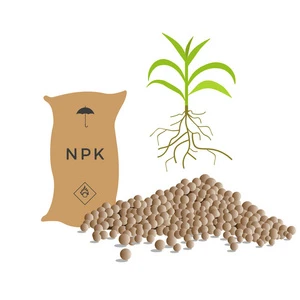

Among various nutrients, nitrogen, phosphorus and potassium are the three nutrients that plants need and take away in large amounts at harvest.Soil NPK for plants provides some of the nutrients.Instead, they are returned to the soil in small quantities in the form of stubble and roots . Therefore it is often necessary to supplement these nutrients with fertilizer applications.
- Nitrogen
Nitrogen is an essential nutrient for plant growth, and it is a component of every living cell. Plants need a lot of nitrogen.Nitrogen is a component of chlorophyll, and both chlorophyll a and chlorophyll ß are nitrogen-containing compounds. Green plants carry out photosynthesis, converting light energy into chemical energy and converting inorganic substances (carbon dioxide and water) into organic substances (glucose) with the help of chlorophyll. Glucose is the raw material for the synthesis of various organic substances in plants, while chlorophyll is the plant\'s "food" factory for the leaves. Nitrogen is also a component of the vitamin and energy system in plants. The effect of nitrogen on plant growth and development is very obvious. When nitrogen is sufficient, plants can synthesize more proteins and promote cell division and growth, so the plant leaf area grows and more leaf area can be used for photosynthesis.
- Phosphorus
Phosphorus is second only to nitrogen and potassium in the plant body, and is generally higher in the seeds.Phosphorus is involved in photosynthesis, respiration, energy storage and transfer, cell division, cell enlargement and several other processes in plants. Phosphorus promotes early root formation and growth, improves the ability of plants to adapt to external environmental conditions, and helps them to withstand the harshness of winter. Phosphorus helps enhance disease resistance in some plants. Phosphorus has a ripening-promoting effect and is important for harvest and crop quality.
- Potassium
Potassium is a major nutrient for plants and is also one of the three elements in the soil that often affects crop yield due to inadequate supply. Crops contain similar amounts of potassium as nitrogen and higher amounts than phosphorus. In many high-yielding crops, the amount of potassium exceeds the amount of nitrogen. To date, no organic compounds containing potassium have been found in plants. Potassium is dissolved in the plant sap in an ionic state and its main function is related to the metabolism of the plant.Potassium promotes photosynthesis, which is weakened by potassium deficiency. Potassium significantly increases the uptake and utilization of nitrogen by plants and is quickly converted into protein. Potassium also promotes the economic use of water by plants. Because potassium ions accumulate more in crop cells, they increase cellular osmotic pressure and allow water to move from low concentrations in soil solution to higher concentrations in root cells. When potassium is in sufficient supply, the crop can use water efficiently and retain it in the body, reducing water transpiration.Another characteristic of potassium is that it contributes to crop stress tolerance. One of the important physiological roles of potassium is to enhance the regulation of cells to environmental conditions. Potassium enhances the ability of plants to tolerate various adverse conditions such as drought, low temperature, salinity, pest and disease damage, and collapse.The most common symptom of potassium deficiency in plants is a scorch-like appearance along the leaf margins, starting first with the lower, older leaves and gradually expanding to the upper leaves. Seeds and fruits are small and dry and wrinkled. Plants have low resistance to diseases.
0













Sign in to leave a comment.