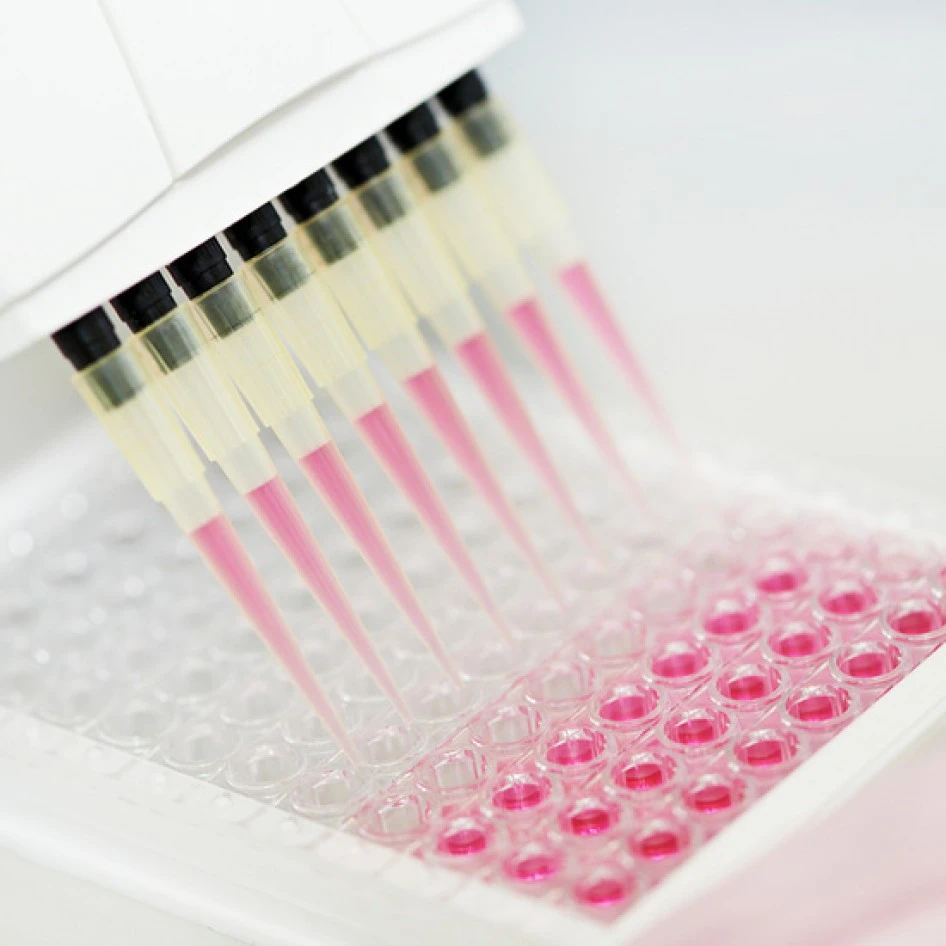

An ELISA test kit is a powerful laboratory tool used for detecting and quantifying biomolecules such as proteins, antibodies, hormones, and pathogens in biological samples. The enzyme-linked immunosorbent assay (ELISA) technique is widely used in medical diagnostics, pharmaceutical research, food safety, and environmental monitoring due to its high sensitivity and specificity. This method relies on antigen-antibody interactions, where an enzyme-linked reaction generates a measurable signal, usually a color change, indicating the presence of the target molecule.
How Does an ELISA Test Kit Work?
ELISA kits function by binding the target antigen or antibody to a solid surface, followed by an enzyme reaction that produces a detectable signal. The intensity of this signal correlates with the concentration of the analyte in the sample, allowing researchers and healthcare professionals to obtain accurate measurements. This makes ELISA an invaluable tool for disease detection, immune response monitoring, and biomarker analysis.
Types of ELISA Test Kits
There are four primary types of ELISA kits, each designed for different research and diagnostic applications:
- Direct ELISA – Uses a single enzyme-linked antibody to detect the target antigen, providing a fast and straightforward method.
- Indirect ELISA – Involves a primary antibody followed by a labeled secondary antibody, offering increased sensitivity.
- Sandwich ELISA – Uses two antibodies to capture and detect the target molecule, making it ideal for complex samples.
- Competitive ELISA – Measures antigen concentration by competition between the sample antigen and a labeled antigen, useful for detecting small molecules.
Applications of ELISA Test Kits
ELISA test kits are widely used across various fields, including:
- Medical Diagnostics – Detecting infectious diseases, autoimmune disorders, and cancer biomarkers.
- Pharmaceutical Research – Evaluating drug efficacy, vaccine development, and immune response studies.
- Food Safety Testing – Identifying allergens, toxins, and contaminants in food products.
- Environmental Monitoring – Detecting pollutants, toxins, and hazardous substances in water and soil samples.
Advantages of ELISA Test Kits
ELISA test kits offer several benefits, making them a preferred choice in laboratories worldwide:
- High Sensitivity and Specificity – Ensures accurate detection of low-concentration biomolecules.
- Cost-Effective and Scalable – Allows simultaneous testing of multiple samples, reducing costs and time.
- Easy to Use and Reliable – Provides consistent and reproducible results for research and clinical applications.
With advancements in biotechnology, modern ELISA test kits now offer improved accuracy, faster processing times, and enhanced automation, making them essential tools in scientific and medical research.














Sign in to leave a comment.