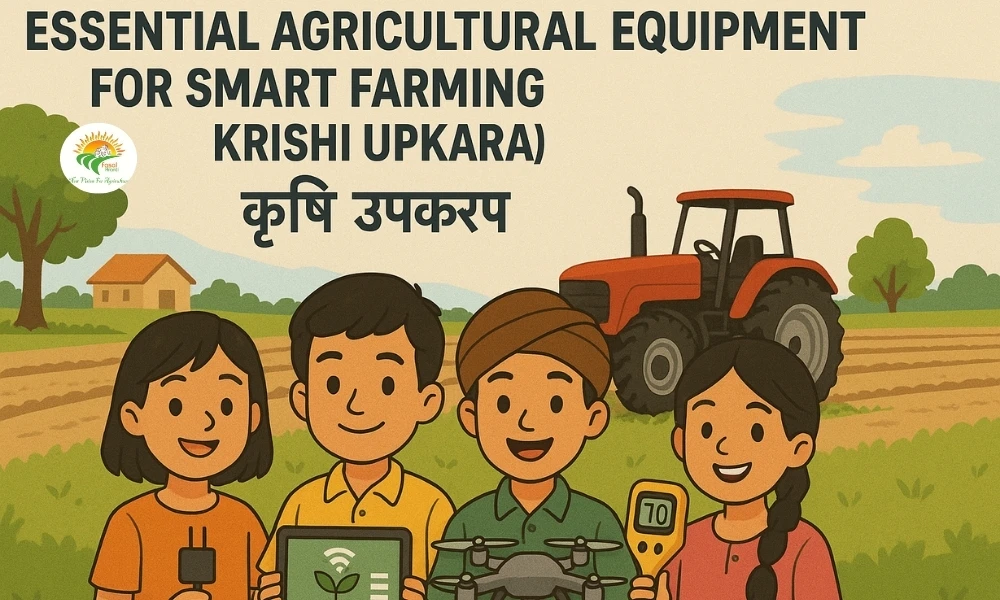
Farming in India has transformed remarkably, moving from traditional methods to modern technology-driven practices. Earlier, fields were tilled using bullocks and wooden plows, but now advanced Krishi Upkaran (agricultural equipment) perform these tasks with greater speed and precision. This technological leap has helped farmers save time, reduce labor, and boost crop productivity. From seed sowing and irrigation to harvesting and storage, Krishi Upkaran enhance every stage of farming. Moreover, using the right tools with the right types of soil in India such as alluvial for rice or black soil for cotton ensures better yield and soil health. Smart farming integrates equipment with soil knowledge to optimize inputs and maximize output sustainably.
Best Soil Types for Using Agricultural Equipment?
The effectiveness of agricultural equipment (Krishi Upkaran) greatly depends on the type and condition of soil. Using the right equipment on the right soil not only enhances productivity but also reduces wear and tear on machines.
1. Alluvial Soil
a) Found in Indo-Gangetic plains and river basins.
b) Loose, well-drained, and nutrient-rich, this soil allows easy ploughing, tilling, and seeding with modern tools such as Rotavators and seed drills.
c) Ideal for tractors and mechanized harvesters due to its flat terrain and loose structure.
2. Black Soil (Regur Soil)
a) Rich in clay and moisture-retaining capacity.
b) Suitable for ploughs, cultivators, and heavy tractors, especially during pre-sowing preparation.
c) Requires powerful equipment when dry, but performs well with tillage machinery when slightly moist.
3. Red and Laterite Soil
a) Found in southern and eastern India.
b) Loamy texture allows moderate ease of equipment use.
c) Cultivators and disc harrows work well here for crop bed preparation.
4. Loamy Soil
a) A balanced mixture of sand, silt, and clay.
b) Works well with a range of Krishi Upkaran such as tractors, sprayers, and irrigation equipment
c) Loamy soil’s structure supports deep ploughing and mechanized sowing efficiently.
5. Sandy Soil
a) Light and easy to handle with machines.
b) Well-suited for shallow tillage tools and automated irrigation systems
c)However, it requires careful handling to avoid soil erosion due to lose particles.
1. Agricultural Equipment for Land Preparation
a) Rotavators (Rotary Tiller):
Breaks up, pulverizes, and mixes the soil efficiently. Ideal for preparing seedbeds in various types of soil in India.
b) Plough (MB Plough or Disc Plough):
Used for turning the soil, clearing weeds, and enhancing soil aeration. Suitable for hard and dry soil like black and red soils.
c) Cultivator
Facilitates soil loosening, breaks compact clods, and clears out weeds. Commonly applied in alluvial and loamy soils.
d) Harrow
Levels the land surface after ploughing and breaks soil clumps, ensuring uniform soil texture for sowing.
2. Equipment for Sowing and Transplanting
a) Seed Drill:
Ensures precise seed placement at uniform depth and spacing, improving germination rates and reducing seed wastage.
b) Transplanted:
Ideal for crops like rice, it places seedlings accurately, saving time and labor while promoting healthy plant development.
c) Improved Accuracy:
These tools ensure consistent plant spacing, leading to uniform crop growth and easier management.
d) Enhanced Efficiency:
Scientific sowing and transplanting reduce manual effort, increase productivity, and optimize resource use.
3. Modern Irrigation Systems
a) Drip Irrigation:
Supplies water directly to plant roots, minimizing wastage and ensuring uniform moisture levels.
b) Sprinkler System:
Mimics natural rain by uniformly spraying water across wide areas.
c) Solar Pumps:
Operate using solar energy, cutting down on fuel and electricity costs while being eco-friendly.
d) Overall Benefit:
These irrigation tools help conserve water, lower input costs, and support sustainable farming practices.
4. Agricultural Equipment for Pesticide and Fertilizer Spraying
a) Power Sprayer:
Efficiently applies pesticides and fertilizers over large areas, ensuring even and quick coverage.
b) Drone Spraying Technology:
Enables precise spraying in hard-to-reach areas, reducing chemical wastage and improving accuracy.
c) Labor and Time Savings:
These tools minimize manual effort, speed up operations, and cover more land in less time.
d) Better Yield & Profitability:
Enhanced spraying quality leads to healthier crops, higher yields, and increased income for farmers.
5. Equipment for Harvesting and Crop Management
a) Harvester:
A multifunctional machine that simultaneously cuts, threshes, and cleans crops like wheat and rice, reducing manual labor and saving time.
b) Thresher:
Efficiently separates grains from the husk, making post-harvest cleaning and storage faster and easier.
c) Baler Machine:
Gathers leftover straw and compresses it into neat bales for easy handling, storage, and transport.
d) Overall Impact:
These modern tools help preserve crop quality, minimize post-harvest losses, and increase operational efficiency.
6. Modern Storage and Transportation Solutions
a) Cold Storage Units:
Maintain freshness of fruits and vegetables for a longer period, helping retain their market value.
b) Grading & Packaging Machines:
Automatically sort produce by size, color, and quality to meet specific market standards and boost sales.
c) Tractor & Trolley:
Enable fast and safe transportation of harvested crops from the field to storage or market.
d) Overall Benefit:
These tools reduce post-harvest losses, enhance storage efficiency, and improve pricing leading to better income for farmers.
7. Digital Devices and Agri-Tech Innovations
a) Mobile Apps, Sensors, GPS & GIS Tools:
Deliver real-time information on weather patterns, soil conditions, and crop health to aid informed decisions.
b) AI and Machine Learning:
Analyze large datasets to optimize planting, irrigation, pest control, and harvesting schedules.
c) Smart Decision-Making:
Farmers can make data-driven choices that increase efficiency and reduce resource wastage.
d) Future-Ready Agriculture:
These innovations pave the way for sustainable, climate-resilient, and highly productive farming systems.
Conclusion
Essential agricultural equipment (Krishi Upkaran) for smart farming not only saves time and effort but also transforms agriculture into a profitable and sustainable venture. With the diverse types of soil in India, using the right tools ensures maximum productivity and minimal resource wastage. In today’s era of climate change, shrinking land resources, and rising input costs, modern Krishi Upkaran and digital technologies act as powerful allies for farmers. They bring precision, efficiency, and higher yields while reducing labor and operational expenses. Embracing these innovations is crucial for making Indian agriculture future-ready, sustainable, and a reliable source of income for farmers.
FAQs
Q1: What is the role of Krishi Upkaran in modern Indian farming?
Krishi Upkaran, or agricultural equipment, helps farmers save time, reduce labor, and improve productivity. These tools cover every stage of farming from land preparation, sowing, irrigation, to harvesting and storage making agriculture more efficient and profitable.
Q2: Which are the best types of soil in India for using agricultural equipment?
: The effectiveness of Krishi Upkaran depends on soil type:
- Alluvial Soil: Soft and fertile, ideal for tractors and Rotavators.
- Black Soil: Moisture-retentive; suitable for heavy tillage tools.
- Red & Laterite Soil: Supports disc harrows and cultivators.
- Loamy Soil: Best for all types of equipment.
- Sandy Soil: Lightweight tools preferred to prevent erosion.
Q3: Which equipment is essential for land preparation?
- Rotavators: Mixes and aerates the soil.
- Plough (MB/Disc): Turns the soil and removes weeds.
- Cultivator: Loosens soil and breaks clods.
- Harrow: Levels and smoothens the land for sowing.
Q4: What Tools Are Used for Sowing and Transplanting?
Modern sowing and transplanting tools improve precision and reduce labor:
- Seed Drill: Places seeds evenly and at the right depth, ensuring uniform germination.
- Transplanted: Efficiently sets seedlings like paddy into the field with minimal effort.
These tools boost germination rates, save time, and reduce manual work.
Q5: What Are the Modern Irrigation Solutions in Smart Farming?
Efficient water management is vital in farming. Smart solutions include:
- Drip Irrigation: Delivers water directly to the plant roots, reducing waste.
- Sprinkler System: Distributes water evenly, imitating natural rainfall.
- Solar Pumps: Sustainable method to draw water using solar energy.
These systems help conserve water and lower irrigation costs.
Q6: Which Krishi Upkaran Are Used for Pesticide and Fertilizer Application?
Advanced tools improve coverage and precision in input application:
- Power Sprayer: Covers large areas quickly and uniformly.
- Drone Spraying: Delivers targeted spraying in inaccessible or uneven areas.
These tools enhance crop health, reduce input use, and increase yields.
Q7: What Machines Support Harvesting and Post-Harvest Management?
Mechanized tools reduce harvest losses and improve efficiency:
- Harvester: Cuts and threshes crops like wheat and rice in a single pass.
- Thresher: Separates grains from husk effectively and quickly.
- Baler: Compacts straw into manageable bales for storage and transport.
These machines reduce labor, time, and post-harvest losses.
Q8: How Can Farmers Maintain Crop Quality After Harvest?
Post-harvest equipment protects crop freshness and boosts market value:
- Cold Storage: Preserves perishable produce for longer shelf life.
- Grading & Packaging Machines: Sort and package produce for better presentation.
- Tractor & Trolley: Ensure safe and efficient transportation to the market.
These tools minimize waste and enhance farmer profits.
Q9: What Digital Tools Are Used in Smart Farming?
Digital technologies are transforming Indian agriculture:
- Mobile Apps, GPS, GIS, and Sensors: Offer real-time insights into soil, weather, and crop health.
- AI & Machine Learning: Support smart decisions in irrigation, pest control, and harvesting.
These innovations help farmers make data-driven choices and adopt sustainable practices.
Q10: Why is it important to match Krishi Upkaran with soil type?
Different types of soil in India respond differently to machinery. Matching equipment with soil type improves efficiency, reduces wear and tear, and maximizes output while preserving soil health.












Sign in to leave a comment.