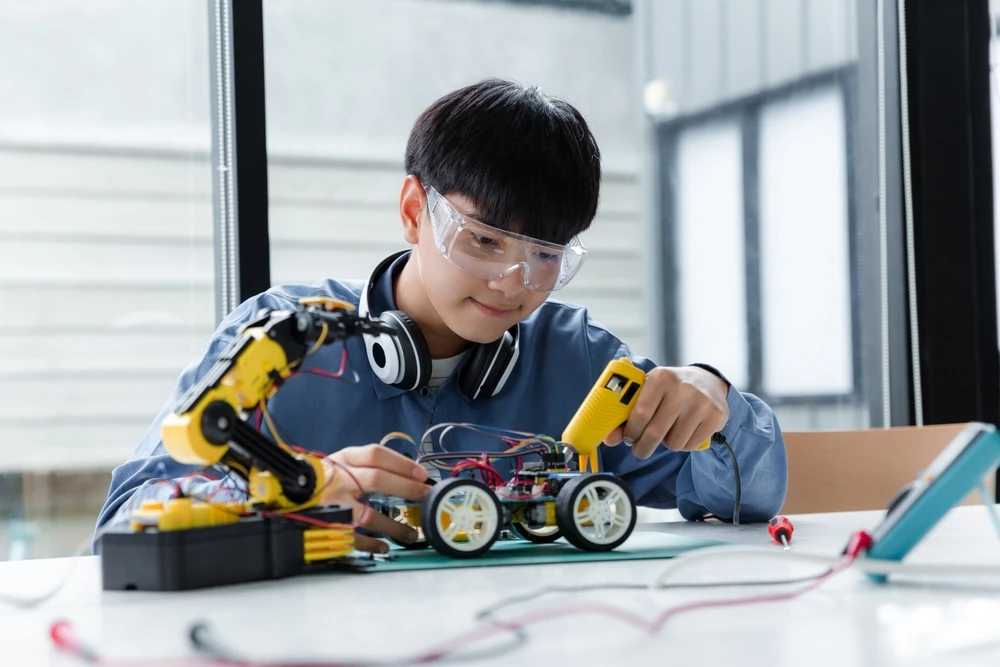

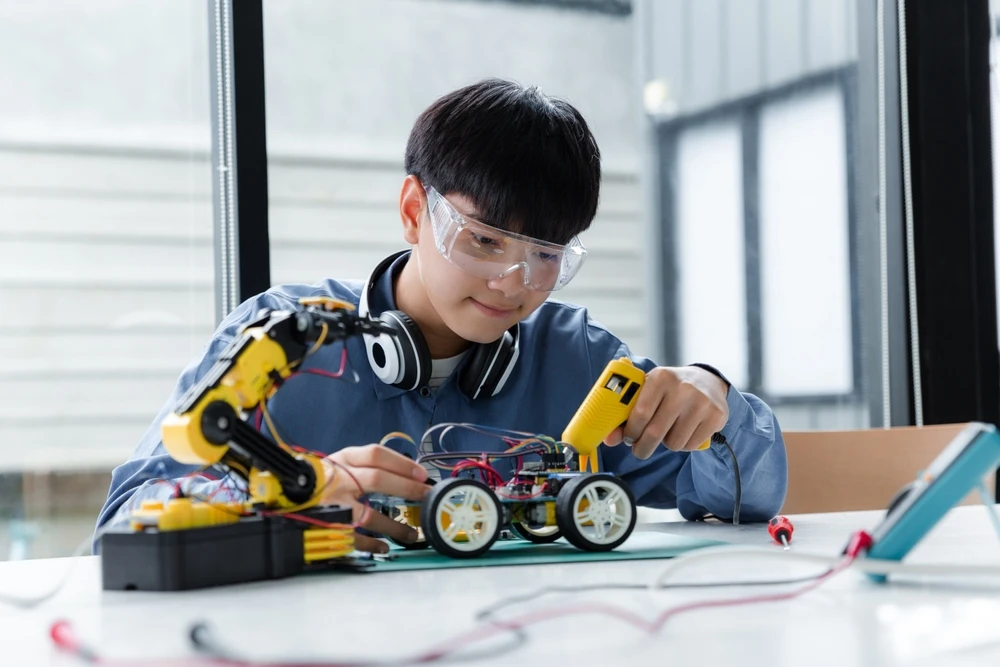
Are you searching for ways to keep your child engaged and learning at the same time? STEM toys for creativity are quickly becoming household favorites, offering kids a chance to explore science, technology, engineering, and math through hands-on play.
In this blog, we’ll walk through some of the most popular STEM toys, what makes them special, and how they can benefit your child’s development. Whether you’re curious about building kits, coding robots, or science experiments, you’ll find practical examples and tips to help you choose the right fit. By the end, you’ll know exactly what to look for and why these toys are more than just playthings.
What Makes a Toy a "STEM Toy"?
Ever wonder what sets STEM toys apart from the rest? It’s not just about having a fancy label. STEM toys are designed to teach kids about science, technology, engineering, and math in a way that feels like play, not homework. These toys often encourage problem-solving, hands-on exploration, and open-ended thinking.
Key features of STEM toys include:
- Activities that involve building, experimenting, or coding
- Opportunities to ask, “What if?” and test out ideas
- Clear learning goals, but plenty of room for creativity
Parents and teachers love STEM toys because they help kids develop real-world skills, like critical thinking and teamwork, while having fun. Plus, they can spark a lifelong interest in learning, which is always a win.
Building Blocks and Construction Kits: Are They Still Relevant?
You might be wondering if classic building toys like LEGO, Magna-Tiles, or K’NEX still have a place in today’s tech-driven world. The answer is a definite yes! These timeless kits remain favorites for a reason.
- LEGO sets let kids design everything from simple houses to complex robots.
- Magna-Tiles use magnets to help little hands build 3D shapes with ease.
- K’NEX offers rods and connectors for more advanced structures.
Building blocks do more than keep kids busy. They help develop spatial awareness, hand-eye coordination, and problem-solving skills. For younger children, stacking and connecting pieces build fine motor skills. Older kids can tackle more complex projects, learning patience and perseverance along the way.
Moreover, the skills learned from construction kits translate to real-life tasks, like organizing, planning, and even basic engineering. So, even in the age of screens, building blocks are as relevant as ever.
Coding Robots and Electronic Kits: Can Kids Really Learn to Code?
Let’s face it, coding sounds complicated. But with the right toys, even young kids can pick up the basics! Coding robots and electronic kits are designed to make programming fun and approachable.
Popular options include:
- LEGO Boost: Combines building with coding through an easy-to-use app.
- Sphero: A rolling robot you can program to move, light up, or even dance.
- Ozobot: A tiny robot that follows colored lines and codes drawn on paper.
- Snap Circuits: Let's kids build working electronic circuits with snap-together pieces.
These toys teach programming logic, sequencing, and cause-and-effect. Kids learn to break big problems into smaller steps, a skill that helps in all areas of life. Plus, coding toys encourage critical thinking, patience, and persistence. It’s not uncommon to hear stories from parents and teachers about kids who once struggled with focus but now spend hours solving coding challenges.
So, yes, kids really can learn to code, and they can have a blast doing it.
Science Experiment Kits: Making Science Hands-On
Remember how exciting it was to mix baking soda and vinegar as a kid? Today’s science experiment kits take that wonder to the next level. Brands like National Geographic and Thames & Kosmos offer kits that let kids grow crystals, dig for fossils, or launch mini volcanoes right at home.
Here’s what makes these kits special:
- Step-by-step instructions guide kids through real experiments
- Hands-on activities build confidence and curiosity
- Kids see science in action, not just in textbooks
In addition, science kits teach kids how to ask questions, make predictions, and observe results. Parents should supervise younger children, especially when experiments involve chemicals or small parts. With a little guidance, science kits can turn your kitchen table into a mini laboratory.
Math-Focused Toys: How Do They Make Numbers Fun?
Let’s be honest, math isn’t every kid’s favorite subject. But math-focused toys can turn numbers into a game, making learning much more enjoyable.
Some top picks:
- Osmo Genius Kit: Uses a tablet and physical pieces to teach math through interactive games.
- MathLink Cubes: Colorful cubes that help with counting, patterns, and basic operations.
- Sum Swamp: A board game that turns addition and subtraction into an adventure.
These toys help kids develop number sense, recognize patterns, and practice logical thinking. By making math playful, kids are more likely to stick with it—and maybe even start to love it.
Engineering Sets and Puzzles: Are They Just for Future Engineers?
It’s easy to think that engineering toys are only for kids who want to be engineers, but that’s not the case. Sets like marble runs, Gravity Maze, and Geomag magnetic kits are all about creative problem-solving.
- Marble runs challenge kids to design tracks that actually work.
- Gravity Maze is a puzzle that uses logic and planning to guide a marble to its goal.
- Geomag lets kids build structures with magnetic rods and spheres.
These toys help kids develop patience, resilience, and the ability to learn from mistakes. Even if your child doesn’t end up in a STEM career, these are skills they’ll use for life.
STEM Toys for Different Ages: What Should You Choose?
Choosing the right STEM toy can feel overwhelming. Here are some quick tips:
- Toddlers: Look for large, easy-to-handle blocks or simple magnetic tiles.
- Early learners (ages 4-7): Try science kits with safe, hands-on experiments or basic coding robots.
- Older kids (8+): Go for advanced building sets, robotics kits, or challenging puzzles.
As kids grow, their interests change—so don’t be afraid to try new types of toys. The key is to match the toy to your child’s age and curiosity level.
How to Get the Most Out of STEM Toys at Home
STEM toys are only as effective as the playtime they inspire. Here’s how you can help your child get the most out of them:
- Set aside regular time for hands-on play
- Join in and ask open-ended questions (“What happens if you try this?”)
- Mix screen-based learning with physical activities
Parents and caregivers play a big role in encouraging curiosity. With a little support, STEM toys can become powerful learning tools.
Conclusion: Ready to Explore the World of STEM Toys?
Let’s recap the main benefits of STEM toys:
- They make learning fun and hands-on
- Kids build real-world skills like problem-solving and creativity
- There are options for every age and interest
Ready to take the next step? Browse buildable toy sets and discover the perfect fit for your family. The right STEM toy could be the start of a lifelong love of learning.















Sign in to leave a comment.