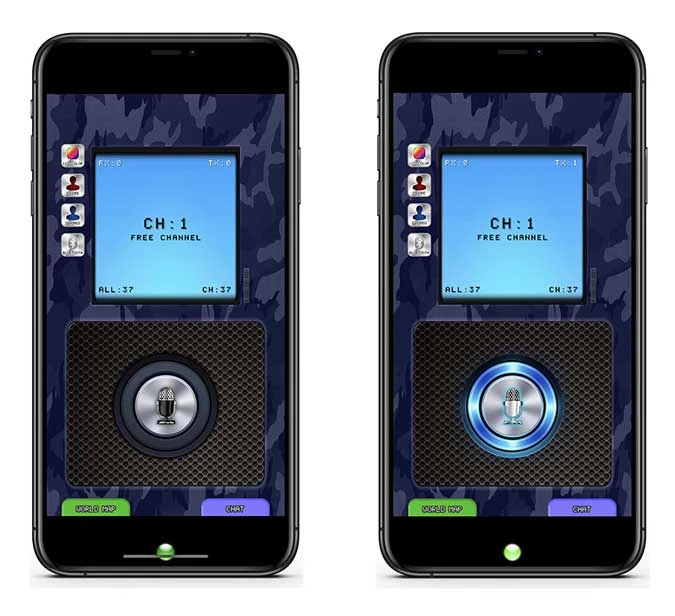

In today's fast-paced, highly connected world, effective communication is key. Two-way radio apps, often referred to as walkie talkie apps, are becoming increasingly popular for personal and professional use. These apps leverage the power of the internet and smartphones to provide users with real-time voice communication, much like traditional two-way radios but with a host of innovative features that enhance functionality and convenience. In this article, we'll explore some of the most innovative features of modern two-way radio apps.
1. Real-Time Voice Communication
The core feature of any two way radio app is real-time voice communication. Unlike traditional radio systems that rely on radio frequencies, these apps use internet connectivity to facilitate instant communication. This ensures that users can communicate over vast distances without the limitations of traditional radio signal ranges.
2. Push-to-Talk (PTT) Functionality
Push-to-talk functionality is a hallmark of two-way radio communication. This feature allows users to communicate instantly with the press of a button, mimicking the ease and immediacy of traditional walkie-talkies. Some advanced apps also offer a hands-free PTT mode, which can be activated through voice commands or wearable devices, enhancing usability in various situations.
3. Group Communication
Modern two-way radio apps support group communication, allowing multiple users to join a single channel and communicate simultaneously. This feature is particularly useful for teams working in coordination, such as event organizers, construction crews, and emergency responders. Users can create and manage multiple channels, customize access, and ensure that relevant information reaches the right people at the right time.
4. Location Tracking and Sharing
Many two-way radio apps come equipped with GPS functionality, enabling location tracking and sharing. This feature allows users to see the real-time location of their team members on a map, enhancing situational awareness and coordination. It is particularly valuable for outdoor activities, search and rescue operations, and fleet management.
5. Multimedia Messaging
Beyond voice communication, two-way radio apps often support multimedia messaging, including text, images, and video. This allows users to share important information quickly and efficiently, providing context that might be difficult to convey through voice alone. For instance, a field worker can send a photo of a damaged utility pole to a supervisor, enabling faster decision-making and response.
6. Secure Communication
Security is a paramount concern for many users, especially in professional settings. Modern two-way radio apps offer robust encryption to ensure that communications remain private and secure. Some apps also include features such as end-to-end encryption and secure server protocols to protect sensitive information from unauthorized access.
7. Cross-Platform Compatibility
Two-way radio apps are designed to be compatible with a variety of devices and operating systems, including smartphones, tablets, and desktop computers. This cross-platform compatibility ensures that users can communicate seamlessly regardless of the device they are using. It also allows organizations to integrate the app into their existing communication infrastructure without significant changes.
8. Integration with Other Systems
Advanced two-way radio apps can integrate with other communication and management systems, such as dispatch consoles, incident management platforms, and workforce management tools. This integration allows for a more streamlined and efficient workflow, as information can be shared and acted upon without the need for multiple disparate systems.
9. Customization and Scalability
Many two-way radio apps offer customization options to tailor the app to specific needs and preferences. Users can customize alert tones, interface layouts, and communication settings to suit their workflows. Additionally, these apps are scalable, allowing organizations to add or remove users and channels as their needs evolve.
10. Offline Communication
In situations where internet connectivity is unreliable or unavailable, some two-way radio apps offer offline communication capabilities. These apps use local networks, such as Bluetooth or Wi-Fi Direct, to facilitate communication between devices in close proximity. This feature ensures that users can stay connected even in remote or challenging environments.
Conclusion
Two-way radio apps have revolutionized the way we communicate, offering a range of innovative features that enhance functionality, security, and convenience. From real-time voice communication and push-to-talk functionality to location tracking, secure messaging, and integration with other systems, these apps provide a versatile and reliable solution for personal and professional communication needs. As technology continues to advance, we can expect even more innovative features to emerge, further transforming the landscape of digital communication.











Sign in to leave a comment.