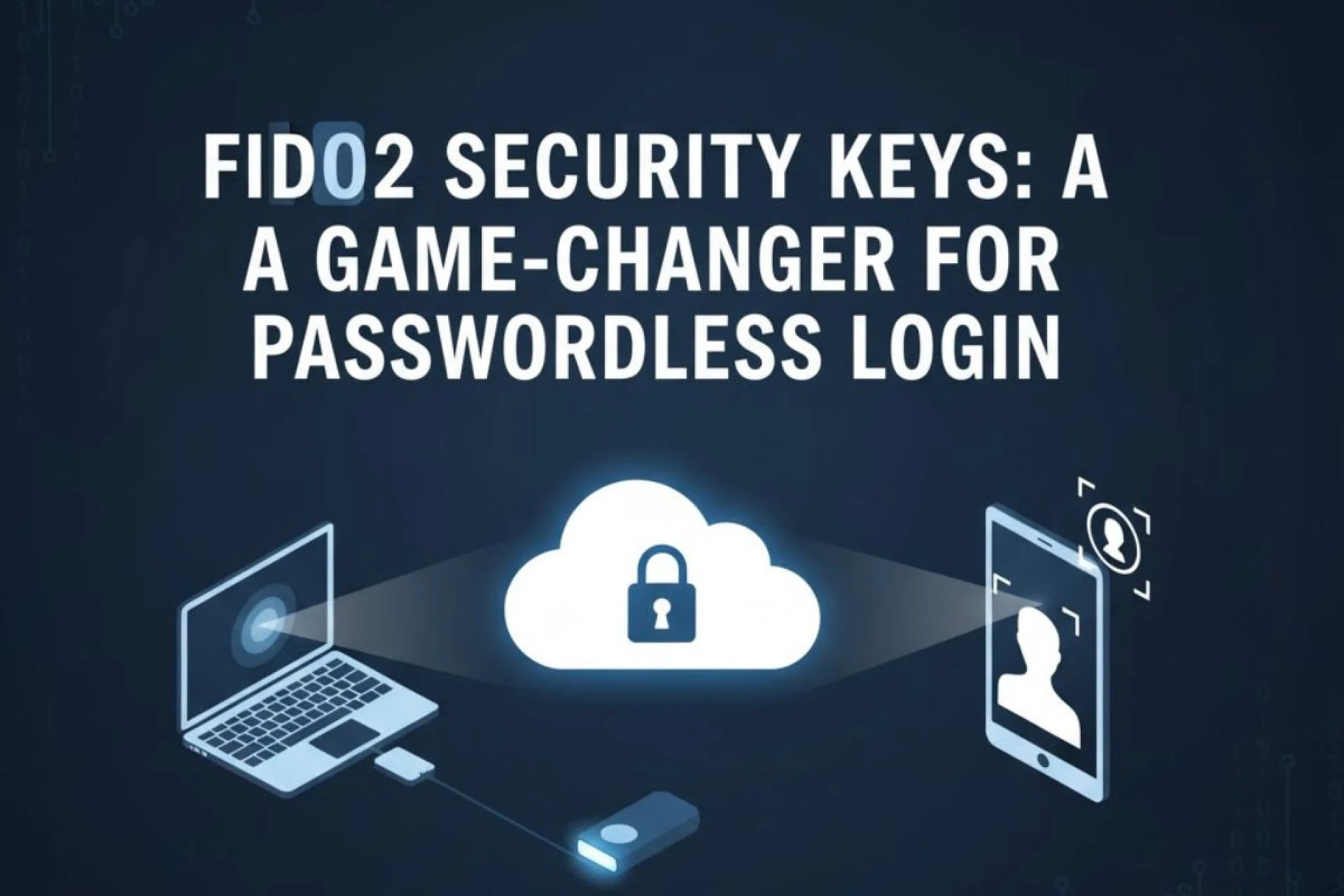

Why Passwords Are Losing Their Relevance
For decades, passwords have been the standard for online security. Yet, their weaknesses have become clear. Users struggle to remember complex combinations, while attackers exploit them through phishing and data breaches. Businesses are spending more time and resources managing password resets and monitoring credential-based attacks. The growing need for stronger protection and easier access has led many organizations to explore passwordless authentication — and that’s where the fido2 security key steps in as a major shift in digital security.
Understanding the Power of FIDO2 Security Keys
The FIDO2 standard, developed by the FIDO Alliance and the World Wide Web Consortium (W3C), eliminates traditional passwords by using public-key cryptography. Instead of storing passwords on servers, FIDO2 creates a unique key pair during registration. The private key stays on the user’s device, while the public key is stored by the online service. Authentication happens locally, meaning credentials are never exposed over the internet.
A fido2 security key acts as a physical token — like a USB or NFC device — that confirms a user’s identity. When plugged into or tapped against a device, it verifies the login securely and instantly. It’s far safer than a password or even two-factor authentication methods that rely on SMS or email codes, which can be intercepted.
How FIDO2 Security Keys Strengthen Authentication
Each FIDO2 login session is unique and cannot be reused, blocking replay or phishing attempts. Even if a hacker tricks someone into visiting a fake site, the key won’t respond because it verifies the original domain.
This design gives both users and organizations confidence that only trusted devices and people are gaining access.
Additionally, hardware-based authentication reduces dependency on network connections. Users can log in even if they’re offline, and no central password database exists for attackers to target.
Benefits for Businesses and End Users
- Phishing Resistance: Since the private key never leaves the device, attackers can’t steal or duplicate it.
- Faster Login Experience: Users can access accounts in seconds without remembering complex passwords.
- Lower IT Costs: With fewer password resets and support tickets, businesses save on administrative overhead.
- Improved Compliance: Many data protection standards now recognize passwordless methods like FIDO2 as strong authentication.
- Better User Trust: Customers feel safer knowing their information is protected by technology that cannot be easily breached.
Real-World Applications of FIDO2 Keys
- Enterprise Security: Large companies are adopting FIDO2 keys for employee logins, especially for remote and hybrid teams.
- Cloud Access: Platforms such as Microsoft, Google, and AWS have integrated FIDO2 authentication to simplify secure access.
- Financial Services: Banks are using hardware keys to protect online transactions and prevent account takeovers.
- Developers & Administrators: FIDO2 keys are used to secure access to code repositories, servers, and cloud dashboards.
These examples show how the use of fido2 security key brings practical benefits beyond theory. It’s not just about protection — it’s also about efficiency and user confidence.
The Future of Passwordless Access
The move toward passwordless systems is gaining global momentum. As more devices, browsers, and apps adopt FIDO2 support, the reliance on passwords continues to shrink. Security experts predict that within a few years, password-based authentication will be rare in high-security environments.
FIDO2 also aligns perfectly with modern authentication trends like biometric verification and zero trust frameworks. It supports a future where identity is verified by possession and presence, not memorization.
FAQs
Q1: What makes FIDO2 more secure than traditional passwords?
FIDO2 uses public-key cryptography, which means the user’s private key never leaves their device. This eliminates common risks like phishing, credential theft, or database leaks.
Q2: Can FIDO2 security keys work across different devices?
Yes. Most FIDO2 keys support multiple interfaces such as USB-A, USB-C, NFC, and Bluetooth, making them compatible with laptops, desktops, and smartphones.
Q3: Are FIDO2 keys expensive to deploy?
The initial cost per user can vary, but it’s often offset by reduced IT maintenance, fewer password resets, and stronger security compliance.
Q4: What if someone loses their FIDO2 key?
Users can register multiple keys for redundancy and recover access using backup authentication options like biometric login or a secondary key.
Q5: Do FIDO2 keys replace biometrics?
They complement biometrics. FIDO2 can pair with fingerprint or facial recognition for added assurance while maintaining privacy and control.
Conclusion
The fido2 security key is more than a modern convenience — it’s a shift toward a safer digital identity system. By removing the weakest link — passwords — it introduces a secure, simple, and privacy-focused method of authentication. Organizations adopting this technology not only protect their systems but also provide users with a faster, frustration-free login experience. As passwordless access becomes the norm, FIDO2 stands out as the foundation for trust in the connected world.









Sign in to leave a comment.