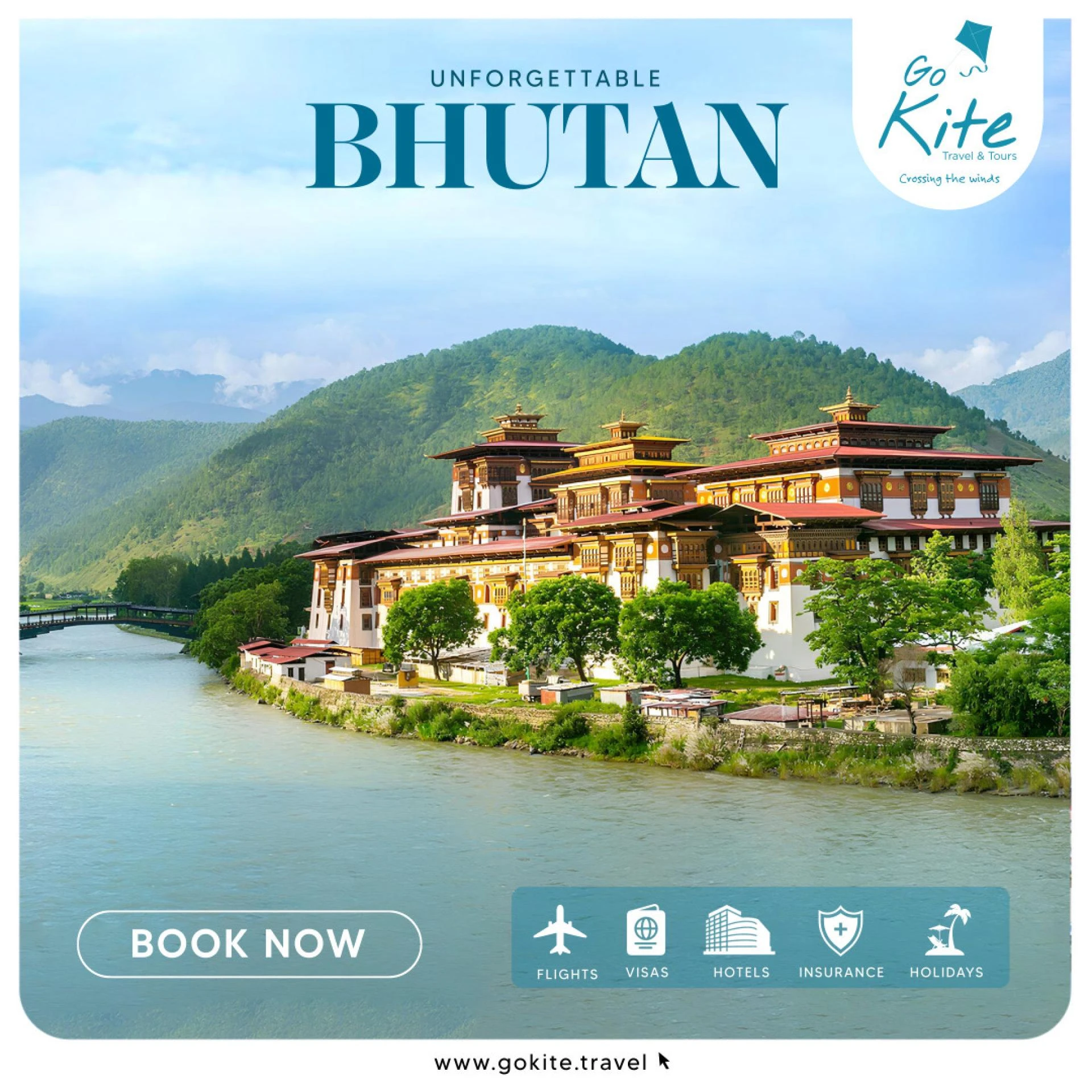

Bhutan is a place of stunning scenery and a rich cultural legacy, tucked in the Eastern Himalayas. There are various well-known spots that promise to make an unforgettable impact on your heart as you begin a tour of this lovely land. The famed Tiger's Nest Monastery, positioned perilously on a cliff and affording not only spiritual peace but also panoramic vistas that transcend description, is one such jewel. Thimphu, the capital city, is a mix of tradition and modernity. The busy alleyways are home to the imposing Tashichho Dzong, a fortress-monastery that exemplifies Bhutanese architecture and culture. Another must-see is Punakha Dzong, the majestic stronghold at the junction of two rivers, where history can be heard in every corner.
The Phobjikha Valley is a haven for rare black-necked cranes, while the tranquil Haa Valley is a well-kept secret with its unspoiled scenery and quaint towns. These well-known locations encapsulate Bhutan's character, enticing you to experience its spiritual retreats, bustling towns, and pristine natural treasures. Each has its own tale to tell, asking you to become a part of Bhutan's wonderful tapestry.
Here are some of the well-known places in Bhutan you should try when you visit.
1.Paro Taktsang (Tiger's Nest): A Spiritual Wonder in the Middle of Nature: The Paro Taktsang, or Tiger's Nest, is Bhutan's most famous and sacred landmark, nestled on the cliffs of the Paro Valley. This monastery, positioned perilously on the edge of a vertical cliff, provides stunning views of the surrounding mountains and lush foliage. Guru Rinpoche, the father of Bhutanese Buddhism, is said to have flown to this location on the back of a tigress, meditated in a cave, and taught Buddhism to the region. A climb to the Tiger's Nest is both a physical and spiritual adventure, offering an insight into Bhutan's rich cultural and religious past.
Punakha Dzong: Majestic Fortress at the River Confluence: Punakha Dzong, also known as the "Palace of Great Happiness," is a spectacular fortification located at the confluence of the Pho Chhu (father) and Mo Chhu (mother) rivers. This dzong's building is a work of art, demonstrating Bhutanese workmanship and elegance. Entering through the large oak doors embellished with elaborate carvings transports you to a realm where tradition and spirituality meet. The dzong is a religious and administrative center as well as an architectural marvel. Punakha Dzong is a must-see location for visitors interested in learning more about Bhutanese culture, thanks to its tranquil courtyards and bright paintings illustrating Buddhist teachings. Thimphu is Bhutan's capital, and it combines tradition and modernity: Bhutan's capital, Thimphu, is a unique combination of tradition and modernity. Traditional dzongs and monasteries mix alongside modern structures in the middle of the city's hustle and bustle. The Tashichho Dzong, an amazing stronghold that houses the royal room and administrative offices, is one of the attractions. The city's vibrant marketplaces, where you may discover local crafts, textiles, and fresh fruit, also provide an insight into Bhutanese daily life. Thimphu's allure stems from its ability to perfectly blend the ancient with the contemporary, making it a riveting location for anyone seeking to feel Bhutan's heart. Dochula Pass: A View of Bhutan's Himalayan Beauty: Make your journey to Dochula Pass for a breathtaking view of Bhutan's beautiful Himalayan environment. This mountain pass, located on the route from Thimphu to Punakha, is ornamented with 108 stupas, providing a spiritual and picturesque experience. On a clear day, you can see the eastern Himalaya's snow-capped peaks, including Gangkar Puensum, the world's highest unclimbed mountain. Dochula Pass is not simply a magnificent treat but also a location of significant importance, with memorial chortens dedicated to Bhutanese troops who died fighting Indian militants in 2003. Phobjikha Valley: A Relaxed Haven for Nature and Culture Lovers: Phobjikha Valley, located at an elevation of 3,000 meters, is a serene retreat for nature and cultural aficionados. The valley, known for its huge marshlands and the endangered black-necked cranes that come here during the winter, provides a tranquil respite from the rush and bustle of contemporary life. The Gangtey Monastery, positioned on a ridge overlooking the valley, gives a spiritual element to the landscape. Explore the valley's walking routes, engage with the inhabitants, and immerse yourself in rural Bhutan's simplicity and beauty. The Phobjikha Valley offers a one-of-a-kind opportunity to enjoy Bhutan's natural magnificence while also helping to preserve its fragile environment.A trip to Bhutan is more than simply a holiday; it's an immersion into a world where nature and culture coexist. As you discover the well-known destinations that dot this Himalayan treasure, the end of your Bhutan journey is more than simply the finish; it's a portal to memories that endure and tales that reverberate. The Tiger's Nest Monastery is a spiritual haven for those seeking peace, while the lively streets of Thimphu reveal the pulse of Bhutan's history and present. Bhutan is more than a location; it's an experience, with its unique combination of history and modernity.
Consider the secret valleys of Phobjikha and Haa as you finish your journey, where nature's splendor unfolds in whispers, encouraging you to appreciate moments of tranquillity. Bhutan tour packages from India make it easy to plan your Bhutan excursion, ensuring that your family's journey is as magical as the country itself. Bhutan family tour packages provide access to a world where the excitement of discovery and the warmth of familial relationships weave a tapestry of memories.
Finally, Bhutan's well-known destinations are invitations to find the remarkable in the ordinary, to connect with a culture that breathes in every landscape, and to embrace a trip that transcends the ordinary.








Sign in to leave a comment.