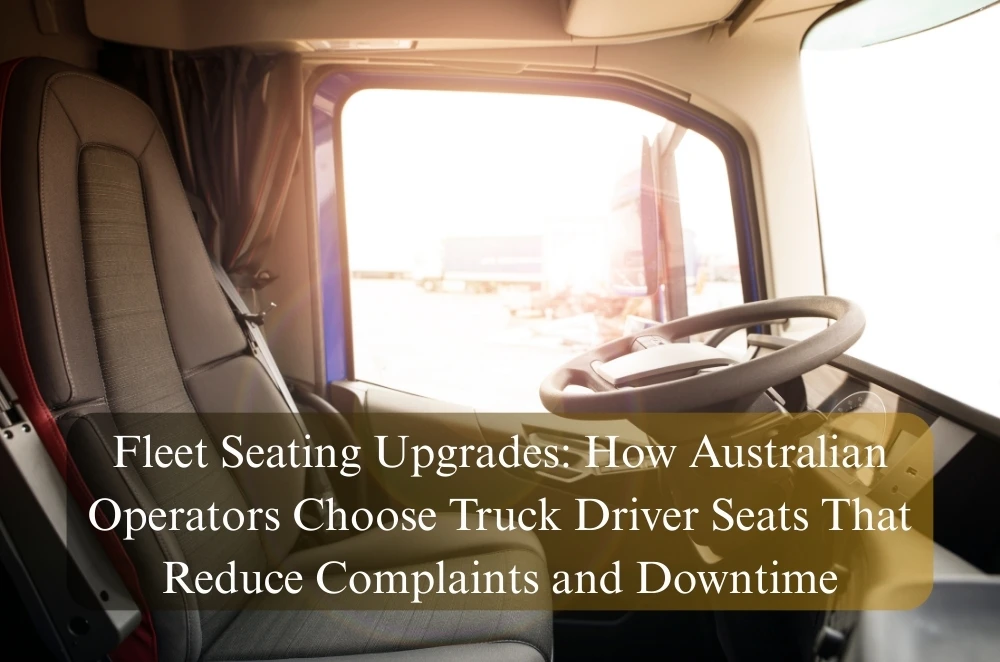

A truck seat isn’t a “nice-to-have” in a fleet.
It’s a piece of working equipment that drivers interact with for hours every day, and it has a direct impact on comfort, fatigue, and whether people actually want to stay in the job—exactly why heavy vehicle driver seating solutions matter.
Most seating problems don’t show up as one big failure.
They show up as a slow drip: sore backs, constant adjusting, torn bolsters, squeaks, broken armrests, and a growing list of “can we swap trucks?” requests.
For fleets operating across Australia (and for operators with vehicles moving through the wider Asia Pacific region), a seat upgrade program is less about picking a single “best seat” and more about choosing the right spec for the work, then rolling it out without blowing up schedules.
This guide lays out a practical decision process that still makes sense even if the brand link is removed.
Why seating becomes a fleet cost problem (not just a comfort issue)
Seat discomfort creates operational friction.
Drivers take longer to settle in, complain more often, and sometimes avoid certain vehicles entirely.
It also creates maintenance drag.
Once seats start failing—mechanisms, sliders, upholstery, armrests—the fix can become a string of small repairs that cost time, not just parts.
For owner-drivers, the impact is personal and immediate.
For fleet managers, the impact is cumulative: downtime, admin, inconsistent cab setups, and a constant cycle of “we’ll deal with it later”.
Seat upgrades are often triggered by a major event (a seat collapses, an inspection issue, a driver leaves), but the best outcomes come from planned replacement cycles.
A proactive program is usually cheaper than a reactive scramble.
Decision factors that matter when choosing truck driver seats
A good seat choice matches the vehicle, the routes, the driver mix, and the reality of maintenance.
If you only optimise for comfort or only optimise for price, you’ll often pay in downtime later.
Adjustability and driver fit range
Fleets rarely have one “standard driver size.”
The more variation you have in height, weight, and driving posture, the more important adjustability becomes.
Look for practical adjustments that drivers will actually use, not a long list of features nobody touches.
If a seat is fiddly or unintuitive, drivers often set it once and live with a poor fit.
Suspension type and ride conditions
Not all roads and routes feel the same.
Metro stop–start, regional highways, and rough access roads place different demands on seating.
Suspension and vibration management are part of comfort, but they’re also part of reducing end-of-shift fatigue complaints.
The right spec depends on the work profile, not what looks premium in a catalogue.
Durability and cleanability
A seat in a long-haul prime mover lives differently from a seat in a tipper, a rigid doing construction runs, or a vehicle with multiple drivers per week.
Upholstery wear, foam breakdown, and damaged controls are common failure points.
If the cab environment is dusty, wet, or dirty, cleaning and material choice matter.
A seat that’s hard to clean becomes a seat that stays dirty, which drivers tend to hate.
Fitment and compatibility
Seat upgrades fail quietly when fitment isn’t handled properly.
Mounting points, seat rails, belt integration, and cab geometry all need to be aligned with the vehicle.
The cheapest seat becomes the expensive seat if it causes installation delays or repeat visits.
Fitment planning is also where fleets can standardise and reduce complexity over time.
Downtime and installation planning
A seat that’s perfect on paper is still a bad choice if it takes vehicles off the road at the wrong time.
Upgrade programs should be scheduled like any other fleet maintenance—batched, planned, and aligned to quieter periods or existing service windows.
Driver acceptance and change management
Driver buy-in matters.
If drivers dislike the feel, find the controls awkward, or don’t trust the seat’s stability, they’ll complain—regardless of the spec sheet.
A small pilot with a few vehicles can prevent a large, expensive rollout mistake.
It also gives you real feedback before you commit fleet-wide.
Common mistakes in seat upgrades
Mistake 1: Choosing a seat based on one driver’s preference.
A fleet needs a spec that works for a wide range of drivers and use cases.
Mistake 2: Treating fitment as “the installer will sort it.”
Fitment and compatibility need to be confirmed early to avoid delays and rework.
Mistake 3: Upgrading only when seats fail.
Reactive replacement creates downtime spikes and messy purchasing.
Mistake 4: Rolling out a new spec without a pilot.
A small trial can reveal issues with controls, comfort, or durability before you scale.
Mistake 5: Ignoring maintenance realities.
Seats live in harsh environments; plan for cleaning, inspection, and wear parts.
Mistake 6: Standardising too aggressively.
Some fleets genuinely need two or three seat specs, not one, based on vehicle type and route profile.
A simple spec-and-rollout framework for fleet managers
This is a practical way to move from “drivers hate the seats” to a controlled upgrade program.
It’s designed to keep decision-making grounded and reduce disruption.
Step 1: Define the problem in operational terms
Avoid vague notes like “seat uncomfortable.”
Instead, track what’s happening:
- Which vehicles generate the most complaints
- What the complaints are (adjustment, suspension feel, torn upholstery, broken mechanisms)
- Whether issues correlate with routes, vehicle type, or driver shift length
You don’t need perfect data.
You need enough to identify patterns and prioritise the worst offenders.
Step 2: Segment the fleet by use case
Most fleets can be grouped into two or three-seat environments:
- long-haul/high hours (comfort and fatigue management priority)
- metro/stop–start (easy entry/exit, durability, frequent adjustments)
- site / harsh conditions (cleanability, rugged controls, wear resistance)
This prevents the “one seat must do everything” trap.
It also makes procurement and maintenance cleaner.
Step 3: Build a short spec checklist
Keep it simple and practical:
- adjustability that suits your driver range
- support and suspension appropriate to route conditions
- materials appropriate to the cab environment
- compatibility and mounting considerations
- serviceability (how easy it is to maintain or replace common wear parts)
If you want a reference point for common seat types and what to check before ordering for a fleet, the fleet seating upgrades across Australia are a useful starting place.
Step 4: Run a pilot before you scale
Pick a small set of vehicles that represent the fleet mix.
Give drivers a short feedback form that focuses on the real issues: comfort after a shift, ease of adjustment, stability, and overall acceptance.
Keep the pilot long enough to be real—not just a quick sit test.
A week or two of real driving reveals more than a quick yard trial.
Step 5: Plan the rollout like maintenance, not a “project”
Batch installs in line with servicing windows, where possible.
Avoid pulling vehicles off the road during peak periods.
If you’re running multi-site operations, plan logistics for parts and installation in each location.
The smoother rollouts usually have boring documentation: vehicle list, seat spec, install schedule, and sign-off steps.
Local SMB mini-walkthrough
A mid-sized transport operator runs a mixed fleet: a handful of long-haul trucks and several metro rigids doing daily deliveries.
Driver complaints cluster around a few older vehicles with worn bolsters and unreliable adjustments.
They segment the fleet into long-haul and metro groups and pilot two-seat specs—one aimed at long-hour comfort, one aimed at rugged metro durability.
Installs are batched during planned service windows to avoid unexpected downtime.
After two weeks, they standardise each group to the spec drivers accept most, then roll out vehicle by vehicle.
The win isn’t “perfect seats.” It’s fewer disruptions, fewer complaints, and a simpler maintenance story.
Operator experience moment
The upgrade programs that go smoothly are usually the ones that treat fitment as a first-class decision.
A seat can be excellent, but if installation becomes a guessing game—rails, mounts, belt setups—downtime balloons fast.
The other big turning point is when fleets stop debating “best seat” and start deciding “best seat for this use case.”
That’s when purchasing and driver acceptance both get easier.
Next 7–14 days: first actions to move from complaints to a plan
Days 1–2: Start a simple seat issue log.
Record vehicle, issue type, and whether it affects shift comfort or operability.
Days 3–4: Segment the fleet into 2–3 use cases.
Long-haul, metro, harsh site conditions—whatever fits your operation.
Days 5–7: Draft a short seat spec checklist.
Focus on adjustability, durability, compatibility, and serviceability.
Days 8–10: Choose a small pilot group.
Pick vehicles that represent the fleet mix and drivers who will give honest feedback.
Days 11–14: Build a rollout plan aligned to maintenance windows.
Decide batching, installation timing, and how feedback and sign-off will be captured.
Practical Opinions
Pilot first, then standardise—fleet rollouts punish assumptions.
Fitment planning is where most “easy upgrades” become messy.
If you can’t maintain it simply, it won’t stay good for long.
Key Takeaways
- Seats are fleet equipment: comfort issues become downtime and admin over time.
- The best decisions match seat spec to vehicle use case, not one “universal” choice.
- Fitment, serviceability, and rollout scheduling matter as much as features.
- A pilot plus a simple maintenance-aligned rollout prevents expensive mistakes.
Common questions we hear from businesses in Australia
Q1) Should we standardise one seat spec across the entire fleet?
Usually, fleets do better with two or three specs aligned to vehicle type and route profile, rather than forcing a single compromise.
A practical next step is to segment vehicles into use cases and define what matters most for each group.
In most cases across Australia, metro rigids and long-haul prime movers place different demands on seating.
Q2) How do we minimise downtime during seat upgrades?
It depends on fleet size and operational peaks, but batching installs around existing service windows is usually the cleanest approach.
A practical next step is to build an installation schedule that aligns with maintenance and avoids your busiest weeks.
In most cases, predictable scheduling saves more than rushing individual vehicles.
Q3) What feedback should we collect during a pilot?
Usually, the most useful feedback is practical: ease of adjustment, comfort after a full shift, stability, and whether drivers actually like using the controls.
A practical next step is to use a short form and collect notes after several real driving days.
In most cases, quick “sit tests” miss the issues that show up after hours on the road.
Q4) What’s the biggest mistake fleets make when ordering seats?
In most cases, it’s underestimating fitment and compatibility, then discovering installation complications mid-rollout.
A practical next step is to confirm mounting and vehicle compatibility early and document it as part of the purchasing decision.
Usually, across Australia and Asia Pacific operations, multi-site fleets benefit most from clear fitment notes and standardised install processes.













Sign in to leave a comment.