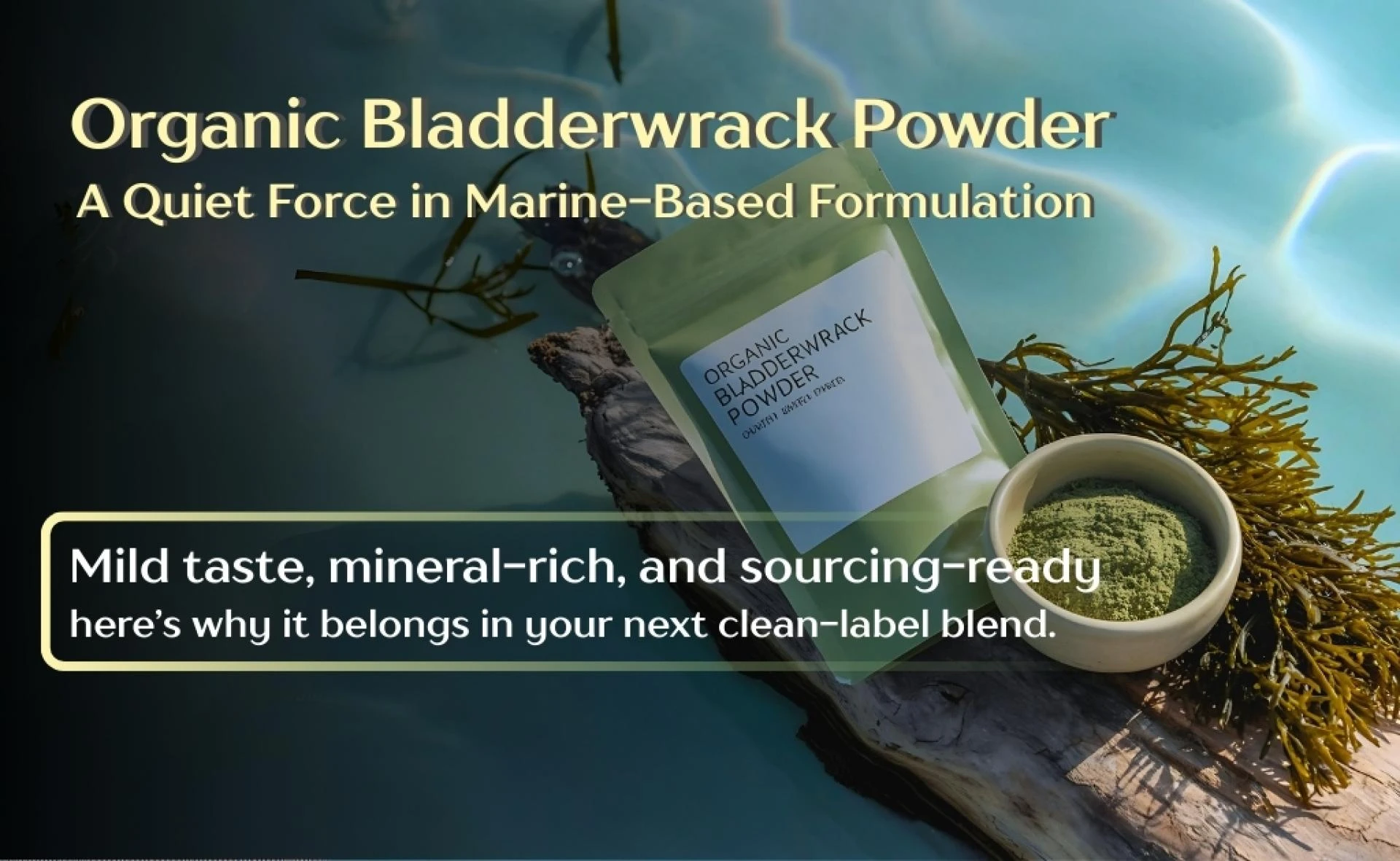

I’ve worked with my fair share of mineral-rich botanicals—chlorella, spirulina, moringa. But when it comes to marine-derived ingredients that offer both functionality and flexibility, organic bladderwrack powder deserves more attention than it gets.
It’s not new. In fact, Fucus vesiculosus—the species behind bladderwrack—has been studied for centuries. But with today’s push toward cleaner, traceable, and naturally functional ingredients, this brown seaweed is making a quiet but meaningful comeback in the formulation and sourcing conversations I’ve had across supplement, functional beverage, and even cosmetic industries.
So, what makes bladderwrack a viable player in the mineral blend space?
Let’s start with what’s in it.
Bladderwrack naturally contains iodine, fucoidans, alginates, and phlorotannins. While iodine tends to get the spotlight due to its link with thyroid support, the functional benefits go beyond a single element.
In powdered form, bladderwrack brings a lot to the table:
- Fucoidans, a group of sulfated polysaccharides, can support textural stability in hydrating powders or nutrient-dense gummies.
- Alginates help retain moisture and create viscosity in both food and topical products.
- Marine polyphenols (like phlorotannins) are increasingly studied for oxidative stability in oil-based supplements and emulsions.
From a formulation standpoint, that means organic bladderwrack powder is not just filler. It offers structure, flow, and bioactivity—and can support a range of label claims without relying on synthetics.
Real Use Cases That Are Scaling Quietly
I’ve seen product developers use bladderwrack in:
- Alkalizing marine mineral blends (paired with lemon and chlorella)
- Vegan broths and superfood soups
- Salt substitutes in wellness snacks
- Pet nutrition formulations, where iodine must be naturally derived
- Clay and algae-based skincare masks needing texture and trace mineral content
It’s also gaining traction in functional beverage prototypes, especially in North America and Europe, where brands are leaning into ocean-based wellness.
Sourcing It Right: What I Always Ask For
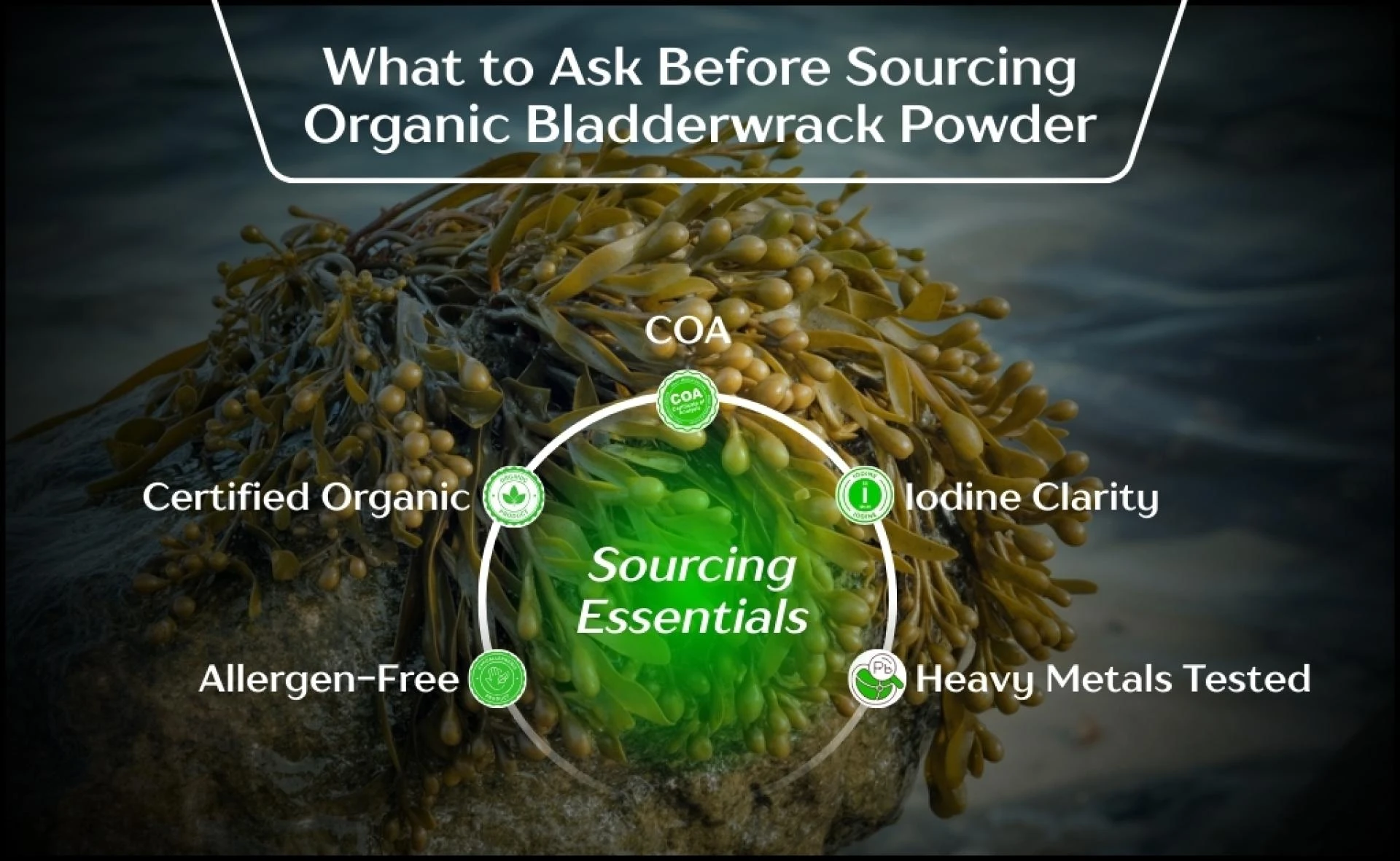
Not all bladderwrack is created equal. As a rule, I look for:
- USDA Organic or EU Organic certification
- A complete Certificate of Analysis (with iodine levels, microbial profile, and heavy metal test results)
- Particle size uniformity and moisture content (≤10%) for compatibility with dry mix systems
- Statements covering allergen safety—especially shellfish cross-contamination risks
- Bonus if the supplier provides a pesticide residue report, even for wild-harvested material
Why so much scrutiny? Because natural iodine can fluctuate widely. And regulatory flags (like California Prop 65) mean you need full traceability on metal content and iodine variance.
What Sets It Apart in a Sea of Marine Ingredients
Unlike kelp or dulse, bladderwrack holds up particularly well in blended formulations. The flavor is milder, and its texture works in both water-based and emulsion formats.
It also contains fucoidan levels that are increasingly being used in gut and immunity-related formulations (though we’re careful not to frame it as a claim in B2B messaging).
And in terms of sourcing regions, Icelandic and Canadian bladderwrack tends to offer better regulatory alignment, consistent iodine levels, and reliable documentation.
A Quiet Performer with Real Formulation Value
Organic bladderwrack powder isn’t flashy—and that’s exactly why it works. It blends into formulas without dominating, supports multiple product functions, and checks a lot of clean-label and compliance boxes.
If you’re formulating with marine minerals, and you’re looking for a seaweed-based ingredient that doesn’t just sit on your spec sheet but actually does the work, bladderwrack deserves a closer look.











Sign in to leave a comment.