

The global logistics market is evolving faster than we've ever seen it change. As we approach 2025, the sector is facing a wave of transformation propelled by technology, sustainability, and new trade dynamics. Logistics is about moving things better, faster, and more environmentally friendly, from automation to AI-driven optimization.
This article will talk about the big changes in the Global Logistics Market Trends 2025 and how they are affecting how firms work, compete, and add value for customers all around the world.
1. Smart Logistics and Digital Transformation
Technology is still the most important part of modern logistics. By 2025, digitalization will be required. Blockchain, the Internet of Things (IoT), and artificial intelligence (AI) are all transforming how supply chains work.
For example, AI-powered predictive analytics supports logistics firms in forecasting demand, planning the best routes, and minimizing operating expenses. IoT sensors now keep track of shipments in real time, making them more transparent and reliable than ever before. At the same time, blockchain makes a guarantee that paperwork is protected and can't be changed, which is very important for international freight operations.
Statista says that the global smart logistics business will be worth around $145 billion by 2025. This shows that we are moving toward making decisions based on data and automating more things.
2. Green Logistics and Sustainability
One of the most important trends in the global logistics market for 2025 is sustainability. Companies are looking at their carbon footprint because governments and consumers are putting more and more pressure on them to do so. Electric trucks, warehouses powered by renewable energy, and packaging that is good for the environment are all becoming mainstream in the industry.
Companies all across the world are putting money on logistics networks that don't add to carbon emissions. For instance, DHL's "GoGreen" campaign promises to have no emissions by 2050, and other companies in the logistics business are making similar commitments.
Sustainability can give you a competitive edge beyond just following the rules. People now prefer brands that share their values about the environment. Companies that employ green logistics solutions can increase their brand reputation while saving long-term operational costs.
3. New ideas in e-commerce and last-mile delivery
As e-commerce grows, it continues to change the goals of logistics. The epidemic increased internet buying, and by 2025, worldwide e-commerce revenues are anticipated to top $7 trillion. This growth calls for last-mile delivery options that are speedier, more flexible, and more effective.
Businesses are using micro-fulfillment centers, drone deliveries, and self-driving cars to meet client needs. Both new and established logistics companies are trying out AI-powered route optimization to cut down on delivery times and expenses.
Logistics entrepreneurs in places like India, Southeast Asia, and Africa are also working to solve problems with delivering to rural areas. This is a big step toward making a genuinely global logistics ecosystem.
4. Managing risks and making the supply chain more resilient
One of the most significant things we've learned in the last several years is how crucial it is to be resilient. The COVID-19 pandemic, wars between countries, and natural disasters showed how weak global supply chains are.
By 2025, businesses aim to put more emphasis on diversifying their supply chains, moving operations closer to home, and keeping an eye on risks in real time. Companies are now more focused on risk efficiency than cost efficiency. This implies they are willing to spend more on redundancy and flexibility to avoid problems.
McKinsey & Company says that approximately 70% of global supply chain leaders want to spend money on digital tools that help them find and deal with risks more rapidly. In the global logistics market trends of 2025, resilience is more than just getting through problems; it also means doing well through them.
5. Using robots and automation in warehouses
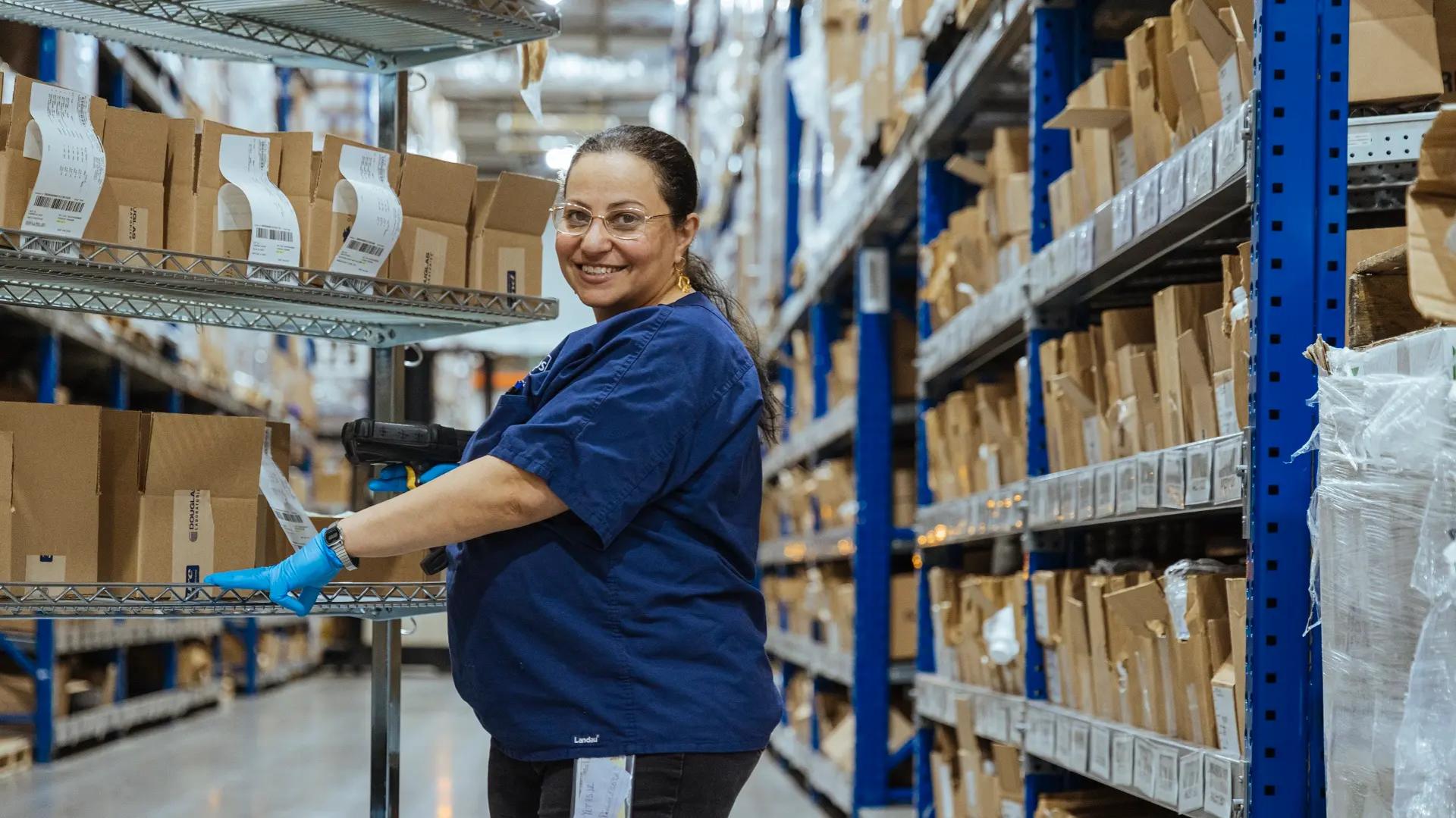
Every year, warehouses get smarter. By 2025, automation and robotics won't be things of the future; they'll be common. Technology is making everything more efficient and accurate, from robotic arms sorting parcels to automated guided vehicles (AGVs) moving items.
Amazon has been a leader in warehouse automation for a long time, but now mid-sized logistics companies are doing the same. AI and robotics make businesses less reliant on people, cut down on mistakes, and speed up order processing. All of these are very important benefits in a time when delivery times are short and customers expect a lot.
A DHL study found that automated warehousing may make things up to 25% more efficient. This shows how significant these new technologies are in the global logistics market trends for 2025.
6. Using data to make decisions and predictive analytics
Data is now the new fuel for logistics. Logistics managers may spot potential problems before they arise with predictive analytics, which employs AI and machine learning. This proactive approach cuts down on delays, saves money, and makes customers happier.
In 2025, businesses will not only gather data, but also use it in smart ways. Decision-makers can act faster and smarter thanks to real-time dashboards, robust analytics platforms, and cloud-based supply chain solutions.
7. The move from globalization to regionalization.
Globalization is still vital, but the world after the epidemic has moved a little bit toward regionalization. To minimize shipping costs and dangers, businesses are building manufacturing and distribution hubs closer to big markets.
This tendency fits with the fact that governments in places like Asia-Pacific and North America are giving more money to businesses that make things locally. By 2025, regional logistics networks will probably grow a lot, making sure that global efficiency and local response are both good.
8. The Human Part of Logistics
People are still the most important part, even with all the technology and automation. Logistics still needs skilled people that can handle intricate networks, analyze data insights, and make sure customers are happy.
As the field grows, new jobs appear, like supply chain data analysts, robot operators, and sustainability managers. The global logistics sector trends for 2025 stress how important it is to keep learning and improving your skills to keep up with changes in technology.
Final Thoughts
In 2025, the logistics sector will hit a turning point. The global logistics market trends for 2025 show a future focused on intelligence, innovation, and adaptation. These trends include automation, sustainability, resilience, and regionalization.
Companies that get on board with these developments early, like Global Dynamic Supply Limited, set themselves up as leaders in reliability and new ideas. They are driving change instead of just going with the flow by using technology while still holding on to human values.










Sign in to leave a comment.