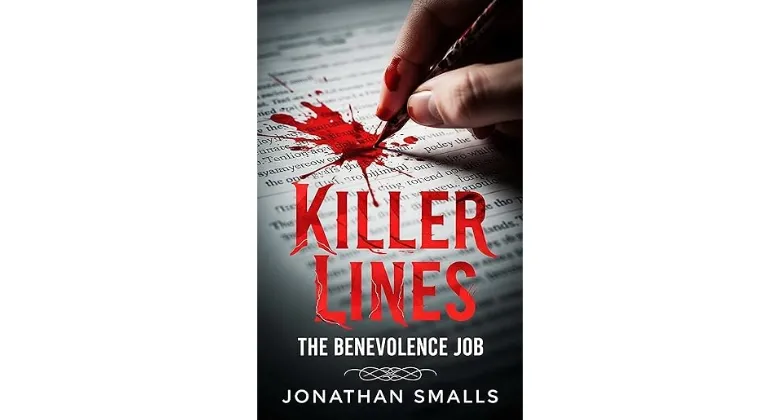

When Intelligence Meets Adrenaline
Not all thrillers rely solely on psychology. Some grip you by the mind and then refuse to let your pulse slow down.
The Benevolence Job is often praised for its intellectual depth, moral ambiguity, and layered storytelling. But beneath that sophistication lies something just as powerful: pure, unrelenting excitement. This is a novel that doesn’t just make you think, it makes you feel every second of the chase.
Because when calculated minds collide, the result isn’t always quiet strategy. Sometimes, it explodes into motion.
The Art of the Chase
Car chases in fiction can easily become repetitive, engines roaring, tires screeching, and predictable outcomes. But in a story driven by precision and planning, even speed becomes strategic.
In The Benevolence Job, movement is never random. Every pursuit is intentional. Every escape is calculated. The roads are not just pathways; they are extensions of the characters’ decisions.
Imagine narrow European streets, sharp turns that demand perfection, and the constant awareness that one miscalculation ends everything. These sequences are not just about velocity; they are about control under pressure.
What makes them gripping is not simply the danger, but the intelligence behind every maneuver. You’re not just watching a chase. You’re witnessing a battle of anticipation.
When Silence Breaks Into Violence
While the novel thrives on psychological tension, it does not shy away from moments where that tension snaps.
The confrontations in The Benevolence Job are not exaggerated or theatrical. They are swift, grounded, and purposeful. Every physical encounter feels earned, an inevitable collision after layers of silent strategy.
There is a rawness to these moments. They arrive without warning, breaking the calm that the story so carefully builds. And because they are rare, they carry weight.
This balance is what sets the book apart from many action-heavy thrillers. Instead of overwhelming the reader with constant noise, it chooses its moments carefully—making each impact sharper, each conflict more intense.
The Rhythm of Suspense
One of the novel’s greatest strengths is its pacing. It understands when to slow down and when to accelerate.
A quiet conversation might stretch tension to its limit, only to be followed by a sudden shift into movement. A carefully planned moment may unravel in seconds. The reader is never allowed to settle into comfort.
This rhythm mirrors real adrenaline. It builds slowly, almost imperceptibly, until it spikes. And when it does, it leaves a lasting impression.
The result is a reading experience that feels cinematic without losing its intelligence. You’re not just imagining scenes, you’re experiencing them.
Stakes That Feel Real
Thrill only works when the stakes matter. In The Benevolence Job, every chase and confrontation carries consequences beyond the immediate moment.
These are not isolated action sequences inserted for spectacle. They are extensions of the story’s central conflict, where every risk reveals something deeper about control, power, and vulnerability.
The danger is not just physical. It is psychological. Every decision made in motion reflects the same calculated thinking that defines the characters.
That connection between action and intellect is what keeps the tension grounded. Nothing feels unnecessary. Nothing feels exaggerated.
Why This Kind of Thrill Works
Modern readers expect more from thrillers. They want excitement, but they also want meaning. They want intensity, but not at the cost of substance.
The Benevolence Job delivers both.
It proves that a story can be intellectually engaging and physically thrilling at the same time. That car chases can reveal character. That confrontations can deepen the narrative instead of interrupting it.
This is entertainment without compromise.
A Thriller That Moves With Purpose
At its core, The Benevolence Job is about control, who has it, who loses it, and what happens in the moments where it slips.
The action sequences reflect that theme perfectly. Whether it’s a high-speed escape or a sudden clash, every moment feels like part of a larger design.
And that is what makes the experience unforgettable.
Because when the tension finally breaks, it doesn’t just move the story forward, it pulls the reader deeper in.









Sign in to leave a comment.