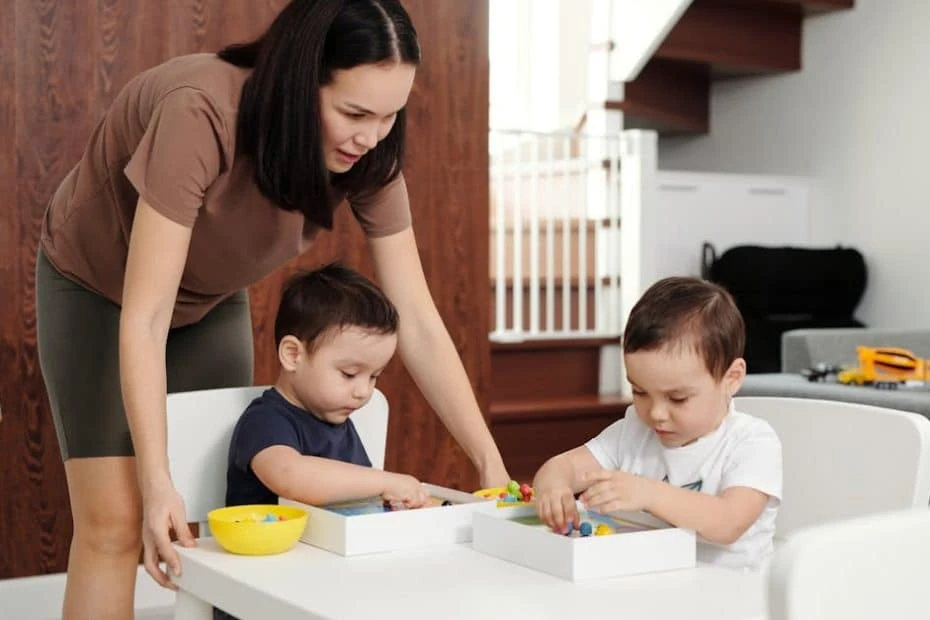

Not every child thrives in a classroom with 35 other kids, a bell every 45 minutes, and a rigid timetable that leaves no room for anything else. Some learners need to move at their own pace. Others are involved in sport, performing arts, or travel that clashes with fixed school hours. And for some families, the local school options simply do not deliver the quality of education they expect.
This is why home-based learning has grown so much across South Africa. It is no longer a fringe idea for a handful of families. Tens of thousands of learners now study from home using structured programmes that follow the national curriculum, and the results speak for themselves. The question is not whether it works, but how to set it up properly.
What Home-Based Learning Actually Looks Like
The term gets thrown around loosely, so it helps to be specific. Home-based learning means a child studies from home (or any stable location) using a curriculum delivered by a registered educational provider. The learner accesses lessons, completes assignments, writes assessments, and receives feedback, all without attending a physical school building.
This is different from unschooling, where there is no formal curriculum. It is also different from a parent creating their own lesson plans. With online schooling, the school provides the full programme. The parent’s role is to create a suitable study space, support the daily routine, and keep an eye on progress.
Most providers use a combination of recorded lessons, live sessions, worksheets, and digital assessments. The learner logs in, follows the schedule, and submits work through the platform. Teachers mark the work and provide feedback, and parents can track results through a dashboard.
The Legal Side of Things
South Africa’s Schools Act allows for home education, but there are rules. Parents must register with the provincial Department of Education and follow a curriculum that meets the standards set by Umalusi (the quality council for general and further education). The learner must write formal assessments and, in Grade 12, sit for the National Senior Certificate exam or an equivalent qualification.
Choosing a registered provider takes care of most of this. The school handles the curriculum alignment, assessment scheduling, and reporting. The parent registers as a home educator with the province and submits the required documentation. It is admin, but it is manageable, and most schools walk you through the process.
Why Families Are Choosing This Path
The reasons are as varied as the families themselves.
Some parents are unhappy with overcrowded classrooms. A class of 40 or more learners means the teacher cannot give individual attention. Kids who need extra help fall behind, and kids who are ahead get bored. A home-based setup lets the learner move at their own speed, spending more time on difficult sections and less time on material they already understand.
Other families have practical reasons. If a child competes in sport at a provincial or national level, training schedules clash with school hours. Attending a physical school means missing training or missing school, and neither is a good option. Home-based learning lets the family build a schedule around both.
Travel is another factor. Families who move frequently for work, or who travel for extended periods, cannot keep pulling a child in and out of different schools. A single online high school South Africa provider gives the learner continuity no matter where the family is based.
Safety concerns play a role for some families too. Bullying, substance exposure, and general school safety issues push parents to look for alternatives that keep their child in a protected environment while still getting a proper education.
Setting Up a Routine That Works
One of the biggest adjustments for families new to home-based learning is the daily routine. Without a school bell and a bus schedule, it is easy for the day to lose structure. The families that do well with this model are the ones who treat it like a job.
Set a start time and an end time. Block out study periods for each subject. Include breaks for meals, exercise, and downtime. Stick to the routine on weekdays, and keep weekends free. Over time, the learner internalises the rhythm and needs less supervision.
Younger children (Grades R to 6) generally need a parent or caregiver nearby during study time. Older learners, especially those in online high school programmes, can manage more independently. By Grade 10 or 11, most learners handle their schedule with minimal oversight.
The physical study space matters too. A quiet corner with a desk, a chair, good lighting, and a reliable internet connection is the minimum. Studying on the couch in front of the TV does not work, no matter how disciplined the learner claims to be.
Socialisation and the “What About Friends?” Question
This comes up every single time. People assume that a child who learns at home will have no friends and no social skills. The reality is different.
Home-based learners socialise through sport, church, community groups, extramural activities, and arranged meetups with other homeschooling families. Many online school providers organise virtual events, group projects, and even in-person gatherings in major cities.
The quality of socialisation often improves compared to a traditional school setting. Instead of spending six hours a day with the same group of kids sorted by age and geography, the learner interacts with a wider range of people across different settings. They learn to hold a conversation with adults, collaborate with peers of different ages, and build friendships based on shared interests rather than just proximity.
Subjects and Curriculum Choices
South African home-based learners follow either the CAPS (Curriculum and Assessment Policy Statement) or the IEB (Independent Examinations Board) curriculum, or in some cases the Cambridge system. The best online schools in South Africa offer at least one of these recognised pathways and provide full subject coverage.
For Grades R to 9, the subject list is largely fixed by the curriculum. From Grade 10 onward, the learner selects subjects that align with their strengths and career interests. This is a critical decision. The subjects chosen in Grade 10 determine university entrance options, so it needs to be done with care.
Most providers offer the full range: mathematics, mathematical literacy, physical sciences, life sciences, accounting, business studies, geography, history, and languages. Some also offer less common subjects like computer applications technology, engineering graphics, and visual arts.
How Assessment Works
This is where parents often have the most questions. If the child is at home, how do they write exams? Who marks the work? Is it credible?
Regular assessments (tests, assignments, projects) are completed on the platform and marked by qualified teachers. The learner receives a report at the end of each term, just like at a physical school.
For Grade 12, the learner writes the final exams at an approved examination centre. These are the same papers, written under the same conditions, as any other school. The matric certificate does not indicate whether the learner attended a traditional school or studied from home. It is the same qualification.
Online schooling South Africa providers handle the exam registration and logistics. They inform parents of the venue, dates, and requirements well in advance. The learner simply shows up, writes, and the results are processed through the normal channels.
The Cost Compared to Private Schooling
Private school fees in South African cities range from R30,000 to over R150,000 per year, depending on the school. Add uniforms, textbooks, transport, and extramurals, and the total climbs further.
Home-based learning through a registered provider is typically a fraction of that cost. There are no transport costs, no uniform expenses, and textbooks are often included in the digital platform. The annual fee for a full programme varies by provider but generally falls well below the cost of a mid-range private school.
For families with more than one child, the savings multiply. The same internet connection and study space serves all the learners in the household, and there are no separate transport arrangements to coordinate.
When It Might Not Be the Right Fit
Home-based learning is not for every family. If both parents work full-time with no flexibility and there is no other adult at home to supervise a primary school learner, the practical challenges can be significant. Younger children need someone present, and a provider cannot replace in-person supervision.
It also requires discipline from the learner. A teenager who cannot self-motivate without external pressure may struggle in this format. The freedom of home-based learning is a strength for self-directed students, but it can be a weakness for those who need constant structure and accountability from a teacher standing in front of them.
For families where the fit is right, the results can be remarkable. Learners who struggled in a traditional classroom often flourish when given the space to learn at their own pace, in their own environment, with the support of a structured programme and qualified teachers on the other end of the screen.
The number of South African families choosing this path grows every year, and the quality of available programmes has grown with it. If it is something you are considering, the best first step is to speak with a provider, ask detailed questions, and see whether their model matches your family’s needs and circumstances.













Sign in to leave a comment.