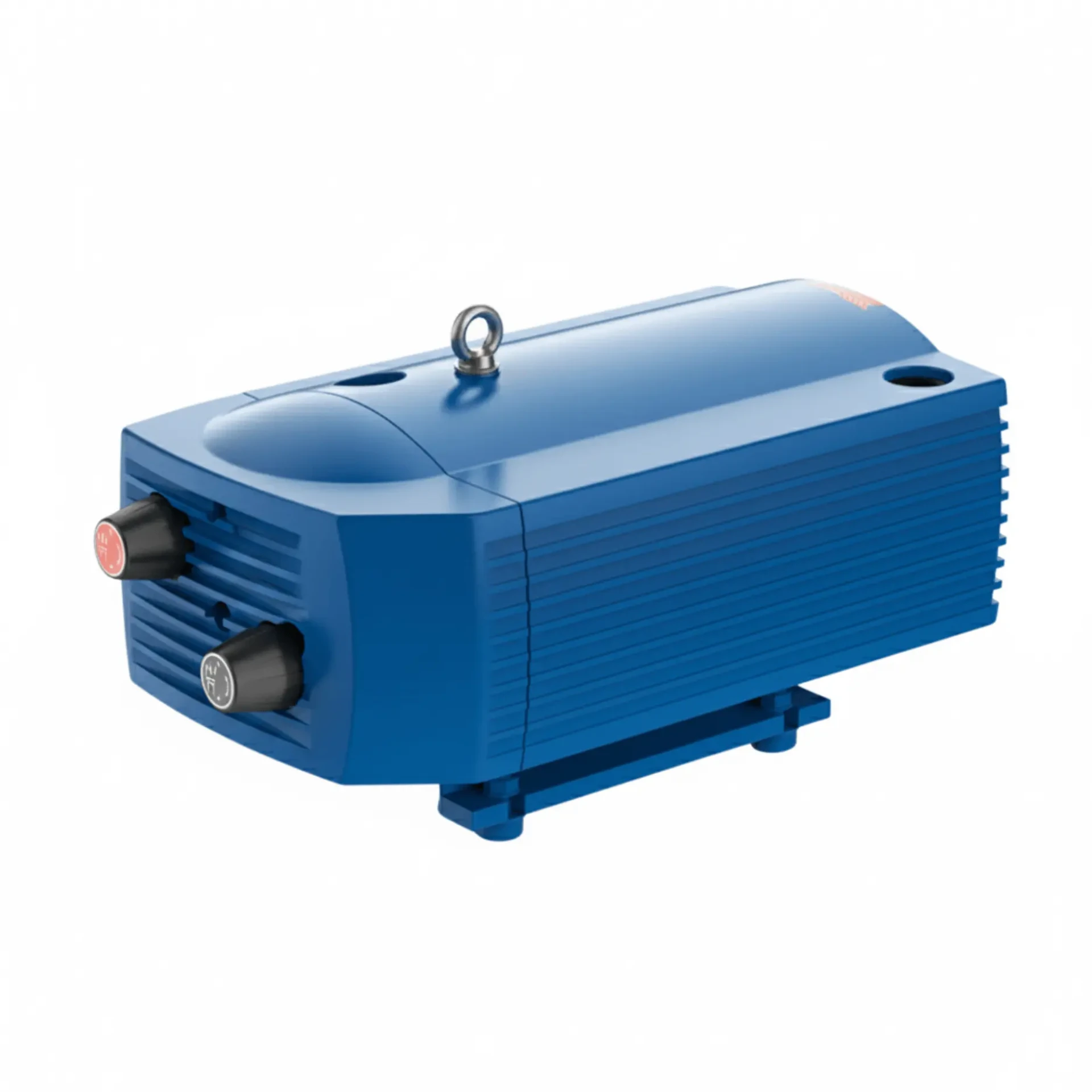

Vacuum technology plays a crucial role in modern industry. From manufacturing plants to laboratories, controlled vacuum environments help ensure precision, safety, and efficiency. Among the different vacuum generation systems available today, rotary vane pumps are widely recognized for their reliability and straightforward working principle. Understanding how they operate and where they are commonly used can help engineers, technicians, and decision makers select the right solution for their applications.
The Basic Working Principle
A dry rotary vane pump operates on a positive displacement mechanism designed to generate vacuum without the use of oil or liquid sealing inside the compression chamber. At its core, the system consists of a cylindrical housing with a rotor mounted eccentrically inside it. The rotor contains slots that hold sliding vanes made from durable composite materials.
When the rotor spins, centrifugal force pushes the vanes outward so they maintain constant contact with the inner wall of the housing. Because the rotor is positioned off center, the space between the rotor and the housing changes continuously during rotation. This changing volume forms chambers between the vanes.
As the rotor turns, air or gas enters through the inlet port into an expanding chamber. As rotation continues, the chamber gradually decreases in size, compressing the trapped gas. The compressed gas is then discharged through the outlet port. This repeated process of intake, compression, and discharge creates a consistent vacuum at the inlet side.
The absence of oil in the compression chamber is a defining characteristic. Instead of relying on fluid sealing, the pump uses tight manufacturing tolerances and self lubricating vanes to maintain efficiency and durability. This approach reduces the risk of contamination and simplifies maintenance requirements.
Key Components and Their Roles
To better understand how this pump functions, it is useful to examine its primary components.
The rotor is the central rotating element. Its eccentric placement within the housing is essential for creating variable chamber volumes. The sliding vanes move within rotor slots and extend outward during operation. Their movement forms separate compartments that trap and compress gas.
The pump housing provides a sealed cylindrical cavity. Its smooth internal surface ensures proper sealing as the vanes glide along it. The inlet and outlet ports control the flow of air or gas into and out of the system.
Bearings support the rotor and allow smooth rotation at high speeds. A motor drives the rotor, and cooling systems may be integrated to manage heat generated during compression.
Advantages of Oil Free Operation
Operating without oil in the compression chamber offers several important benefits.
One major advantage is clean vacuum generation. Since there is no oil vapor or mist inside the pumping chamber, the risk of contamination is significantly reduced. This makes the pump suitable for environments where product purity and cleanliness are critical.
Maintenance requirements are often lower compared to oil lubricated systems. There is no need for frequent oil changes, disposal of used oil, or monitoring of oil quality. This simplifies routine servicing and reduces operational interruptions.
Environmental considerations also play a role. Eliminating oil reduces waste and minimizes the potential for leaks or spills. In applications where regulatory compliance and sustainability are priorities, this feature can be valuable.
Common Industrial Applications
These pumps are used across a wide range of industries due to their reliability and clean operation.
In packaging industries, vacuum is used for sealing food products and extending shelf life. Oil free operation helps prevent contamination and supports hygiene standards.
In printing and paper handling, vacuum systems assist in sheet feeding, lifting, and positioning. A stable and dry vacuum source ensures consistent performance without affecting sensitive materials.
The medical and laboratory sectors also rely on clean vacuum technology. Applications such as suction systems, sterilization processes, and sample handling require contamination free environments.
Electronics manufacturing is another important area. Vacuum systems are used in pick and place machines, semiconductor production, and circuit board assembly. Oil free performance reduces the risk of residue affecting delicate components.
Environmental technologies such as gas sampling and filtration systems also benefit from this type of pump. Its ability to handle air and certain gases without introducing lubricants makes it suitable for analytical and monitoring equipment.
Performance Considerations
When selecting a vacuum pump for a specific application, several performance factors should be evaluated.
Pumping speed determines how quickly the pump can evacuate a given volume of air. Higher pumping speeds are useful in processes that require rapid cycle times.
Ultimate vacuum level refers to the lowest pressure the pump can achieve. Different applications demand different vacuum levels, so matching pump capability to system requirements is essential.
Heat generation is another consideration. Compression naturally produces heat, and adequate cooling ensures long term reliability. Many systems include built in cooling fans or external ventilation support.
Noise levels may also influence selection, especially in laboratory or indoor environments. Modern designs often incorporate features that reduce operational noise.
Maintenance and Longevity
Although these pumps eliminate oil related maintenance, regular inspection remains important. Vanes experience wear over time due to constant contact with the housing. Periodic replacement of vanes ensures optimal sealing and efficiency.
Filters at the inlet and outlet should be checked and cleaned or replaced as needed. Preventing dust and debris from entering the chamber helps extend component life.
Monitoring operating temperature and ensuring proper ventilation also contributes to longevity. Following manufacturer guidelines for service intervals can prevent unexpected downtime.
Conclusion
Understanding how a rotary vane vacuum pump operates without oil in its compression chamber helps clarify its strengths and limitations. Its simple mechanical design, clean operation, and reliable performance make it suitable for a variety of industrial, medical, and technical applications. When selecting a vacuum solution, evaluating factors such as required vacuum level, pumping speed, maintenance expectations, and environmental conditions will help ensure that the chosen system aligns with operational needs.







Sign in to leave a comment.