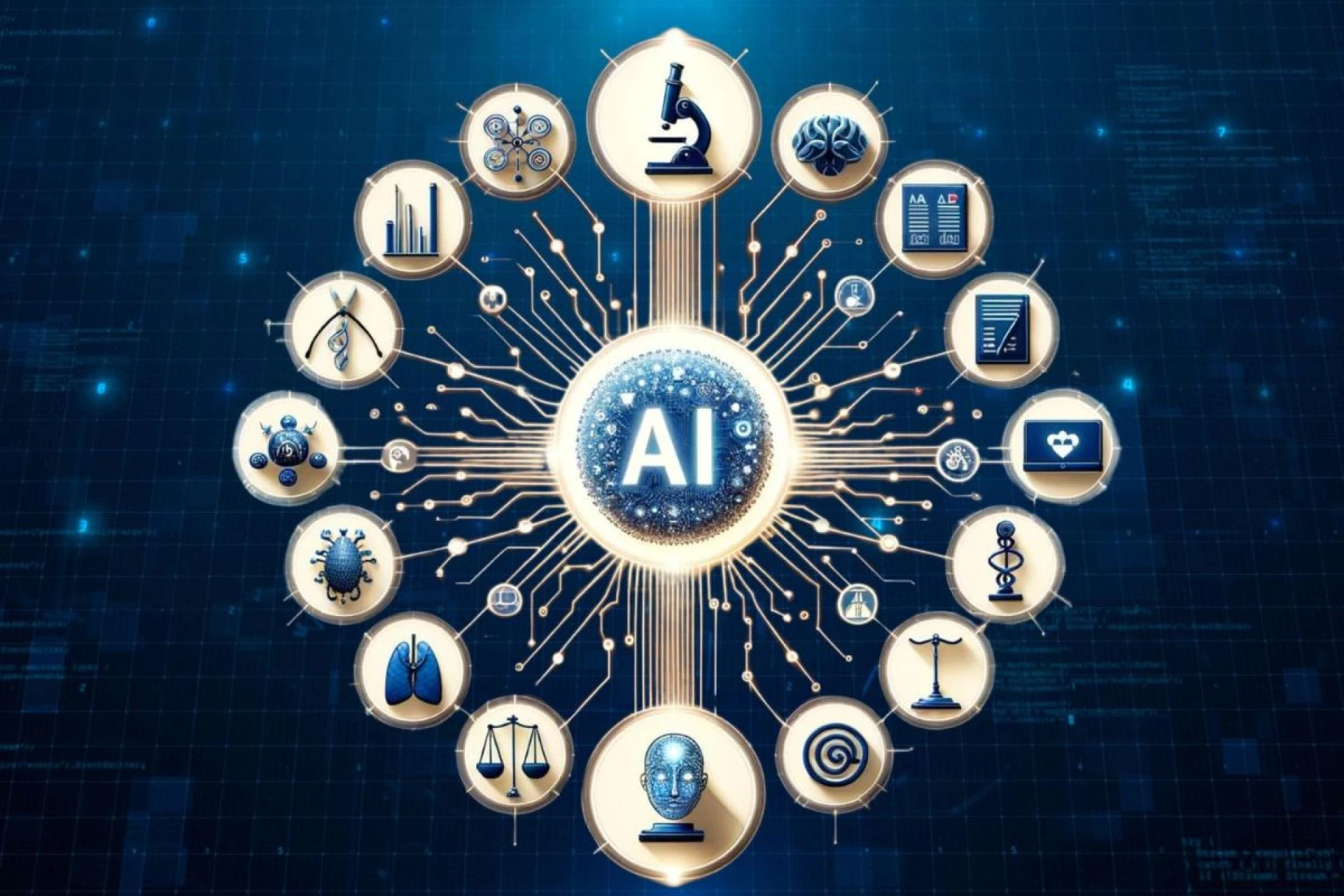

Artificial Intelligence is no longer in the early planning stages alone. It is used by companies daily in many kinds of sectors. Intelligent systems are being used more often both in healthcare and finance. If we use technology to answer real-life problems, it becomes applied AI. The main aim of this domain is applied AI in real situations to create useful changes.
AI is Helping Improve Healthcare
Healthcare organizations are now using smart solutions to aid in early diagnosis and better patient treatment. The use of machine learning now helps doctors find cancer and diabetes earlier than they could before. The use of artificial intelligence makes imaging devices give clearer and quicker results.
Automation: An Important Part of Manufacturing
Modern production is now operated by data-driven technology. All three technologies combine and work together to simplify operations. This approach allows us to spot problems early, preventing serious threats to reliability. Machine vision systems automatically check goods for flaws as they are made.
With dynamic forecasting and inventory planning, the process of supply chain efficiency has improved. None of this innovation would take place if intelligent algorithms were not applied. Because of applied AI, the industry has seen both lower costs and higher productivity.
Finance and Risk Management
Various improvements in the financial industry have come through AI-enabled technology. With anomaly detection models, fraud detection is now much more efficient. These models locate suspect behaviors ahead of what traditional approaches can do. They make use of algorithms to direct and improve how your investments are handled.
The way credit scores are calculated has moved from basic methods to more advanced AI methods. Institutional lenders can make better decisions by reviewing large data on consumers. Because of AI, checking risks and supporting customers are now done more easily and swiftly.
Smart Cities and How We Plan Our Cities
AI technology is being used to improve structures and systems in cities. The systems observe traffic levels and change signals to lower traffic congestion. Real-time information is used to improve the timing and carrying capacity of public transportation services.
Experts look at energy patterns to help cities build sustainably. Computation systems are now being used to react faster and more diligently to emergencies and keep places secure. Thanks to developments in applied AI, urban planners are able to use these tools and plan outstanding, welcoming cities.
Personalized Learning and Education
New AI platforms enable learners to get the courses they need easily. Students benefit from materials that suit how fast and in what way they learn. These models help us pinpoint which students might struggle, so help is offered early.
Managing resources in schools and universities has improved because administrative procedures are now automated. A virtual teaching assistant responds to most questions, helping teachers complete their tasks. As a result of these innovations, using applied AI in education means students can access it easier and demonstrate higher engagement.
Retail and Providing Customer Service
AI is helping the retail industry learn about what buyers like and keep the right amount of stock. They recommend things for you to buy after tracking what you look at and purchase. Customers can get assistance at any time by talking to virtual assistants.
Inventory information is updated as items are sold to keep the level just right. Logistics and delivery companies are now using route optimization and automation in their warehousing. The changes show how AI is being used in practice to boost customer happiness.
Environmental Observation and Efforts to Fight Climate Change
Intelligent tools are used by climate researchers to examine weather conditions and predict how things might turn out later. Data precision is higher for deforestation, changes in ocean temperatures, and carbon emission levels. Through AI, tools can help monitor disasters, forecast what will happen, and guide timely strategies.
Moving to and from Locations and the Development of Autonomous Systems
Automobiles and drones are designed to navigate and ensure safety mainly because of AI. Road navigation, recognizing obstacles, and choosing the best path are all driven by machine learning algorithms. Businesses in logistics rely on AI to create schedules for deliveries and give warning of delays.
Today’s transport systems create schedules that change with changing passenger numbers and traffic situations. Such technologies make operations cheaper and improve the way visitors use a website. These systems are effective because progress in applied AI is being concentrated on them.
Conclusion
It’s no longer just an idea in research labs; AI is now accessible to many people. It affects many important areas by being put into practice. Applying AI technology clearly leads to greater efficiency, higher accuracy, and more innovation.












Sign in to leave a comment.