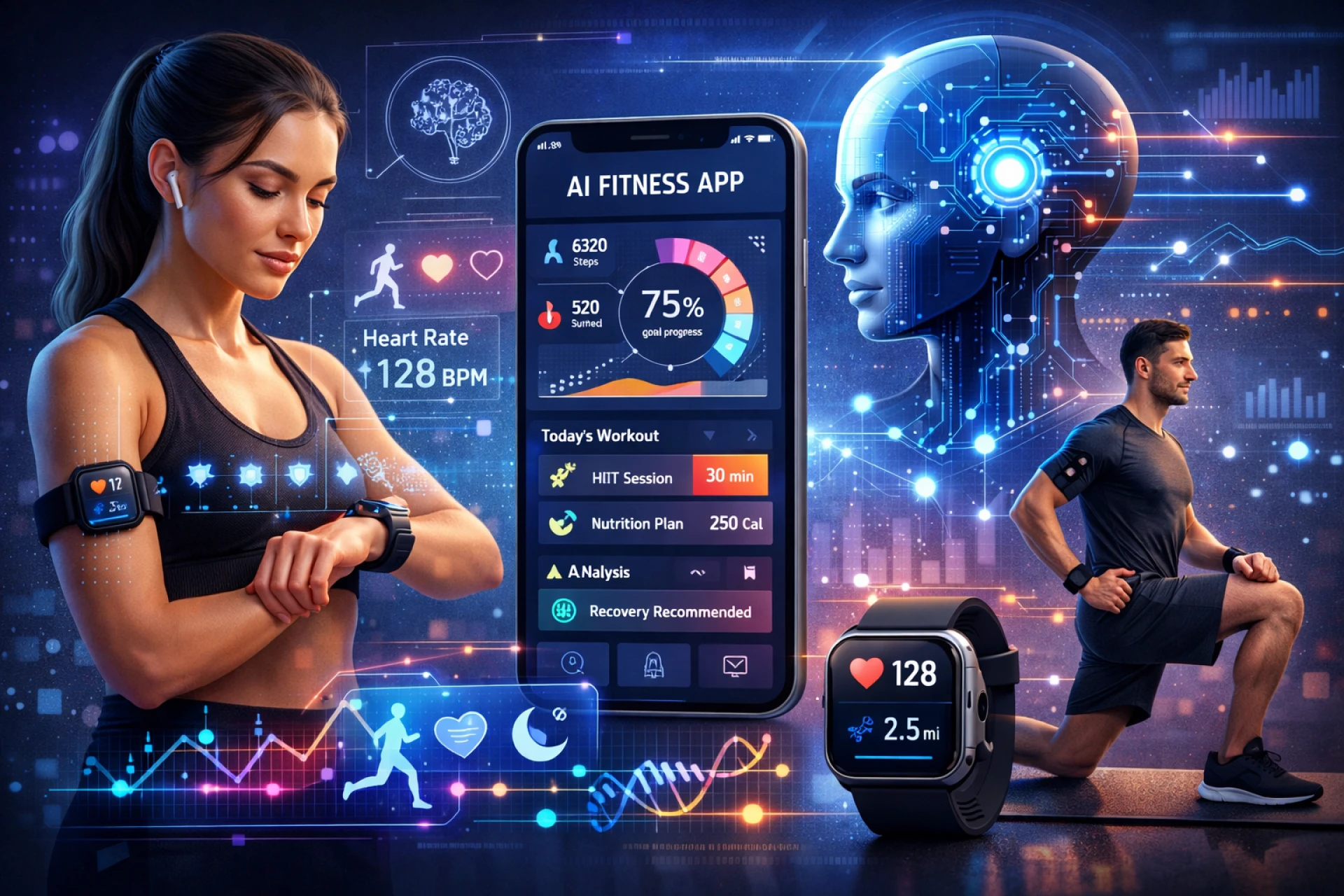

The global fitness industry is undergoing a major digital shift as artificial intelligence and wearable technology redefine how users track, manage, and improve their health. Fitness applications are no longer limited to step counting or basic workout logs. They are evolving into intelligent health companions that analyze real-time biometric data, predict outcomes, and personalize fitness journeys at scale. This transformation is creating new opportunities and expectations for every fitness app development company aiming to build competitive and future-ready solutions.
The Evolution of Fitness Applications From Static Tools to Intelligent Platforms
Early fitness apps relied heavily on manual input and generic workout plans. Users had to log meals, activities, and progress on their own, often leading to low engagement and inconsistent results. The introduction of wearable devices and AI-driven analytics has shifted this paradigm. Modern fitness mobile app development focuses on continuous data collection, behavioral insights, and adaptive recommendations that respond dynamically to user performance and health metrics.
This evolution is not only improving user outcomes but also redefining how fitness platforms are designed, developed, and scaled across markets.
The Role of Artificial Intelligence in Modern Fitness App Development
Artificial intelligence acts as the intelligence layer that converts raw health data into meaningful insights. It enables fitness applications to go beyond tracking and into prediction, personalization, and proactive health management.
Personalized Workout and Training Recommendations Using AI
AI algorithms analyze user data such as age, weight, fitness level, workout history, and wearable sensor inputs to generate customized training plans. These plans automatically adjust intensity, duration, and recovery time based on user progress and physical responses. This level of personalization improves adherence, reduces injury risk, and enhances long-term engagement.
AI-Powered Nutrition and Lifestyle Guidance
Fitness applications increasingly integrate AI-driven nutrition planning. By analyzing calorie burn, metabolic patterns, and dietary habits, AI suggests meal plans aligned with individual fitness goals. Some platforms also provide lifestyle insights, such as sleep optimization and stress management, making fitness apps holistic wellness solutions rather than isolated workout tools.
Predictive Analytics for Injury Prevention and Performance Optimization
AI models can detect abnormal movement patterns, fatigue indicators, or overtraining risks by analyzing wearable data. This allows apps to warn users before injuries occur and recommend rest or corrective exercises. Predictive analytics also help athletes and serious fitness enthusiasts optimize performance through data-backed insights.
Wearable Technology as the Data Backbone of Fitness Apps
Wearable devices are the primary data sources powering intelligent fitness applications. They continuously collect biometric and activity data, enabling real-time monitoring and analysis.
Types of Wearables Commonly Integrated with Fitness Apps
Wearables include smartwatches, fitness bands, heart rate monitors, smart shoes, and even sensor-equipped clothing. These devices track metrics such as heart rate, oxygen saturation, sleep quality, calories burned, movement patterns, and stress levels. Fitness app development services now prioritize seamless integration with multiple wearable ecosystems to ensure broad device compatibility.
Real-Time Data Synchronization and Continuous Monitoring
Real-time data synchronization allows fitness apps to deliver instant feedback and adaptive recommendations. Users receive alerts during workouts, recovery suggestions after sessions, and health summaries throughout the day. This constant feedback loop enhances user trust and positions the app as an always-on digital coach.
Challenges of Wearable Data Accuracy and Standardization
While wearables provide valuable data, ensuring accuracy and consistency across devices remains a challenge. Different manufacturers use varying sensors and algorithms. A reliable fitness app development company must implement data normalization techniques and validation layers to maintain consistent user experiences across device types.
How AI and Wearables Work Together to Create Intelligent Fitness Experiences
The true transformation occurs when AI and wearables operate as a unified system. Wearables collect continuous health data, while AI interprets and contextualizes that data into actionable insights.
Adaptive Fitness Journeys Based on Real-Time Feedback
Instead of static fitness plans, users experience adaptive journeys that evolve daily. If wearable data indicates fatigue or elevated heart rate variability, the app adjusts workouts accordingly. This responsiveness improves results and builds long-term user loyalty.
Behavioral Analysis and Habit Formation
AI analyzes user behavior patterns such as workout timing, consistency, and drop-off points. Fitness apps can then deliver personalized nudges, reminders, and motivational messages at optimal times, supporting habit formation and reducing churn.
Gamification and Engagement Through Data Intelligence
Wearable data fuels gamification features such as achievement badges, performance milestones, and social challenges. AI ensures these elements remain personalized and achievable, keeping users motivated without overwhelming them.
Impact on Fitness App Development Strategy and Architecture
The integration of AI and wearables significantly influences how fitness platforms are architected and maintained.
Scalable Cloud Infrastructure for High-Volume Health Data
Fitness apps process large volumes of real-time data from thousands or millions of users. Scalable cloud infrastructure and data pipelines are essential to handle this load efficiently while maintaining performance and reliability.
Security and Compliance in Health Data Management
Health and fitness data is highly sensitive. Modern fitness mobile app development must incorporate strong encryption, secure authentication, and compliance with global data protection regulations. Trust and transparency are critical factors for user adoption and retention.
Modular and API-Driven Development Approaches
To support evolving wearable ecosystems and AI capabilities, fitness platforms are increasingly built using modular architectures. API-driven development allows seamless integration with new devices, third-party health platforms, and emerging AI models without disrupting core functionality.
Business Benefits of AI-Driven and Wearable-Integrated Fitness Apps
From a business perspective, AI and wearables unlock new revenue streams and growth opportunities.
Fitness apps can offer premium subscriptions for personalized coaching, advanced analytics, and exclusive content. Data-driven insights also enable partnerships with healthcare providers, insurers, and corporate wellness programs. For enterprises investing in fitness app development services, these technologies create scalable, high-value digital assets with strong market differentiation.
Future Trends Shaping AI and Wearable-Driven Fitness App Development
The next phase of innovation will further blur the line between fitness and healthcare. Advances in machine learning, sensor technology, and predictive health modeling will enable early detection of health risks and more personalized wellness interventions. Voice-based AI coaches, emotion-aware fitness guidance, and deeper integration with medical systems are expected to become standard features.
As user expectations rise, only platforms built with intelligent, flexible, and secure foundations will remain competitive.
Conclusion
AI and wearable technology are fundamentally transforming fitness app development from simple tracking tools into intelligent, adaptive wellness platforms. By combining real-time biometric data with advanced analytics, modern fitness applications deliver personalized experiences, improve health outcomes, and drive long-term engagement. For any fitness app development company, embracing AI-driven insights and wearable integration is no longer optional but essential to building future-ready solutions that meet evolving user demands and market opportunities.
Frequently Asked Questions
How does AI improve user engagement in fitness applications?
AI personalizes workouts, nutrition plans, and notifications based on individual behavior and performance data. This relevance increases motivation, consistency, and long-term user retention.
Are wearable-integrated fitness apps suitable for beginners?
Yes. Wearable data combined with AI allows apps to adjust intensity and recommendations based on user fitness levels, making them accessible and safe for beginners as well as advanced users.
What role does a fitness app development company play in wearable integration?
A development company ensures seamless device compatibility, accurate data synchronization, secure data handling, and scalable architecture to support multiple wearable ecosystems.
Is fitness mobile app development with AI more expensive?
Initial development costs may be higher due to data infrastructure and AI modeling, but long-term benefits include higher user retention, premium monetization opportunities, and scalable growth.
How secure is health data in AI-powered fitness apps?
Well-designed fitness platforms use encryption, secure cloud infrastructure, and regulatory compliance measures to protect sensitive user data and maintain trust.

Sign in to leave a comment.