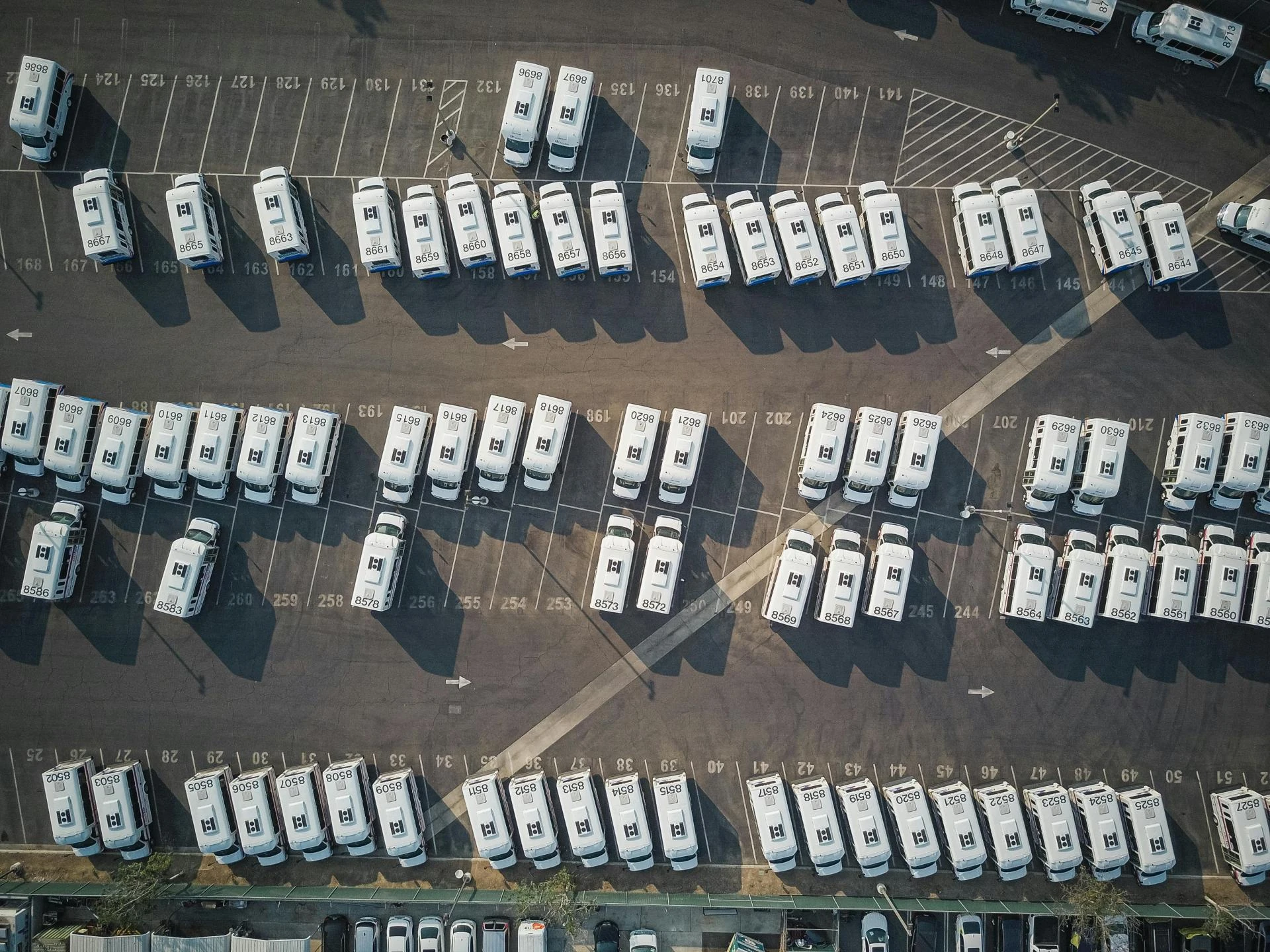

Cleaning is an essential part of the maintenance of vehicles in a commercial fleet. Not only does regular cleaning help sustain the brand image, but it will increase vehicle durability and reduce general maintenance and repair costs by removing dirt and pollutants that may cause rust or other problems.
While keeping vehicles clean is essential, cleaning itself results in downtime. There are also costs associated with this operation. The use of labor, equipment, and cleaning agents must be optimized. The consumption of water, capturing and recycling water, and disposing of waste water and cleaning chemicals will all play a role in the cost structure and efficiency of a fleet wash system.
The scheduling of vehicle washing is crucial to prevent bottlenecks of vehicles waiting to be washed, and to make sure that each vehicle is washed according to a planning schedule.
Keeping a fleet of vehicles clean is a complex operation, and the bigger and more diverse the fleet, the greater the need to automate the process.
Automation In Fleet Washing
Automated fleet washing will bring benefits that manual washing cannot hope to match. It brings efficiency, time and downtime management, and consistent results to an activity that, if performed optimally, will boost the bottom line.
No matter the nature of the vehicle fleet, whether large commercial vehicles such as trucks, or transit systems like trains or buses, automation can reduce the wash cycle times. Commercial vehicle wash systems are usually optimized for a specific operator’s needs, bringing speed and efficiency that allow more vehicles to be cleaned in less time, which will speed up throughput and increase productivity.
Automation also allows consistency in the wash operation. The machines can be programmed to identify different vehicles and wash each with precision based on a programmed set of instructions.
How Automation Allows Speed And Consistent Results
Automation brings industrial precision into all stages of the wash cycle and industrial processes in the wash itself.
Programmed Wash Cycles
Automated wash systems can be programmed to recognize specific types of vehicles and their cleaning requirements. This could customize the cleaning requirements of each vehicle and customize the steps such as pre-soaking, cleaning, rinsing, and drying the vehicle to a predetermined level.
High-pressure Water
The way automated washing reduces labor input is by using high-pressure water to remove dirt and road contaminants like salt from the surface of the vehicle. Powerful jets of water, used with the right cleaning agents, will eliminate the need for excessive scrubbing, which will save time as well as reduce the change of damage to the vehicle.
Sensor-controlled Brushes
Some vehicles require brushes to remove grime and road sediment. Automated cleaning systems can be pre-programmed to recognize the shape of the vehicle, or measure the contours of a vehicle, and guide precision brushes to clean problem areas efficiently without causing damage or abrasion.
Drying
Automated wash systems integrate strong air dryers to remove moisture from the vehicle after the wash. This eliminates the time required for manual drying and gets the vehicle back on the road as fast as possible.
Feature Of An Automatic Wash System
Depending on the fleet washing requirements of different operators, the system requirements would most likely require attention to several areas of the operation.
While some fleet operators will have identical vehicles, others will operate different kinds of vehicles that could present different levels of dirtiness.
Water recycling and conservation can be a requirement in drought affected areas, but will impact the bottom line wherever the facility is located.
Automatic management of expensive cleaning agents will save money and increase efficiency, while disposing of these chemicals could be subject to legal requirements in specific areas. This latter process can also be automated.
Data Analytics
Fleet wash requirements are subject to many variables, ranging from seasonal activity to weather events and even the behavior of individual drivers. The only way to keep track of these variables and adjust operations is by using comprehensive data analysis and automated reporting/alerts. This will allow the fleet manager to track key performance metrics and identify shifting trends, and react to these changes in real time.
Fleet washing can have a major impact on operational efficiency and asset management. Choosing the right system for a specific fleet will ultimately improve the bottom line in several significant ways.













Sign in to leave a comment.