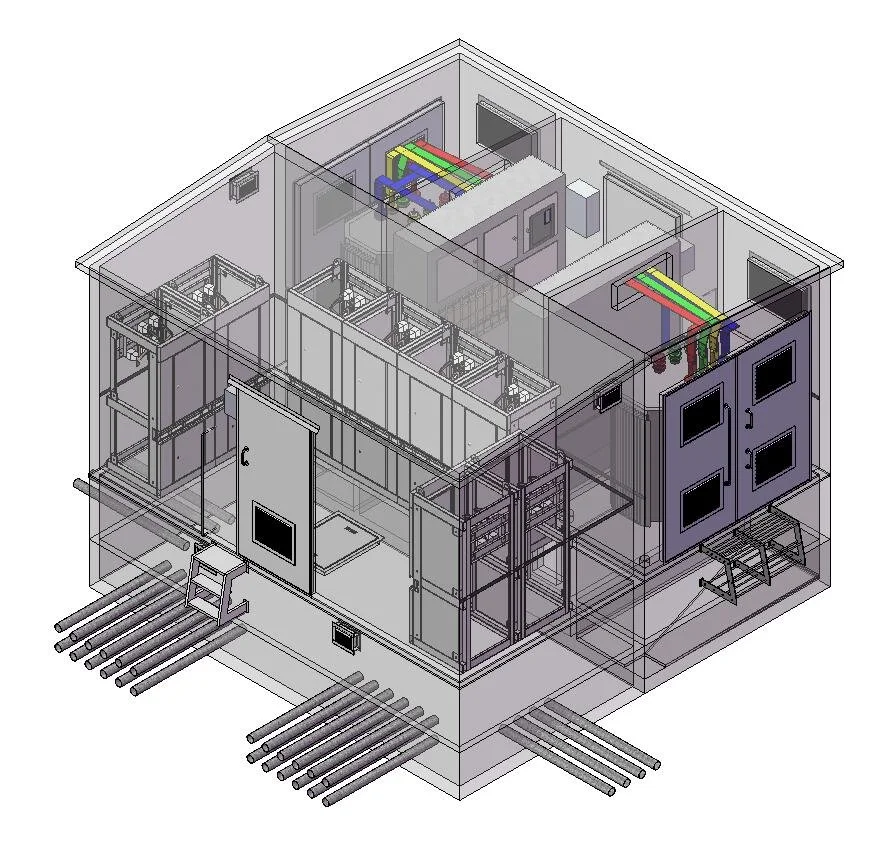
Construction estimating used to be a time-consuming hunt through drawings, notes, and assumptions. Today, that process is changing because models are becoming the primary source of truth. When teams use BIM Modeling Services to produce structured, extractable data and let estimating teams consume that data directly, the work becomes faster, clearer, and far less error-prone. This article walks through the practical ways model-led workflows change estimating, what to watch for, and how to make the shift without painful disruption.
From drawings to data: the fundamental shift
Historically, an estimator read plans and re-created counts: doors, finishes, and lengths. A model flips that relationship. In a well-built Revit or BIM file, objects carry parameters — material, finish, unit — that can be queried. That means much of the mechanical counting disappears and becomes an extract-and-verify task. The result is more predictable quantities entering the pricing process. Good BIM Modeling Services focus on consistent family naming, required parameters, and simple tagging so the output is useful to the estimating team.
This shift doesn’t remove human judgment. Instead, it reallocates it: estimators spend less time counting and more time judging rates, productivity, logistics, and risk. Combining model accuracy with commercial judgment is how you get estimates that are both fast and realistic.
A short, repeatable workflow that delivers results
Adoption succeeds when the process is simple and repeatable. A compact loop repeated at each milestone gives predictable outputs.
- Agree Level of Detail (LOD) and a minimal parameter list at kickoff.
- Modelers follow a one-page naming and tagging guide.
- Run a pilot extract on a single floor or representative zone.
- Condition the export and map families to the cost code structure.
- Apply dated unit rates and visually validate key items.
That pilot extract step is vital. It surfaces missing tags, misnamed families, and odd parameters, while fixes are inexpensive. Teams that skip it usually pay later in time and rework.
Practical benefits for modern estimators
When model outputs are reliable, Construction Estimating Services change in predictable ways:
- Faster takeoffs: automated extraction removes repetitive manual counts.
- Fewer omissions: Repeat items modeled consistently reduce missed quantities.
- Clearer traceability: each estimate line can link back to a model object and a version.
- Better scenario testing: swap materials or systems and reprice quickly.
Those outcomes matter at the tender time and on-site. Faster bids let estimators pursue more opportunities; traceable quantities reduce disputes and speed procurement.
Small governance moves that create big wins.
Most failures are not technical but procedural. A few practical rules prevent the majority of headaches.
- Publish a one-page tagging and naming checklist and attach it to every model handover.
- Require a minimal parameter gate for extractable items: material, unit, finish.
- Use a shared, versioned model repository so everyone opens the same snapshot.
- Keep a dated price library and note the source of each unit rate.
These are low-effort controls. Enforce them once, and many later problems disappear.
Mapping model data into commercial systems
A model extract is useful only when it maps cleanly into your estimating environment. Maintain a living mapping table that links Revit family/type → WBS/cost code → unit. Use a small conditioning step — often a spreadsheet or light script — to normalize exports before importing. That intermediate step removes most of the friction between BIM output and the pricing tool and dramatically reduces data-cleaning iterations.
When BIM Modeling Services and Construction Estimating Services share the same mapping, estimates become repeatable rather than ad hoc.
Where accuracy grows and risks drop
Two linked outcomes explain why owners and main contractors embrace model-led estimating: accuracy and defensibility. Reliable quantities reduce omissions that cause change orders. Traceability — the ability to show the model view, the extract line, and the dated rate — short-circuits many disputes. Estimators who can defend numbers with evidence spend less time on claims and more time on negotiation and value engineering.
That defensibility is often the most underrated benefit: it reduces indirect costs and preserves relationships with clients and subcontractors.
Scenario testing and value engineering — practical, not theoretical
When a model feeds the estimate, scenario testing stops being a luxury. Want to compare two cladding options or evaluate a different MEP layout? Update the model, run the extraction, and you have a new priced scenario in hours instead of days. This speed turns value engineering into routine design support rather than last-minute triage.
Designers get timely cost feedback, owners get clear trade-offs, and estimators can present options that balance performance and budget.
Human judgement remains central.
Models provide mechanical accuracy; people supply context. Narrow stairs, limited laydown areas, local labor behavior, and phasing constraints are factors a model won’t know. Estimators add these layers: productivity adjustments, logistics allowances, and supplier risk assessments. The best results come when model-driven quantities and experienced commercial judgement are combined.
How to measure success quickly
If you want proof before scaling, run a small pilot and track simple metrics:
- Hours per takeoff (before vs after).
- Number of conditioning iterations per QTO.
- Variance between the estimate and procurement quantities.
- Frequency and value of scope-related change orders.
Improvement in these metrics typically appears after one or two pilot projects and provides the rationale for broader rollout.
Getting started with minimal risk
Pick a trade or a single floor that represents your typical work. Share a one-page naming/tagging guide, run a pilot extract, compare to a manual takeoff, and fix gaps. Document the fixes and update your mapping table. Repeat the loop. Small pilots build confidence, deliver measurable wins, and create templates for scaling across projects.
Conclusion
BIM modeling is not a fad; it’s a practical way to convert design intent into reliable inputs for pricing. When BIM Modeling Services produce clean, consistent models and Construction Estimating Services consume those outputs through a repeatable workflow, estimating becomes faster, more accurate, and easier to defend. Start small, focus on simple governance, and let model-driven quantities free your team to do the work that actually adds value: testing options, negotiating rates, and managing risk.










Sign in to leave a comment.